
Define the visibility problem precisely
The phrase security lighting can describe several different needs. A property manager may be concerned about an unlit side passage, staff leaving through a rear door, vehicles arriving at an industrial yard or camera footage that loses detail near an entrance. Identify the specific activity and location before choosing a fixture type.
Lighting can support observation and movement, but it is one part of the property’s overall arrangements. It does not guarantee that an incident will not occur. The assessment should stay focused on practical lighting questions: where people travel, where visibility changes abruptly, which areas are used overnight and what the existing system is doing.
For Mississauga warehouses, plazas, offices and multi-residential properties, those needs can differ within the same site. A continuously used employee entrance may require a different approach from a fenced equipment area. Record the concern in operational terms and identify the person responsible for approving changes to the property’s lighting and access arrangements.
Survey routes, boundaries and overlooked spaces
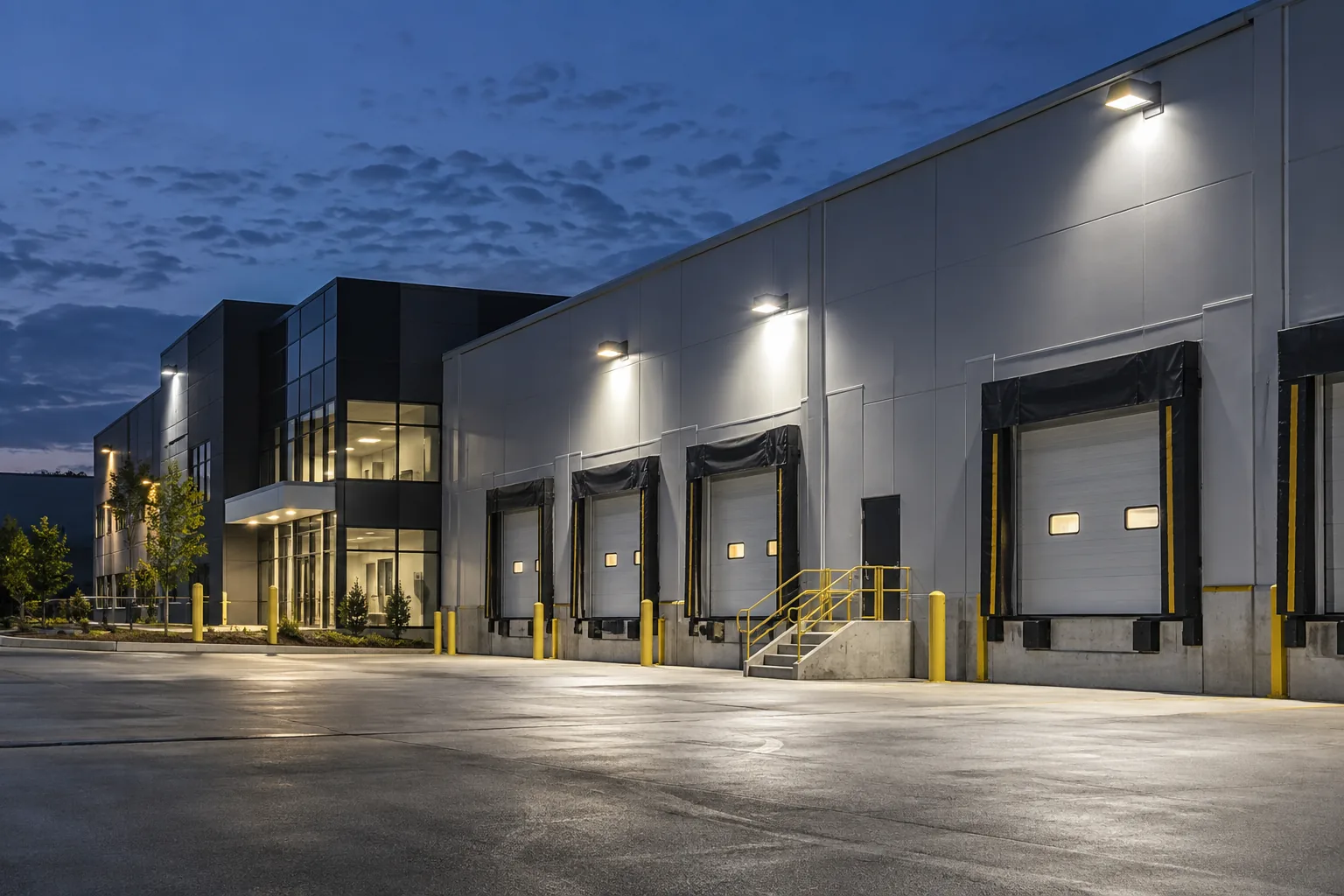
Begin at the places where people enter and leave the property. Follow the route from parking to doors, between buildings and through any service yard used by staff. Look for changes in level, corners, narrow passages and obstructions that may interrupt the pattern of light. A bright open area can coexist with a poorly lit route only a few metres away.
Review the perimeter from both sides where access permits. A fixture aimed out from a building can be highly visible to neighbours while leaving the wall line underneath in shadow. Fences, trees, storage containers and parked vehicles may alter the coverage considerably. Conditions should be considered as they occur during normal use, not only when the site is empty.
Use a site sketch to identify the concern and the existing fixtures. Where the project extends across a complete exterior, coordinate with commercial exterior lighting so entrance, yard and perimeter decisions are assessed together rather than added as disconnected bright spots.
Reduce glare and excessive contrast
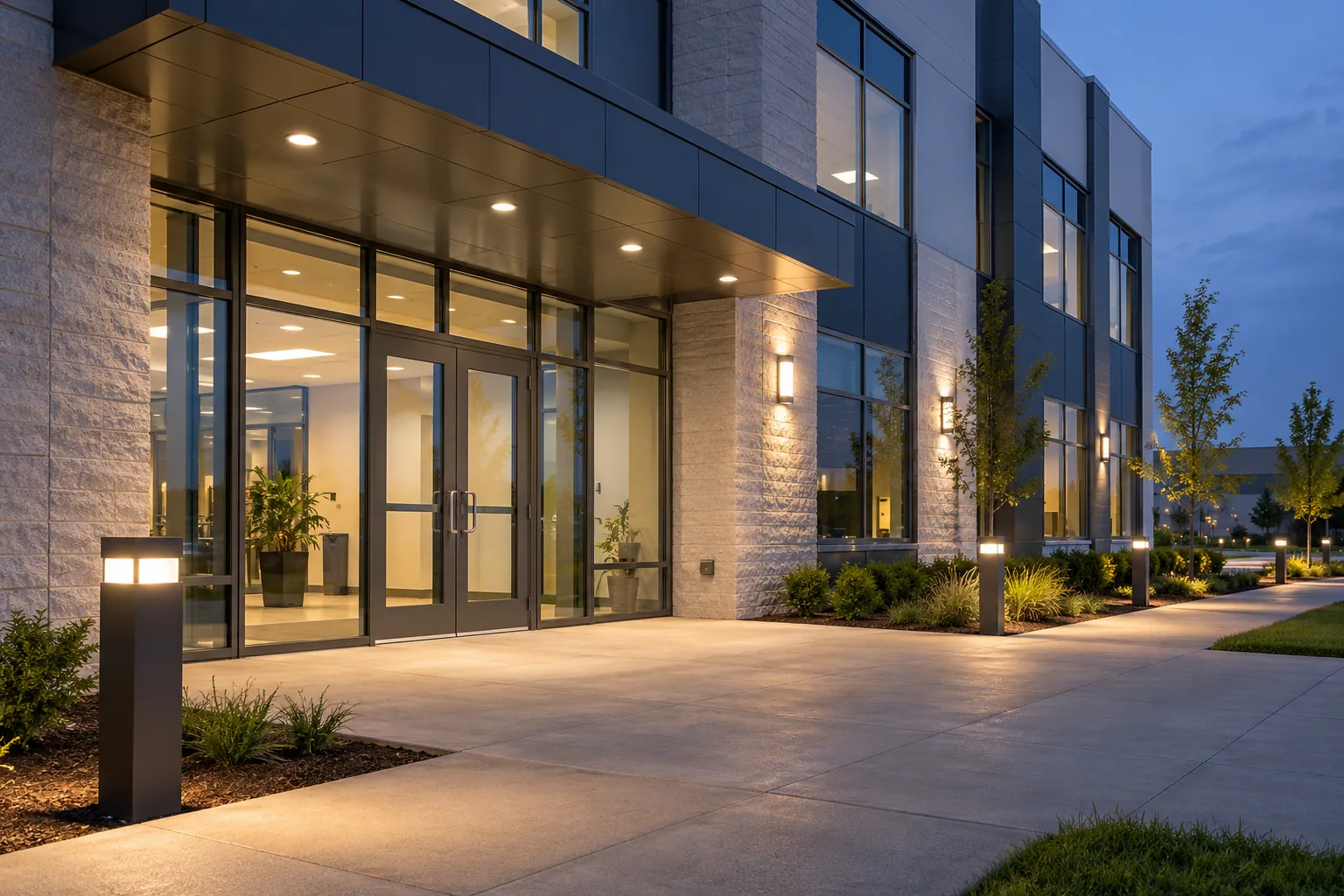
Direct glare can make it harder to see beyond a fixture, particularly when someone approaches along its aiming direction. Increasing output without addressing that relationship may make the view more uncomfortable. Review source visibility from pedestrian eye level, vehicle approach routes and nearby windows before selecting a more powerful fitting.
A balanced pattern generally deserves more attention than an isolated pool of intense light. Large differences between adjoining areas can make a moderately lit space appear very dark. Consider the transition from entrance to path and from path to parking, as well as the apparent brightness of signs and neighbouring buildings.
Fixture position, optical distribution, shielding and aiming help determine where light goes. These choices should respond to the property boundary and actual task. A lighting change that improves one view while producing intrusive spill at another requires refinement. Document the concern clearly so any assessment can consider both the intended benefit and the effect on the surrounding area.
Mississauga’s Nuisance Lighting By-law includes outdoor lighting on private property and addresses nuisance glare and trespass. A perimeter improvement should consequently be reviewed from neighbouring properties as well as from inside the site. Security intent alone does not establish that a proposed lighting arrangement is suitable.
Coordinate lighting with existing cameras
Where cameras form part of the property system, lighting decisions should involve whoever understands their operation. The visible brightness of a scene to a person does not fully describe how a camera will record it. Exposure, viewing direction, reflections and transitions between bright and dark areas can all affect the usefulness of footage.
A fixture placed directly in a camera’s view may create flare or wash out nearby detail. A bright sign or entrance can also dominate the scene while a darker approach remains difficult to interpret. These conditions require coordination of camera position, settings and illumination; replacing a lamp alone may not resolve them.
Lighting assessment should not promise a specific surveillance outcome or treat camera commissioning as automatically included. Define the responsibilities of the lighting and security specialists. Where footage quality is the concern, provide examples showing the relevant location and time, while handling recordings through the property’s normal privacy and security procedures.
Select controls for the way the property operates
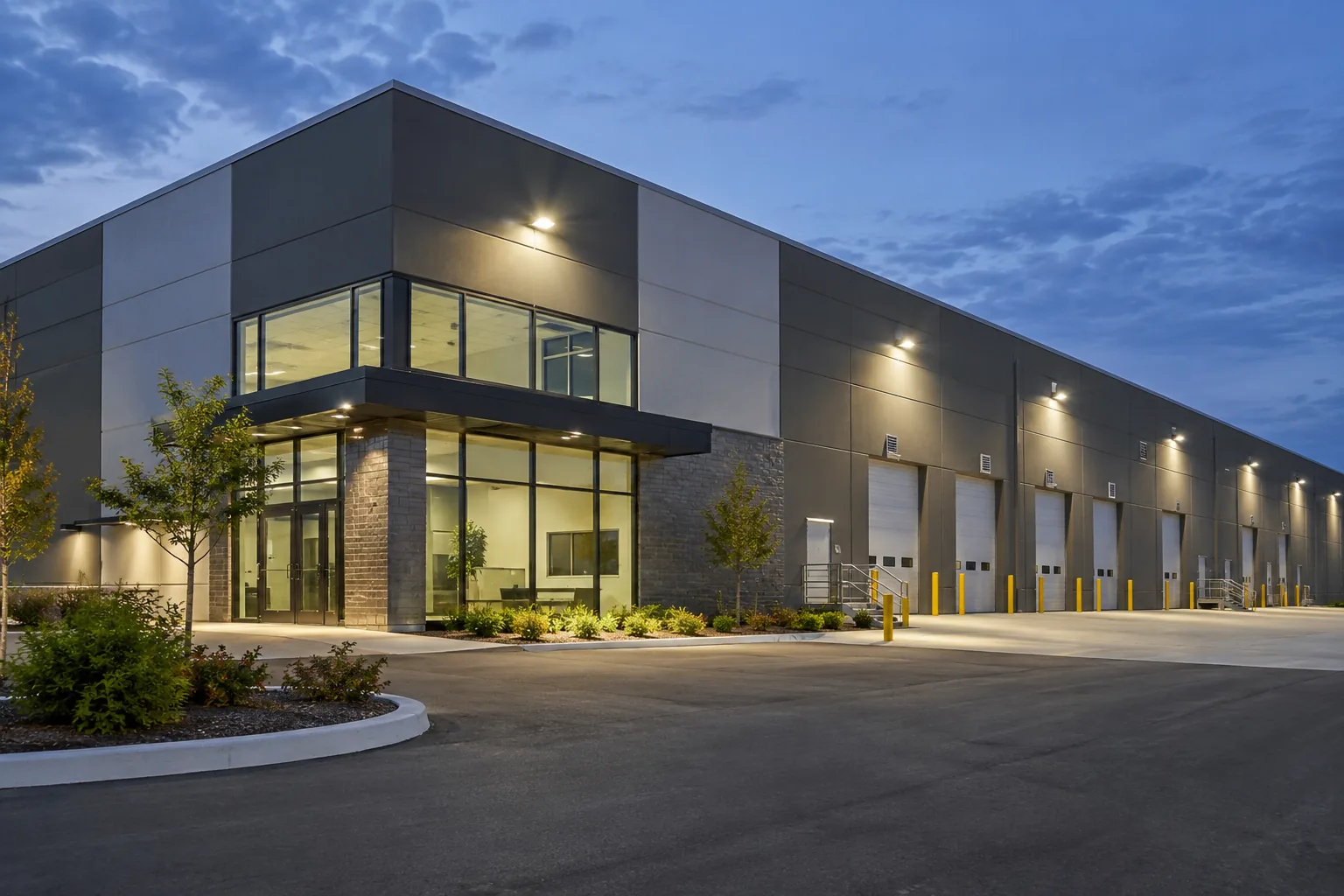
A motion-activated fixture can be useful in some locations, but the response must match the approach route and intended use. A sensor that detects vehicles reliably may not detect a person approaching from behind an obstruction. Detection zones, time settings and background light levels should be considered as a system.
Continuously active entrances may need a predictable baseline rather than an abrupt change from dark to bright. Other areas may support scheduled or reduced-output operation when unoccupied. Define what should happen during normal hours, overnight, during an override and after a power interruption where relevant to the chosen controls.
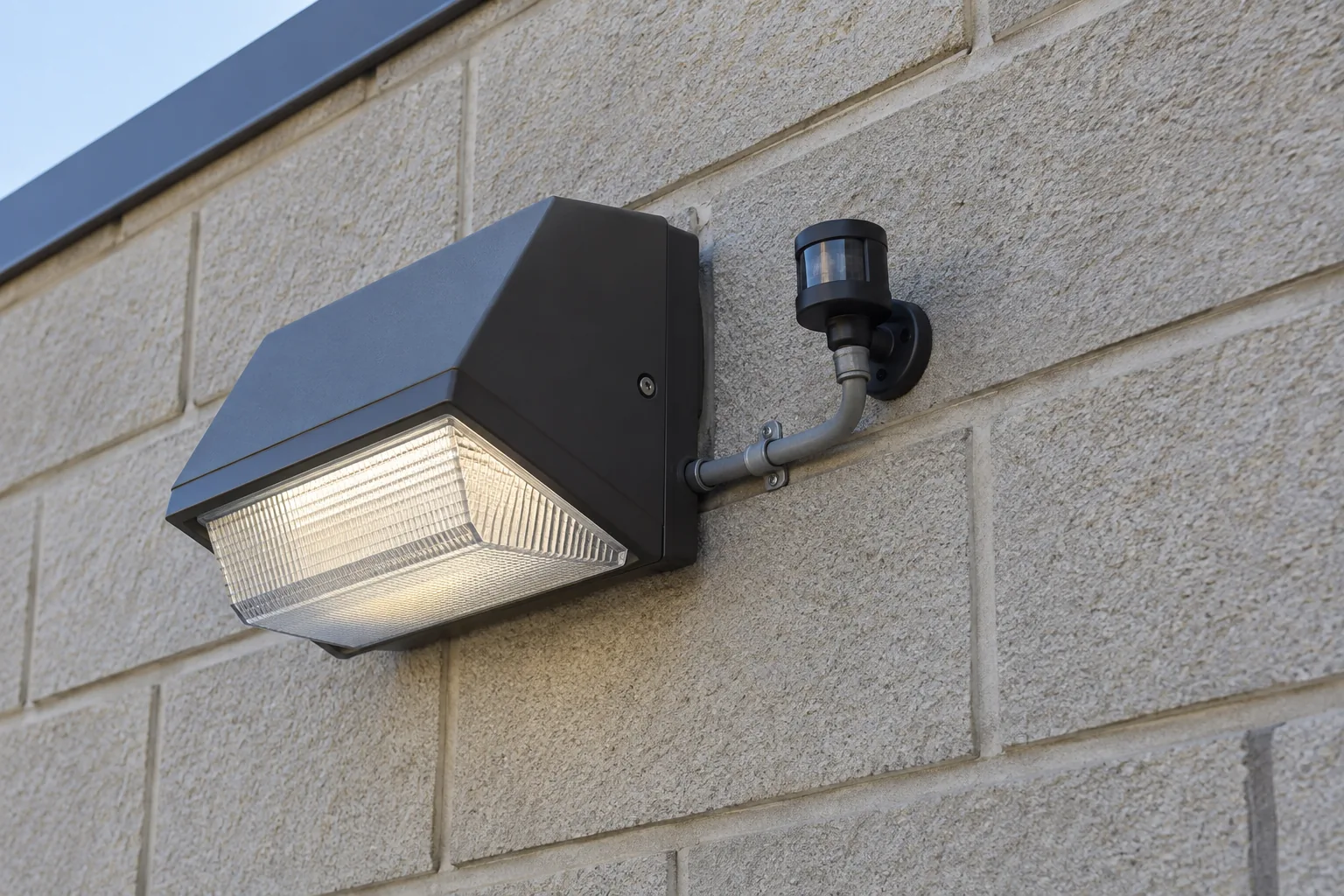
For daylight-dependent operation, assess the photocell or shared exterior control rather than relying on a timer setting indefinitely. Photocells and exterior lighting controls help align operation with ambient conditions. Where movement-based operation is appropriate, occupancy sensor planning addresses detection, response and compatibility with the fixtures.
Restore reliability before expanding the system
A property that once had reasonable exterior coverage may become uneven as fixtures fail. The first step may be to restore the intended arrangement and observe the result. Adding new lights around unresolved outages can create a more complicated system without identifying why the original equipment stopped working.
Compile reports of intermittent operation, daytime burning, repeated failures and damaged fittings. A light that works during a service visit may still have a control or environmental issue that occurs at another time. Clear observations help the investigation, especially when several units share a circuit or control.
Use commercial lighting maintenance to establish a practical record of exterior equipment and recurring concerns. Maintenance planning can prioritize areas that support regular access while separating repairs from optional changes to coverage. It also gives management a clearer basis for deciding when a coordinated replacement is preferable to repeated isolated visits.
Prepare a scope that reflects the whole property
Describe the affected areas, operating hours, relevant entrances and the specific visibility concerns. Provide photographs from the approach direction as well as the fixture location. A night photograph can illustrate a complaint, although camera exposure means it should not be treated as a measurement of lighting performance.
Identify access restrictions, nearby occupied properties and any existing controls or cameras that need coordination. For a tenant-occupied site, clarify whether the landlord or tenant authorizes façade work, new equipment and schedule changes. This is particularly important where multiple businesses share the same rear lane or parking area.
The resulting scope should explain what is being repaired, replaced, repositioned or added, along with the controls and access arrangements. If other security measures are outside the lighting work, keep those responsibilities clear. Request a site assessment with those details so the conversation starts with the property’s actual use and the conditions that need improvement.
For properties with changing tenants or work shifts, include a review point when operating hours change. A lighting schedule that suited the previous occupant may leave a new late shift with an unsuitable route. Keeping the responsible contact and control instructions with the property records makes future adjustments easier to manage.
Questions facility managers ask
Will brighter security lighting prevent incidents?
Lighting can support visibility and observation, but it cannot guarantee a security outcome. Coverage, glare, access arrangements and other property measures all matter. A lighting project should state the visual and operating improvements being sought without promising that additional brightness will prevent incidents.
Can existing wall packs be used for security lighting?
They may already serve useful access or perimeter areas. Their suitability depends on mounting position, distribution, condition and controls. Some locations may benefit from a different optic or more appropriate fixture position; others may only need a repair and a clearer operating schedule.
Should motion lighting replace dusk-to-dawn operation?
That is a site-specific decision. Review how people approach, what background illumination is needed and whether an abrupt response is suitable. Some areas may use a continuous baseline with a higher output on detection. Equipment compatibility and the intended sequence should be established before controls are changed.