
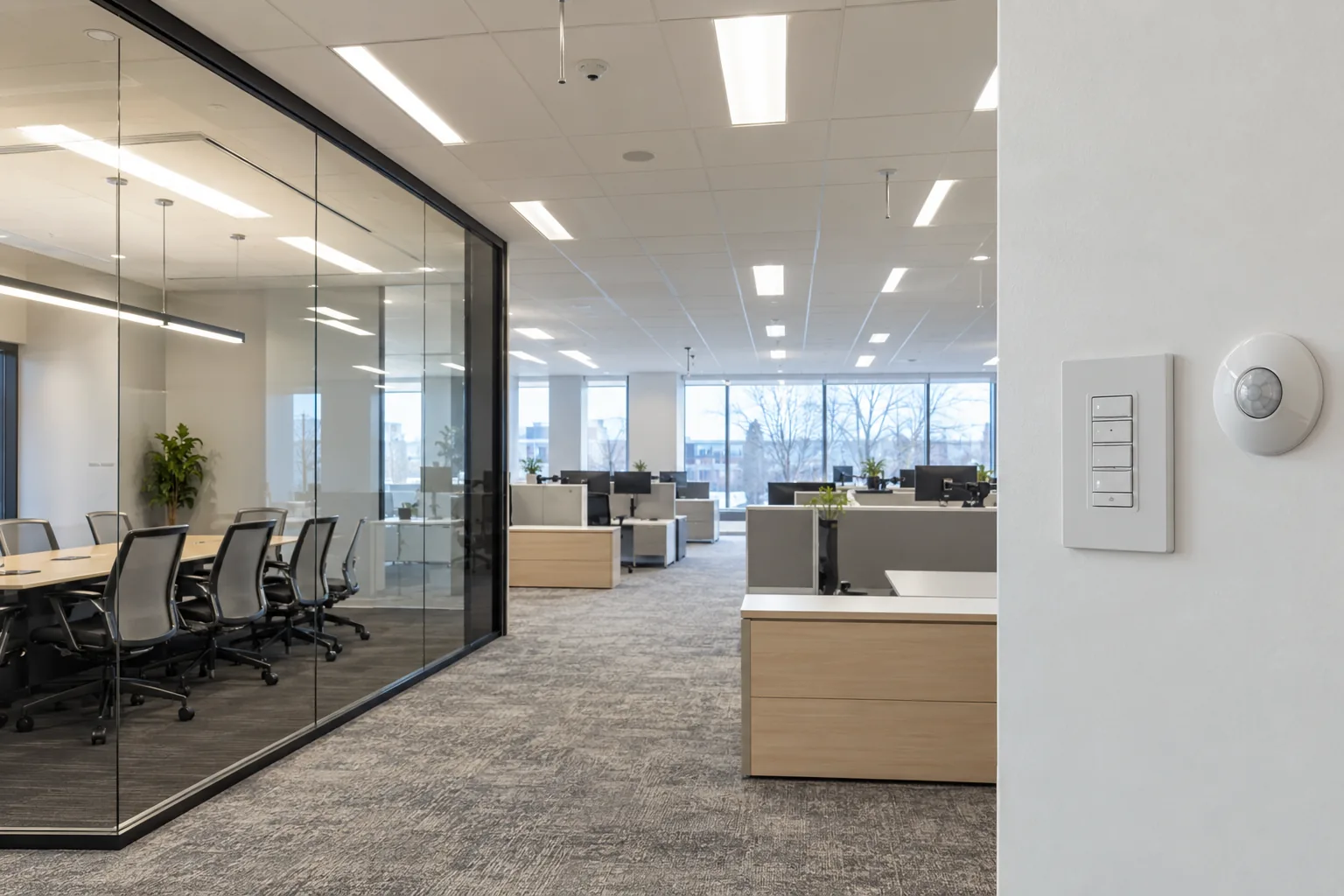
Start with the operating pattern, not the control catalogue
A Mississauga distribution facility operating overnight needs a different control strategy from an office that closes at six. Even within one building, receiving, storage, staff rooms and loading areas can have very different patterns. The starting point is a zone-by-zone account of when light is needed, who depends on it and what currently happens when a space becomes empty.
Useful assessment information includes shift changes, cleaning hours, security patrols, weekend access and seasonal activity. Record exceptions as carefully as normal hours. A rigid schedule can produce complaints when a late shipment arrives, while an unrestricted override can leave lights operating for days. The objective is to select a control approach with a clear normal state, a suitable response to occasional use and an understandable way to return to normal operation. Existing complaints are often the best evidence of where that balance has been lost.
Match each control method to a specific job
Occupancy sensing responds to activity in a space. Vacancy control typically requires a person to switch lights on and turns them off after the space becomes unoccupied. Time scheduling responds to planned operating periods. Photocells respond to available light, while dimming adjusts output instead of treating every condition as fully on or fully off. These functions can be combined, but each combination needs a defined purpose.
For example, an intermittently used storage zone may suit occupancy-based operation, while an exterior entrance may need a schedule that works with a daylight control. A meeting room may require manual selection and dimming because presentation needs differ from routine desk work. Choosing the same device for every room can create unnecessary complexity in some areas and poor coverage in others. Begin with the required behaviour and then identify equipment capable of delivering it with the existing lighting system.
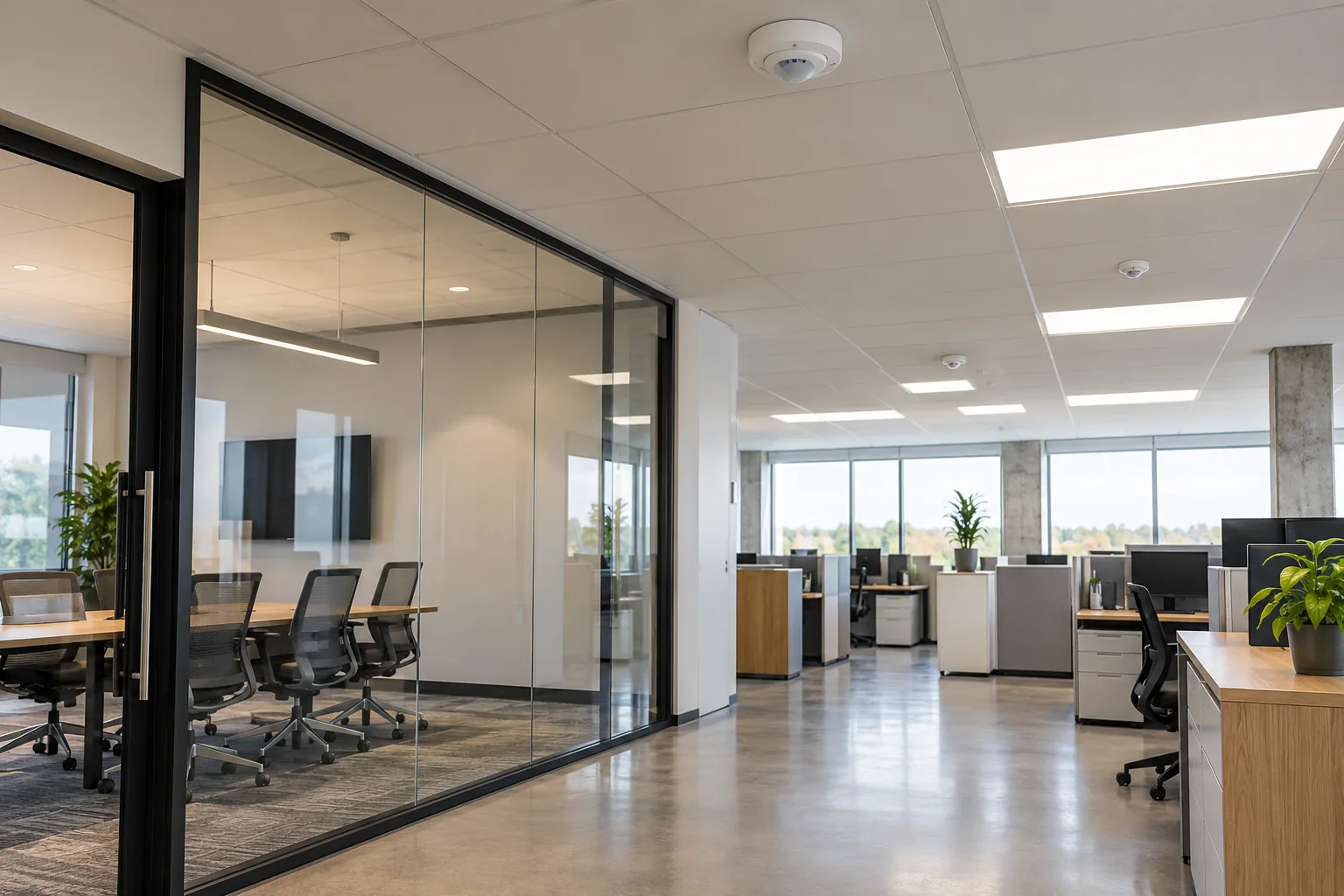
Understand the existing fixtures and control connections
A control upgrade is not automatically compatible with every LED fixture. Drivers, ballasts, switching arrangements and dimming interfaces affect the available choices. The assessment should identify fixture models where accessible, existing control wiring, present switching zones and any equipment already connected to a building-management system. A photograph of a control faceplate can be helpful, but it does not establish the compatibility of equipment above the ceiling.
Where fixtures are being replaced, control selection belongs in the same scope as the LED retrofit. Where fixtures will remain, the proposal should distinguish confirmed compatible areas from areas requiring further investigation or alternative equipment. Mixed generations of lighting deserve particular attention. Two visually similar fixtures can respond differently at low output, creating uneven dimming, flicker or a noticeable difference between adjacent spaces. Compatibility should be checked before quantities and installation assumptions are finalized.
Create zones that reflect the facility
A single large switching zone may keep an entire warehouse illuminated for a small receiving operation. Conversely, excessive subdivision can create a confusing system that staff continually override. Good zoning follows useful boundaries: rack aisles, packing areas, office perimeter zones, meeting rooms, circulation routes and exterior activity areas. The available circuit arrangement and control technology will influence what is practical.
In Meadowvale offices, a perimeter area receiving daylight may benefit from a different response than interior workstations. In a Dixie-area warehouse, shipping activity may continue after picking has stopped. These are operating examples, not reasons to assume identical solutions across a neighbourhood. Ask which areas must remain available together and which can work independently. A clear zone schedule should use names staff recognize, so the person responding to a complaint can connect a control setting to a physical area without guesswork.
Protect continuity and make overrides deliberate
An effective system includes occasional users: cleaners, maintenance personnel, delivery teams and managers working outside normal hours. Discuss how these people obtain light, how long an override lasts and who can change permanent settings. A local switch may be appropriate in one area; another may need restricted access because an accidental change affects a large section of the facility.
Controls should also be reviewed for their interaction with emergency arrangements and essential circulation needs. Those requirements must be evaluated as part of the electrical scope rather than inferred from a convenient energy-saving setting. Test ordinary transitions such as arrival, departure, a quiet occupied period and a return after hours. A system that looks satisfactory during a busy installation shift can behave differently when one person remains at a desk or a forklift pauses behind racking. The acceptance discussion should include these less obvious conditions.
Plan installation and commissioning around operations
A controls project can involve equipment installation, configuration, adjustment and user orientation. Those activities do not always happen in the same visit or under the same operating conditions. For a working commercial building, identify access above ceilings, lift movements, tenant notifications and any areas where lighting interruptions must be coordinated. Grouping work by zone may make the impact easier to manage.
Commissioning should check whether the agreed behaviour occurs in the actual space. Sensor coverage, timeout, daylight response, dimming limits and scheduled events may require adjustment after observation. A warehouse aisle with moving vehicles is different from an empty aisle during setup. Ask the proposal to identify what configuration and handover are included, what site information is needed and how additional changes would be handled. This avoids treating commissioning as an undefined final step after the installation is otherwise considered complete.
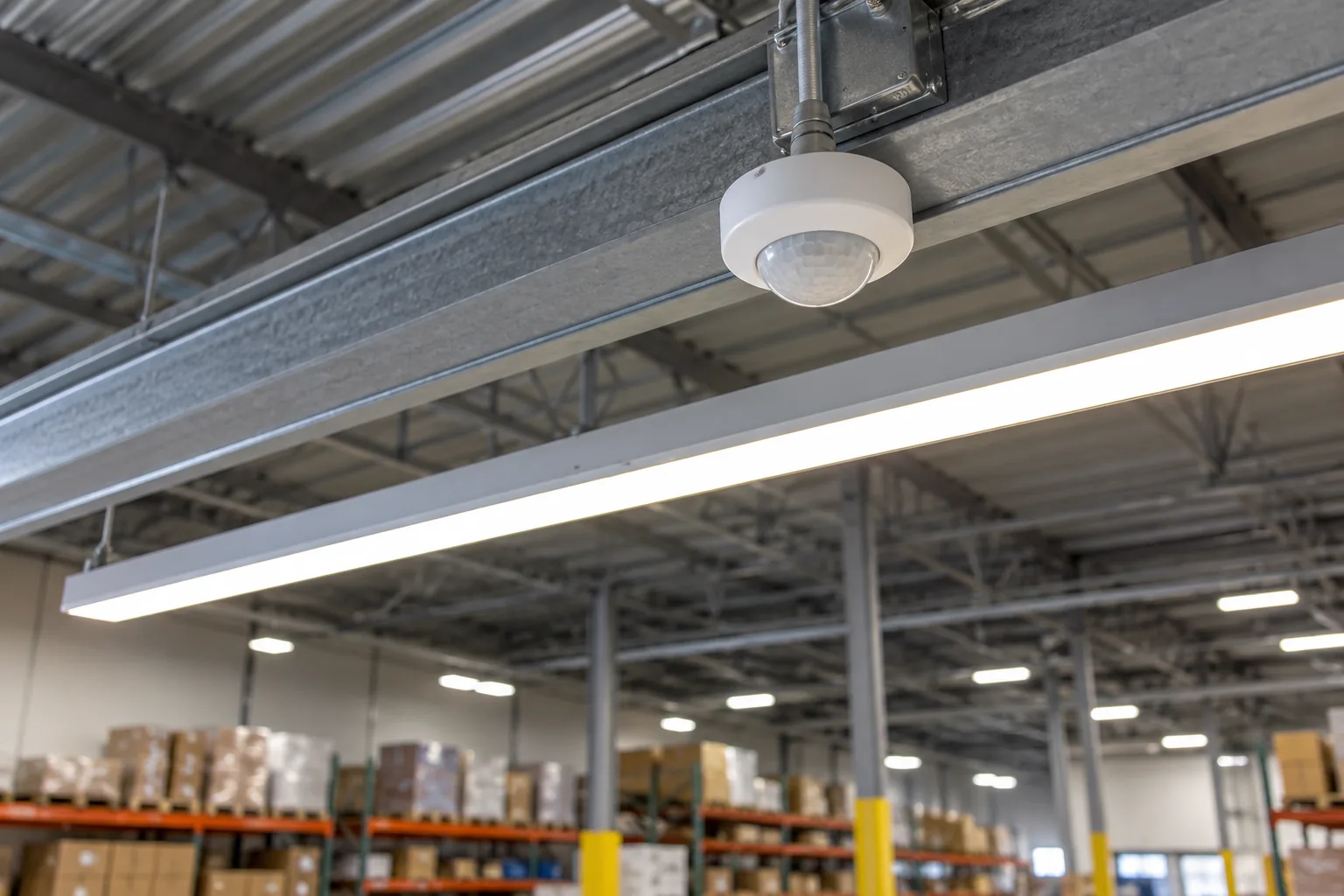
Evaluate value without assuming a fixed saving
The opportunity depends on present operating hours, existing lighting power, occupancy patterns and the amount of avoidable operation. A sensor in a rarely occupied storage room has a different opportunity from one in a continuously active production line. Dimming may reduce unnecessary output, but the required light quality and task conditions remain part of the decision. A credible comparison uses stated assumptions rather than a universal savings percentage.
There can also be operational benefits: clearer scheduling, fewer complaints about forgotten lights and more consistent settings across a property. These should be evaluated separately from electricity estimates. For current funding pathways, review the Ontario lighting incentives page before committing to equipment or timing. Eligibility depends on the current program and proposed project. A controls opportunity should remain practical and understandable even where an incentive is unavailable or the financial comparison changes after a detailed assessment.
Prepare a useful controls assessment request
Provide the facility address, building use, normal hours and the areas where lighting behaviour is causing difficulty. Describe what happens in plain terms: lights turn off while desks are occupied, parking lights run during daylight, or an override never seems to reset. Include photographs of visible controls, a rough floor plan and fixture information already held in maintenance records. Do not remove covers or access electrical parts to gather information.
The next discussion can separate an isolated control fault from a broader need for new zones and dimming or networked controls. For portfolios, include any standard operating policies and the person authorized to approve settings. A focused request makes it easier to identify the right assessment questions, plan access and establish a scope that the building team can continue to use after installation.
Questions facility managers ask
Can controls be added without replacing every fixture?
Sometimes. The answer depends on the existing fixtures, drivers, wiring and required behaviour. A survey can identify suitable areas and limitations before a control-only upgrade is compared with combined fixture and control replacement.
Will occupancy sensors turn lights off while someone is working?
That can happen when coverage, settings or sensor technology do not suit the activity. Desk work and movement behind warehouse racking need different consideration. The assessment should examine quiet occupied periods as well as obvious movement.
Is a networked system always the best option?
No. A local sensor or timer may be sufficient for a straightforward space. Networking becomes more useful where centralized schedules, multiple zones, remote adjustments or system information have a clear operational purpose.
Can building staff change the settings?
That depends on the selected equipment and permissions. Decide which settings staff should control, which require authorization and how temporary overrides return to the agreed operating pattern.