
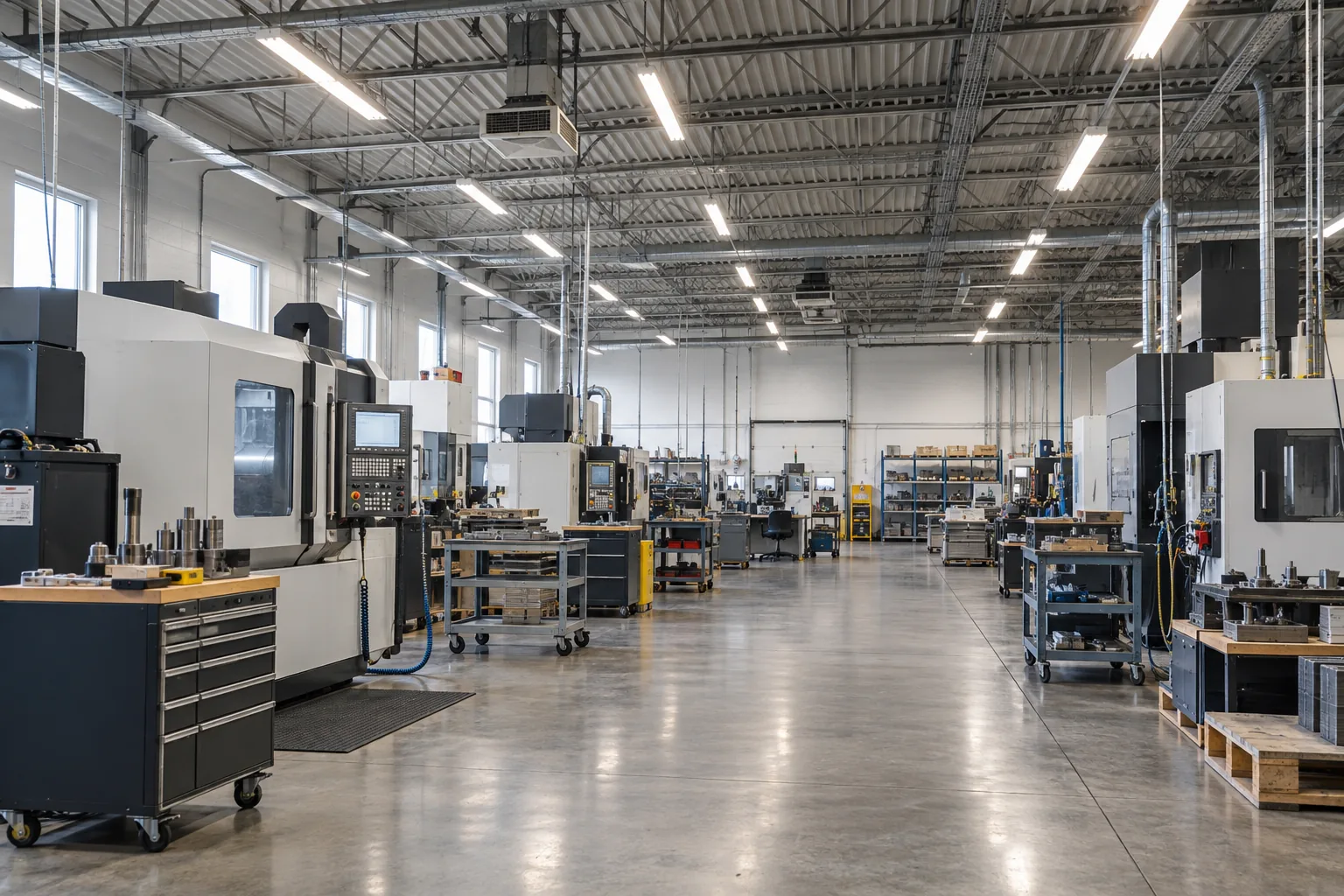
Map the process before selecting fixtures
A manufacturing floor rarely has one uniform lighting requirement. Operators may watch moving material, read instrument displays, inspect surface finishes and handle components within a short distance of each other. A general ceiling layout can support circulation while still leaving a critical work face shadowed by machinery. The production process is therefore the starting point for the assessment.
Describe each work area in practical terms: what people need to see, where they stand and what equipment blocks light. Include changes between production runs and any line modifications already planned. Manufacturing facilities in Mississauga’s industrial employment areas may have been adapted repeatedly, so the original lighting layout should not be presumed suitable for the current operation. Discuss observed problems with operators and maintenance staff before narrowing the scope to fixture replacement.
Balance general illumination and local task needs
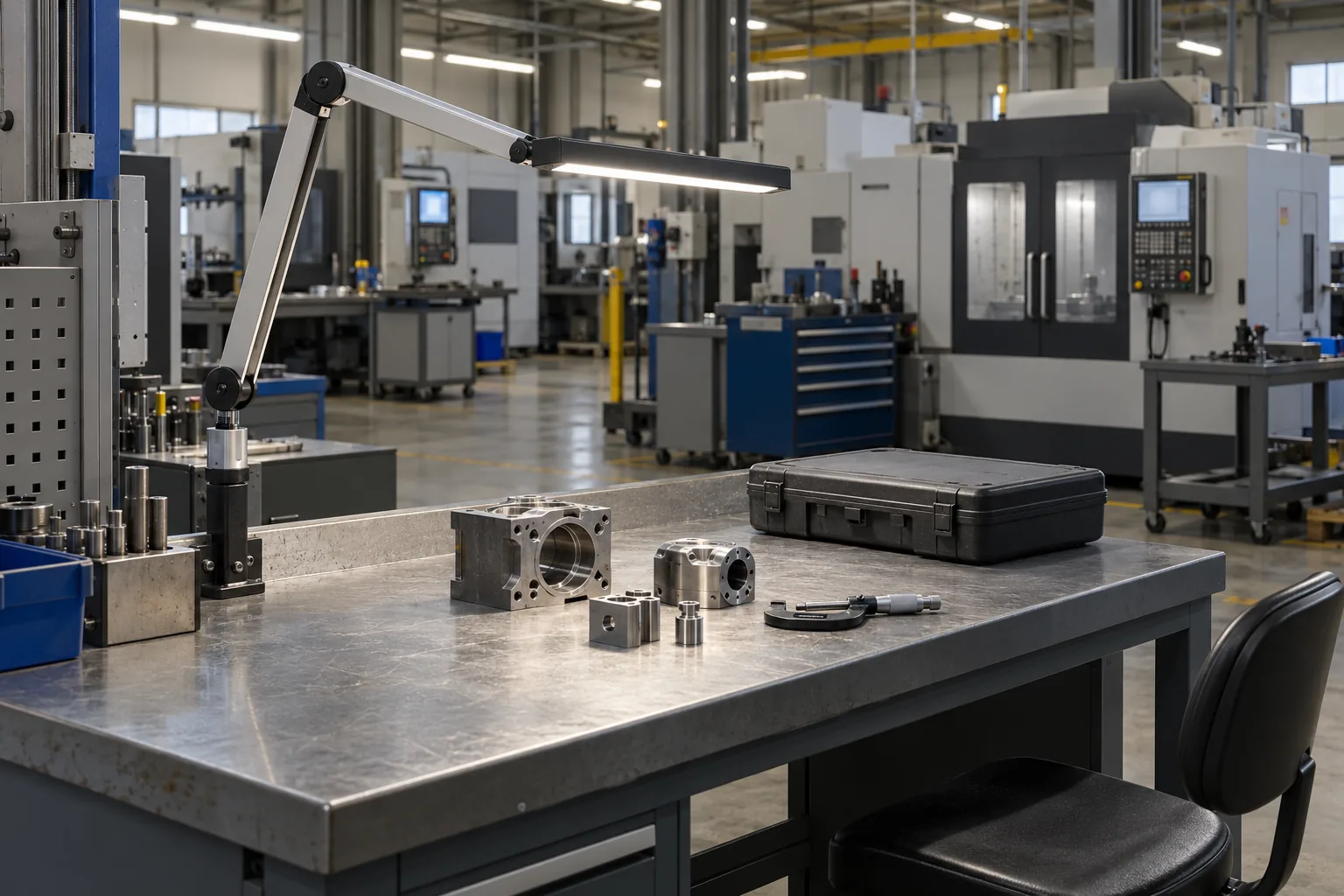
General lighting provides the background environment, while task lighting supports specific work such as assembly, inspection or reading fine markings. Treating all task requirements as a reason to increase overhead output can create excessive contrast or glare in neighbouring areas. Conversely, adding a small local light without considering its position can cast shadows exactly where an operator needs clear visibility.
Review sight lines, reflective workpieces and the movement of hands, tools and equipment. Ask whether the task changes with different products. Industrial task lighting may need adjustable placement or a different distribution from overhead fixtures. Selection should consider the surroundings and any equipment-specific restrictions. A useful scope defines the visual problem and the intended working area rather than promising one universal fixture for every station.
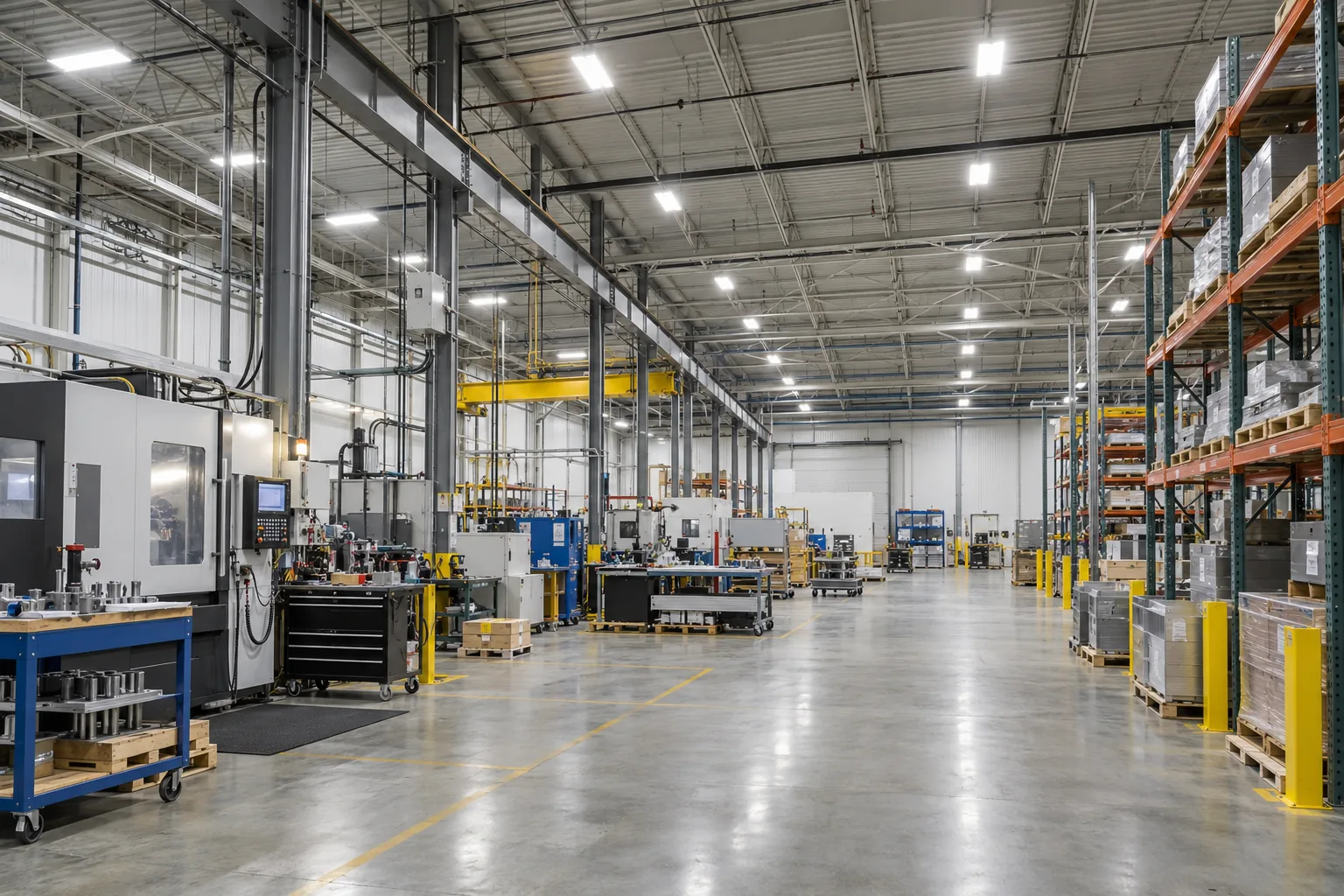
Account for the operating environment
Heat, airborne dust, moisture, vibration and cleaning procedures can affect suitable equipment choices. These conditions may vary significantly within one facility. A fixture near a process exhaust, wash area or vibrating machine may need different consideration from a fixture over dry storage. Photographing the overall room is helpful, but it does not replace a description of the exposure at the actual mounting point.
If the facility has areas subject to special electrical or process classifications, identify them clearly at the outset. Do not assume that a general industrial fixture is appropriate because it appears robust. Suitable products and installation requirements must be established for the specific area by the appropriate qualified people. Include existing equipment information and facility safety procedures in the lighting assessment discussion.
Consider glare, contrast and moving machinery
Lighting complaints are sometimes expressed as a need for more brightness when the underlying issue is reflection or contrast. Polished components, screens and metal work surfaces can reflect a fixture into an operator’s line of sight. A dark background behind a bright inspection area can also make movement between tasks uncomfortable. Review the working position and the direction of view rather than assessing the room only from the entrance.
Where rotating or moving machinery is present, lighting performance should be considered as part of the facility’s broader safety review. Report visible flicker or unusual visual effects and arrange appropriate investigation. Staff should not be asked to diagnose drivers or modify electrical equipment. Industrial lighting planning works best when production, maintenance and workplace safety contacts can describe the same conditions together.
Plan access without disrupting the production line
A high fixture may be physically reachable but operationally difficult to service. Access equipment can interfere with a conveyor, block emergency routes or require a line to stop. Some equipment cannot be moved easily, and some areas can only be released during a planned shutdown. These constraints should influence both the work sequence and the practicality of future maintenance.
Before scheduling, identify the approved working zones, isolation responsibilities and any facility permits or inductions required. Confirm whether maintenance windows can accommodate installation, setup, testing and return to service. A manufacturing lighting project may be divided by production cell, building area or shutdown period. The best sequence depends on operations; it should not be improvised after access equipment arrives.
Investigate failures with the maintenance history
Repeated lighting failures can arise from different causes, including equipment condition, unsuitable environmental exposure, control problems or issues elsewhere in the system. A useful service request includes the affected location, when the behaviour occurs and whether other equipment is affected. Record previous repairs if available, especially where replacement components have not resolved the problem.
Separate isolated failures from recurring patterns before deciding on a broad upgrade. Lighting maintenance can include planned review of known problem areas, but its scope should be agreed rather than assumed. For a production facility, an inexpensive component can still create substantial disruption if it requires repeated access over active machinery. Compare the full practical implications of repair and replacement, including access, downtime and parts availability.

Build controls around the production schedule
The right control arrangement reflects how the production floor is used. A continuously staffed line, an intermittent assembly area and a parts store can have different occupancy patterns. Automatic dimming or switching that suits storage may be inappropriate at a station where a person remains still or works partly behind equipment. The intended behaviour needs to be described before hardware is selected.
Discuss shift starts, cleaning, changeovers and maintenance periods as well as normal production. Review what supervisors can override and how controls behave after a power interruption. Dimming and zoning may help separate areas with different needs, provided compatibility and operating requirements are addressed. Include staff instruction and configuration responsibility in the project conversation so settings remain understandable after personnel or production patterns change.
Define the decision and the information needed
A manufacturing upgrade should produce a scope that management can assess against operational priorities. Identify the work areas included, the problem each change addresses, the access assumptions and the anticipated installation sequence. If energy calculations are proposed, document the existing equipment, operating hours and assumptions instead of relying on a headline saving percentage.
For an initial enquiry, provide the Mississauga facility address, a process or floor layout if available, working heights, photographs and the relevant maintenance history. Explain any environmental restrictions, planned line changes or shutdown dates. A site assessment request can begin with incomplete fixture information; the important point is to make the unknowns visible so the appropriate next steps can be discussed without presenting an uncertain scope as settled.
Questions facility managers ask
Does every production area need the same fixture?
No. A dry assembly area, a damp cleaning area and a hot process zone can have different equipment considerations. Mounting height and visual tasks also vary. Document the surroundings and any area classifications before comparing products. Fixture suitability should be established for the actual application, including relevant facility requirements, rather than inferred from an industrial appearance.
Can task lighting solve an inspection problem?
It may help when the issue involves a specific work face, shadow or detail, but placement and reflection matter. Review the inspection task, the material being viewed and the operator’s normal position. General background lighting may also need attention. Where specialized visual assessment is required, agree the appropriate evaluation rather than assuming an off-the-shelf task light is sufficient.
Can installation fit into a planned shutdown?
A shutdown can provide useful access, but the duration needs to account for preparation, installation, control setup, checks and return to service. Other trades or maintenance tasks may compete for the same area. Confirm dependencies and responsibilities before committing to a schedule, and identify any work that can be prepared outside the shutdown window.
How should repeated fixture failures be reported?
Use a location reference that maintenance staff recognize, describe the symptoms and note when they occur. Include fixture labels visible from safe access, past service dates and any known environmental changes. Do not ask staff to open fixtures or electrical equipment. The pattern helps establish the investigation scope and whether repair, replacement or wider review is appropriate.