

Describe the visual task precisely
Task lighting should answer a specific need. Reading a scale, inspecting a finish, assembling small components and preparing labels can require different arrangements. Describe the detail being viewed, its size, contrast and location, and the position of the person doing the work.
Ask when the difficulty occurs and whether it changes with the material or process. A worker may need light from a particular direction to identify a surface feature, while another task may be affected by reflections from the same direction. A generic request for brighter bench lighting does not capture those differences.
Include the users in the assessment without relying on one person’s preference as the only criterion. The arrangement should support the actual task and any established process requirements. Where formal visual conditions or specialist review are needed, identify that requirement before choosing equipment or promising a particular result.
In a Mississauga industrial unit, a local task-lighting request may come from one bench even though the tenant shares the building’s general ceiling system. Separate the bench-level concern from any landlord-controlled work overhead. For assembly or inspection areas in Dixie or Northeast Mississauga, describe the material, viewing position and shift pattern rather than asking for a standard industrial brightness. That gives the assessment a specific task and a clear approval boundary.
Coordinate task lighting with the surrounding area
A local fixture is part of the visual environment around the workstation. If the task is very bright while nearby surfaces are much darker, moving between the task and surrounding activities may be uncomfortable. Review the general lighting as well as the proposed local source.
The Canadian Centre for Occupational Health and Safety distinguishes general lighting from localized and task lighting. That distinction is useful because a local improvement should address a defined working position rather than compensate indiscriminately for an unsuitable building-wide arrangement.
Our industrial lighting service considers the wider space. If several workstations have the same complaint, assess whether the general fixture layout is contributing. The appropriate scope may combine a change to surrounding coverage with targeted equipment at specific tasks, instead of adding unrelated lamps throughout the floor.
Find the source of shadows before adding output
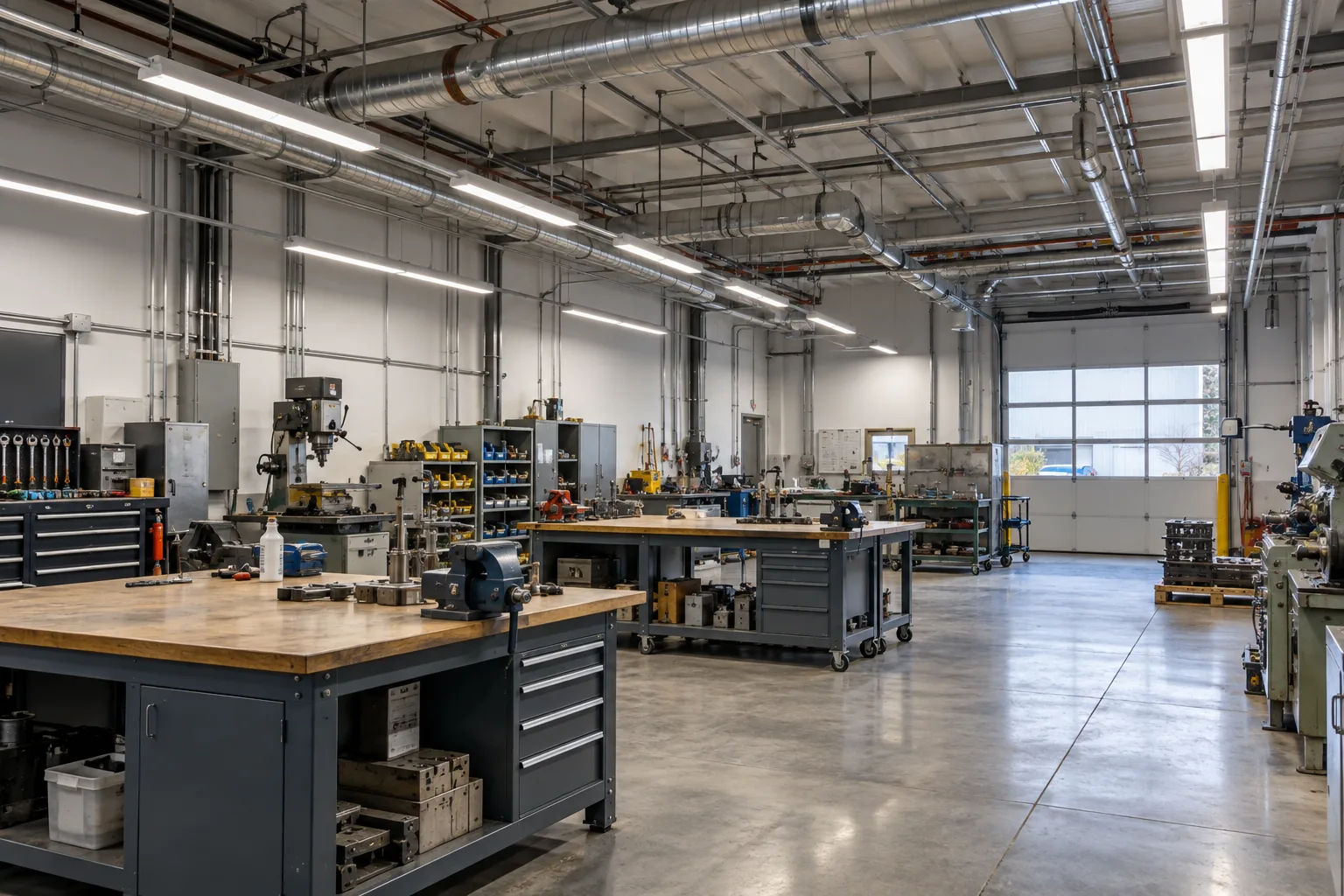
A worker’s body, machine guard, shelving or the workpiece itself can block overhead light. Observe the normal position and the direction from which light reaches the task. Adding output along the same blocked path may have little benefit.
Consider whether a different mounting position or adjustable source can serve the task without creating another problem. The equipment must remain clear of movement, controls and the work area. A fixture that is repeatedly bumped or moved out of the way may not be a practical solution even if its initial light output appears suitable.
For benches used by several people, the arrangement may need to accommodate different working positions. Discuss the range of tasks and adjustments required. Any flexibility should remain manageable, with a stable mounting and a clear way to return to a useful setting. The objective is repeatable task visibility rather than a one-time demonstration.
Manage reflections from materials and displays
Reflective metal, glossy packaging, coated surfaces and screens can make a task harder to see under poorly positioned lighting. The issue may be the direction of a reflected source rather than insufficient illumination. Review the task from the user’s normal viewpoint, with representative materials present.
Where the work involves a display, consider its position relative to the light and the surrounding surfaces. Where the task involves inspection, identify which features must become visible and which reflections interfere. Different tasks at the same bench may call for different positions or controlled adjustment.
Avoid assuming that a particular colour temperature resolves glare or that a higher-output fitting is always an improvement. The selection should consider distribution, shielding, position and the material being viewed. If a task is critical to a defined process, evaluate the proposed arrangement against that process rather than rely solely on an attractive photograph.

Choose mounting and equipment for the work environment
Task fixtures can sit close to machinery, materials and cleaning activity. Their suitability must reflect the actual environment and use. Identify dust, moisture, vibration, temperature or impact concerns that could affect the equipment. Where a process has special requirements, these need to be verified rather than inferred from a general industrial label.
Mounting should be coordinated with the workstation or equipment owner. Added lighting must not obstruct guards, controls, emergency devices, movement or maintenance. Modifying machinery may involve responsibilities beyond a general lighting installation, so those boundaries should be established in advance.
The manufacturing facility lighting page connects local tasks with production conditions. Keep electrical supply, cable management and installation requirements within the responsible professional scope. A permanent task-lighting need should not be resolved through improvised extensions or unsuitable temporary mounting.
Provide useful adjustment without confusing operation
Some tasks benefit from adjustable position or output, while others need a consistent arrangement that should not change casually. Decide which applies before selecting controls. The right degree of adjustment depends on the task, users and any established quality or process requirements.
For shared workstations, explain who can alter the settings and how an accepted arrangement is restored. A fixture may offer several settings that are unnecessary for everyday use. More controls are not automatically more helpful if users cannot tell which setting suits the work.
Review dimming and zoning where local control should be coordinated with the wider area. Compatibility between the fixture, driver and intended control method matters. Include normal operating instructions and any agreed commissioning in the scope so the equipment remains useful after the initial installation visit.
Evaluate a representative workstation before scaling up
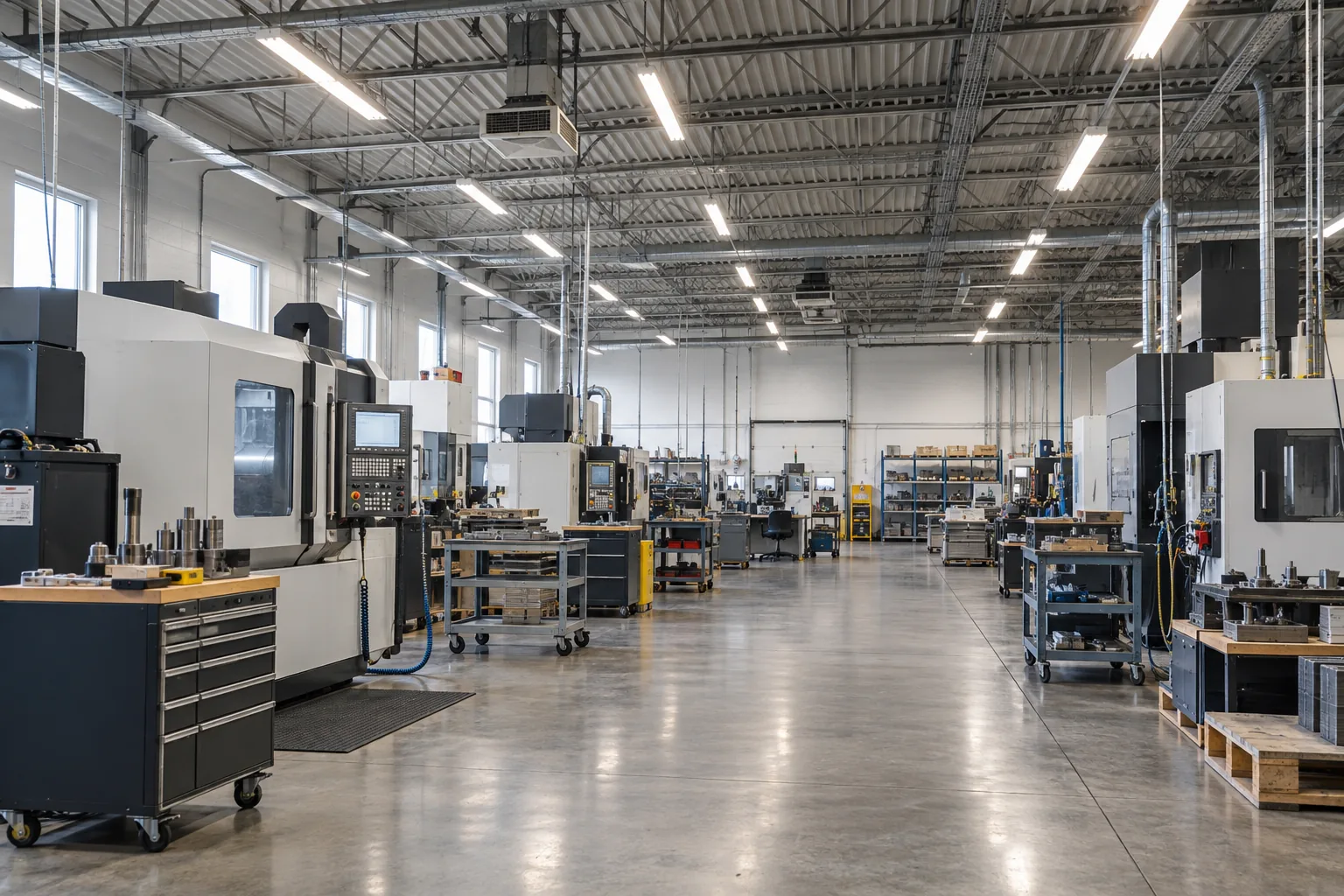
Where many similar stations are involved, a representative evaluation can help identify practical issues before a large purchase. Choose a location that reflects normal work rather than the easiest empty bench. Include the typical material, equipment, user position and surrounding lighting.
Agree what will be reviewed and who will participate. Consider visibility, reflections, shadows, adjustment, reach, interference with work and the practicality of cleaning or maintenance. Keep feedback connected to the task instead of treating the brightest appearance as the only measure of success.
A trial does not replace any formal requirement that applies to the process or installation. Confirm whether specialist assessment or documentation is needed. Record the accepted arrangement and important conditions so later stations can be installed consistently, with exceptions identified where their tasks or layouts differ.
Maintain the task arrangement as work changes
Task lighting can lose its usefulness when a bench moves, a process changes or a replacement fixture is chosen without regard to the original arrangement. Keep the equipment details and the reason for the selection with the workstation record. Note any position or setting that is important to the task.
If the fixture flickers, dims unexpectedly or is damaged, use the commercial lighting repair process rather than improvising a workaround. Describe the symptom, equipment and conditions under which it occurs. Distinguish a component fault from a new task that the existing arrangement no longer serves.
To begin a task-lighting discussion in Mississauga, provide the facility address, description of the work, photographs of the workstation, current concern and relevant environmental conditions. Include the number of stations and planned changes. This supports a focused assessment of the task instead of a generic recommendation to add more light.
Questions facility managers ask
Can task lighting replace the general lighting system?
It serves a specific working position and should be coordinated with surrounding light. A local fixture may not address circulation, adjacent tasks or a wider distribution problem. The overall arrangement needs review.
Should every workstation use the same task fixture?
A shared specification may be useful where tasks and conditions match. Different materials, working positions or environmental requirements can justify exceptions. Evaluate representative stations before applying one product throughout.
Is adjustable lighting always preferable?
No. Adjustment can help varied tasks, but some processes require a consistent arrangement. Define what users need to change, who may change it and how useful settings will be maintained before selecting equipment.