
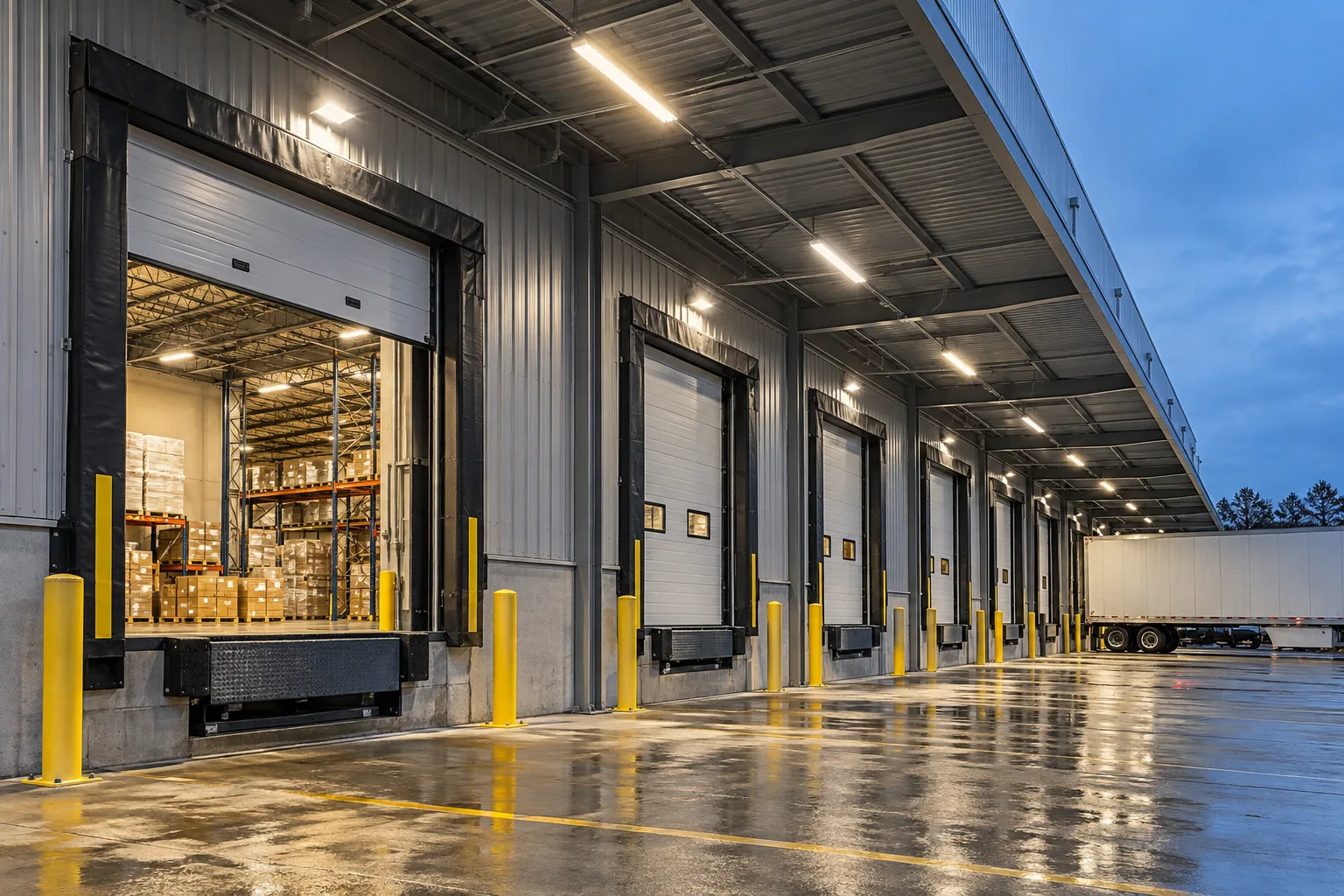
Understand the dock’s operating sequence
A dock may be used for receiving, dispatch, returns or several of these activities at different times. Identify where workers check paperwork, inspect goods, move pallets and travel between the dock and interior staging. Lighting should follow these tasks rather than focus only on the door opening.
Record the normal movement of trucks, handling equipment and pedestrians. Include the areas where vehicles wait and the positions occupied during loading. A fixed fixture should be evaluated against those movements and any equipment that could obstruct its light or damage its mounting.
For Mississauga warehouses near Gateway or Dixie, operating schedules can vary considerably. Describe the actual delivery pattern, including early or late movements, instead of assuming standard business hours. This information affects both the lighting arrangement and the windows available for repair or installation.
Review doors open, closed and in transition
Dock conditions change when doors open. Daylight can reach some areas while deep interior positions remain shaded; after dark, the balance changes again. A review should consider representative operating conditions rather than judge the dock solely during a convenient daytime visit.
Door tracks, overhead equipment, seals and stored materials can affect possible fixture locations. Confirm clearances through the door’s movement and the space used by handling equipment. A position that looks available when the door is closed may be unsuitable during normal operation.
Discuss where users experience difficulty moving between the exterior, dock platform and interior. The objective is an understandable lighting arrangement across the working area. More output at one point does not necessarily improve the transition or solve shadows created by a trailer, door assembly or staging load.
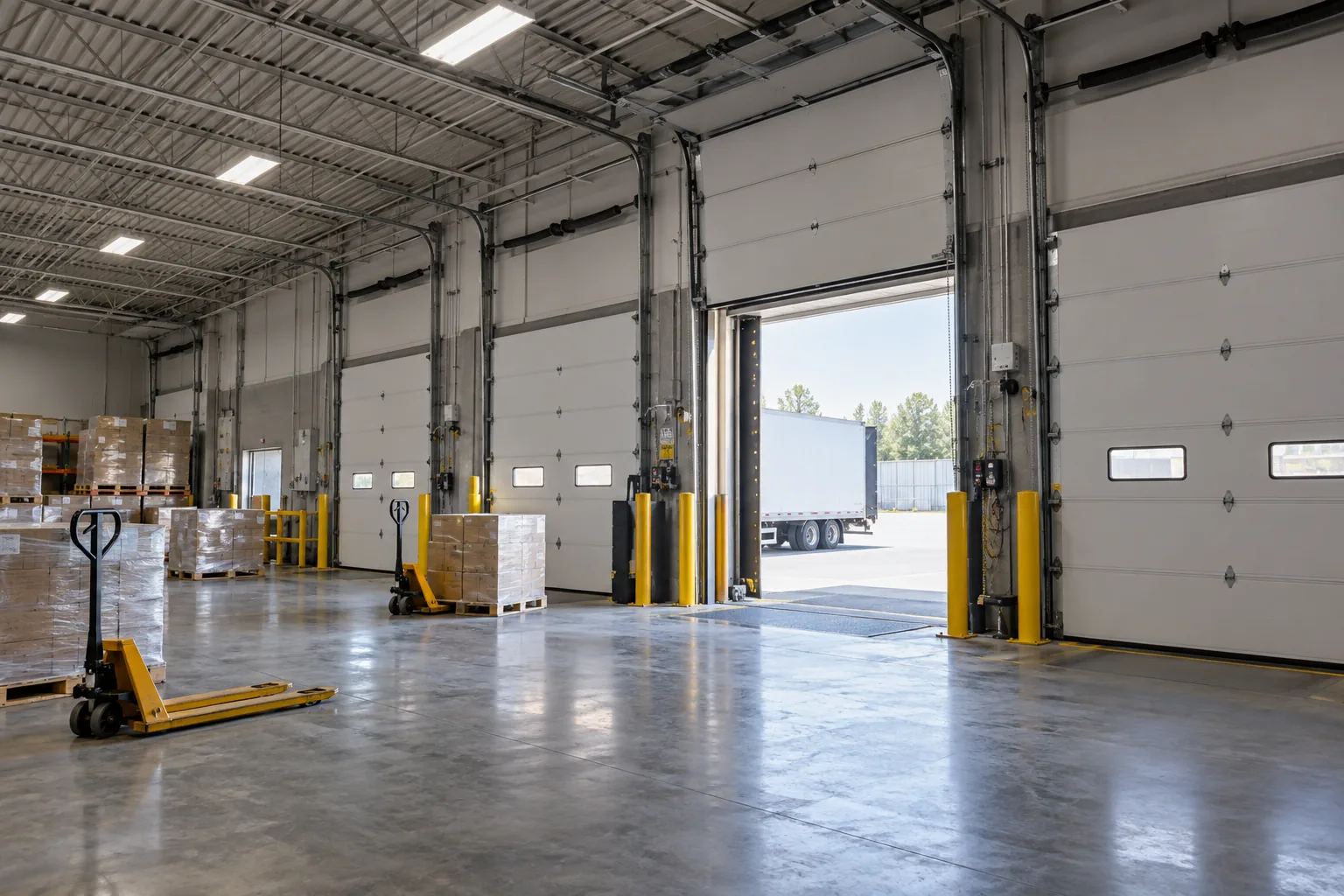
Separate general dock lighting from trailer task lighting
General lighting around the dock does not automatically illuminate the work inside a trailer. Where equipment is needed for that task, the review should identify the area to be lit, the direction of use and the physical movement around the fitting. Mounting and adjustment must suit the activity without obstructing workers or goods.
Consider how the equipment will be used between loads, where it remains when not needed and who is responsible for reporting damage. Impact exposure and repeated movement can make the practical mounting arrangement important. A replacement should be selected for the intended application rather than improvised from a general interior fixture.
The industrial task lighting service considers localized work in more detail. Any dock-specific installation should be coordinated with the responsible facility contacts and applicable equipment requirements. The scope should state whether it covers general area fixtures, task equipment or both.
Connect the dock to staging and warehouse aisles
Loading does not stop at the edge of the platform. Goods may be identified, sorted and held in staging lanes before they enter storage or leave the building. Tall pallets and temporary stock can change the way light reaches those tasks. Include normal busy conditions in the assessment.
The transition to warehouse aisles should remain part of the plan. A well-lit dock can still feed into a poorly served route if the nearby high-bay arrangement no longer suits racking or staging. Review where people turn, read location information and encounter cross traffic.
Our distribution centre lighting information connects receiving and dispatch to the wider operation. When the scope is limited to dock fixtures, identify any adjacent concern that remains outside it. This helps management understand whether the proposed work resolves the complete complaint or only one part of the route.

Consider exterior approach and neighbouring areas
Exterior dock lighting should be considered in relation to truck approaches, pedestrian access, building entrances and surrounding properties. Fixture direction and shielding can influence where the light falls. A stronger fixture is not automatically a better solution if it sends unwanted light beyond the working area.
Record the locations of existing wall fixtures and poles, along with obvious obstructions and the positions of trailers during normal use. A parked trailer can change coverage compared with an empty yard. The assessment should distinguish a fixture failure from an arrangement that is operating but does not reach the required area.
Review commercial exterior lighting for broader site considerations and current Mississauga guidance. The appropriate scope depends on the property and applicable requirements. General planning information should not be treated as a legal determination or a substitute for any project-specific review that is needed.
Set controls for deliveries and changing daylight
Dock schedules can differ from the rest of the building. A warehouse may receive deliveries before office opening or continue dispatch after other areas close. Controls should reflect those periods and the people responsible for access. The intended operation must be clear before choosing a timer, sensor or daylight response.
Discuss what happens when an unusual delivery arrives, when cleaning takes place or when a dock is temporarily inactive. Authorized overrides should be practical without becoming a permanent workaround. Keep the relationship between exterior and interior lighting understandable to staff.
Existing problems such as lights remaining on all day or failing to operate after dusk may involve controls rather than the fixtures themselves. Record the timing and affected area. Do not assume that replacing lamps or fixtures will correct a schedule or photocell issue without reviewing how the zone is controlled.
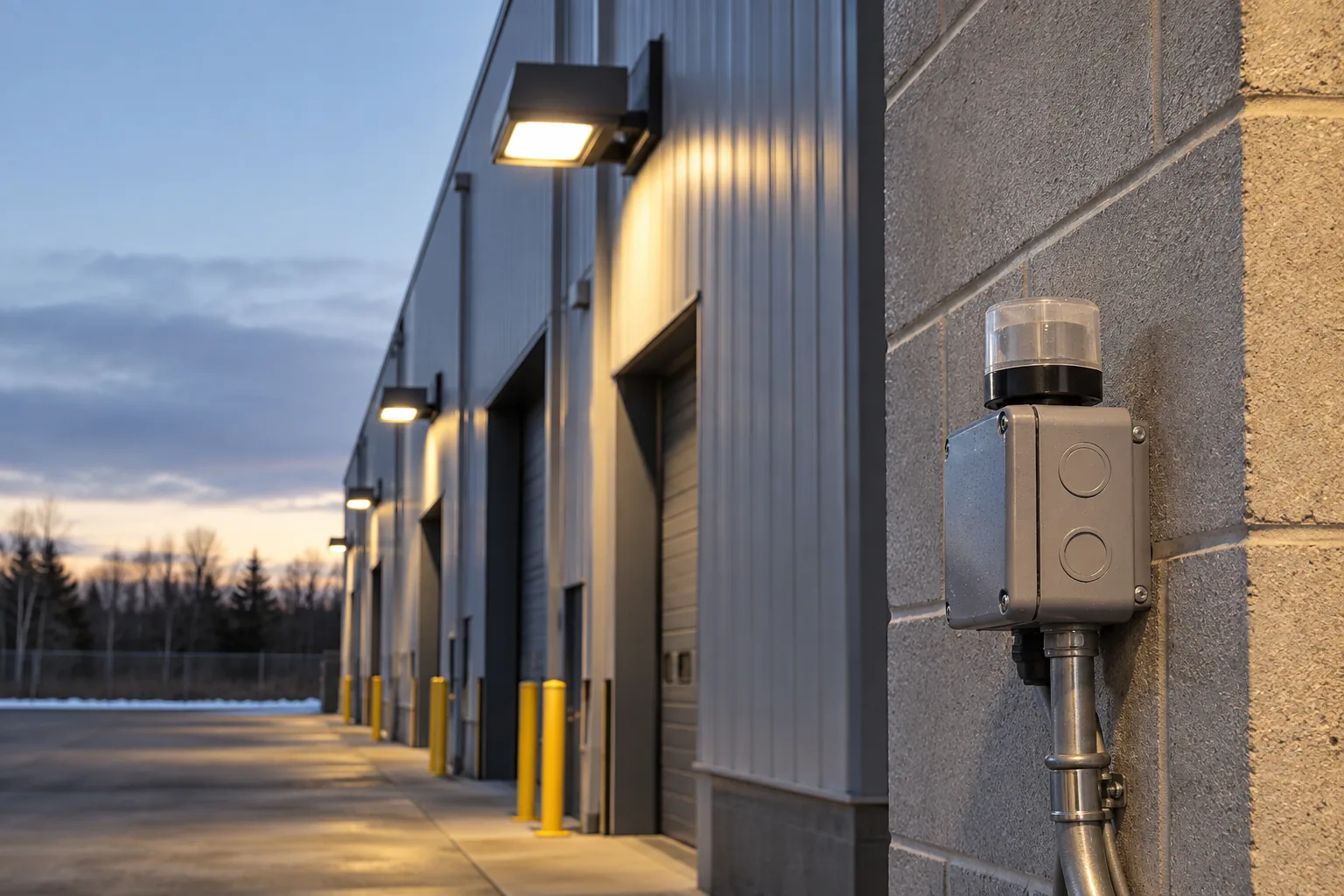
Prepare repairs around access and operational impact
A failed dock fixture can be difficult to reach if the area remains in constant use. Provide the exact location, symptom, approximate height and any visible damage, along with the periods when the dock can be released. Photographs should show the surrounding equipment and access route from a safe position.
The commercial lighting repair process helps distinguish the immediate fault from a broader improvement request. Report whether one fixture or a whole controlled group is affected and whether the issue changes with weather or door operation. These observations support the investigation without naming an unconfirmed cause.
Where equipment has been struck or exposed to water, follow the facility’s safety procedures and keep people away from any hazardous condition. A routine service enquiry does not establish that equipment is safe or promise emergency attendance. Immediate hazards require the appropriate response through established emergency arrangements.
Plan installation and retain clear operating information
Dock installation needs coordination with the people controlling transport movements and interior operations. Confirm how the area will be isolated for work, where access equipment can be positioned and whether another route is available. Include electrical interruptions, setup and restoration in the available window.
If several docks are upgraded in stages, define the sequence and how retained and new equipment will operate between phases. Consistent specifications can help maintenance, but each door’s physical conditions still need consideration. Record exceptions rather than assume identical-looking docks have identical requirements.
Keep the final fixture information, controls instructions and asset locations with the facility records. To request an assessment, provide the address, dock use, operating periods, current concerns, photographs and any access restriction. Mention planned door, staging or yard changes before equipment positions are finalized so the lighting can be coordinated with the intended operation.
Questions facility managers ask
Does a bright warehouse fixture provide enough light inside a trailer?
Not necessarily. The door, trailer and load can obstruct general lighting. The task and working position need review, and suitable localized equipment may be considered separately from the general dock-area fixtures.
Can dock lighting be controlled separately from the warehouse?
That can be considered where operating needs and the electrical arrangement support it. The scope should define the intended schedules, authorized overrides and relationship between the dock, staging and exterior areas.
What should be included in a damaged dock light request?
Identify the exact door or asset reference, the visible condition, operational effect and access window. Provide photographs from a safe location. Do not handle damaged electrical equipment, and follow the facility’s procedures for any immediate hazard.