
Start with a manageable equipment record
A useful maintenance record does not have to begin as an elaborate database. Start with the areas that cause the most disruption: high-bays, parking poles, garage fixtures, common corridors or a particular family of unreliable equipment. Give each area or asset a reference that site staff can recognize.
Record fixture type, location, known model, mounting height, control arrangement and the date of significant work. Add photographs and available product information where they help identify the equipment. Keep unknown details marked as unknown until they can be confirmed; a guessed driver or lamp specification can create unnecessary confusion later.
The record should be easy to update after service. If only one person understands its format, it may stop being useful when responsibilities change. A labelled plan, consistent filenames and a short list of required fields can provide a reliable starting point for a single building or several properties.
Separate routine observations from electrical service
Building staff can report visible symptoms and operational changes without taking on electrical investigation. A routine walk-through might identify a dark fixture, a damaged lens visible from ground level or lights operating at unexpected times. Record the observation and location so an appropriate service request can be prepared.
Inspection, testing, electrical repair and high-access work require the right personnel and arrangements. Do not turn a maintenance checklist into instructions for opening fixtures, bypassing controls or reaching equipment from unsuitable access equipment. The scope should distinguish reporting from the work needed to diagnose and correct a condition.
Decide who receives observations and how they are prioritized. A shared list is only useful if someone reviews it, confirms access and authorizes action. For an active fault, the commercial lighting repair process provides the details that make a service request more actionable.
Choose a maintenance rhythm that suits the property
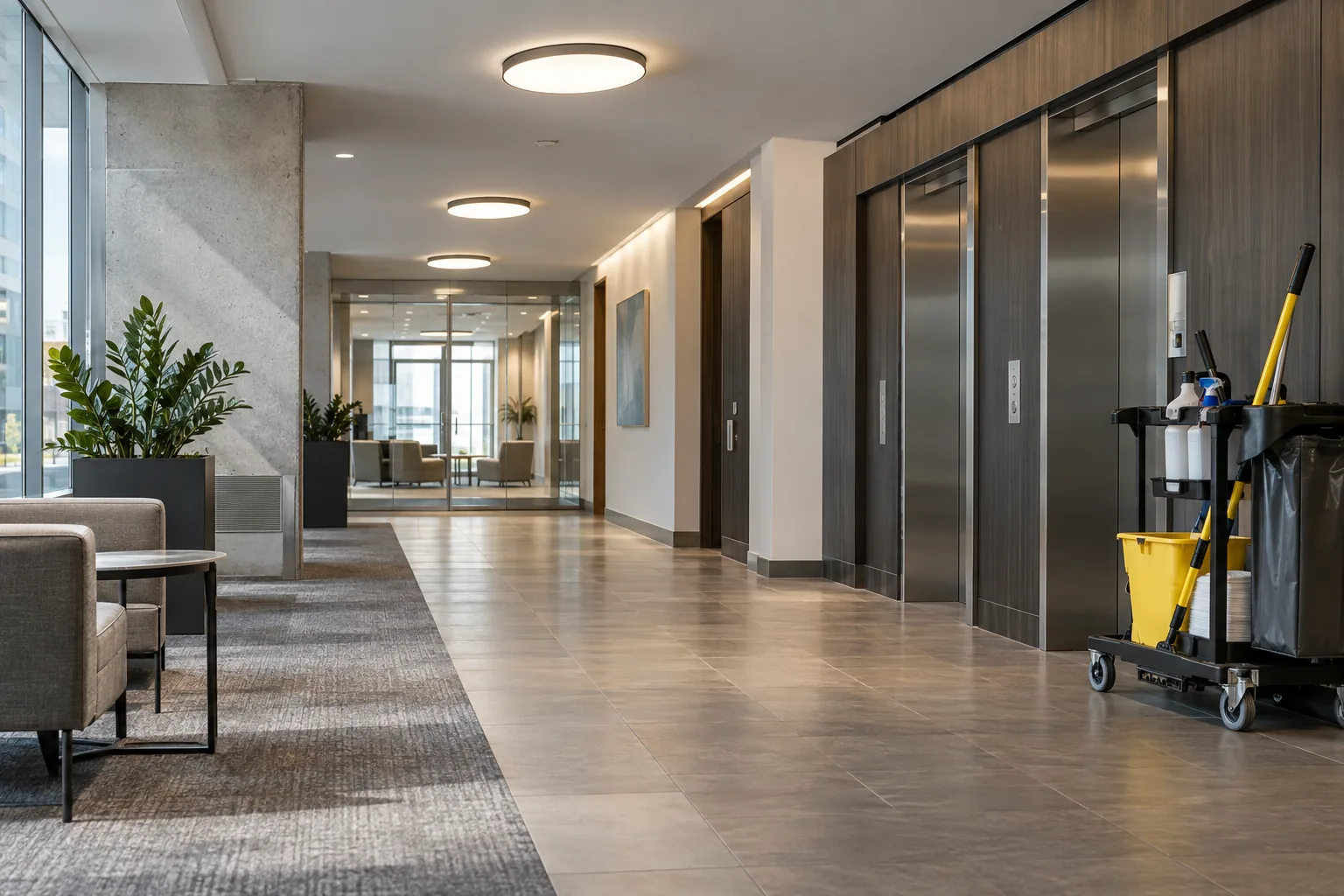
No single visit interval suits every commercial lighting installation. Hours of use, environment, access, equipment condition and the importance of an affected area all influence planning. A quiet storage area and a busy parking garage should not automatically follow the same review routine simply because they belong to one owner.
Use the property’s experience to identify patterns. Exterior observations may need to occur after dark. A warehouse may need checks coordinated with stock movement. An office can benefit from feedback during normal occupation, when glare, dimming or sensor complaints are apparent. Seasonal schedule changes can also expose control issues that are not visible during a brief daytime visit.
A planned service arrangement should state the areas covered, the agreed activities and how additional work is approved. It should not imply that every future failure is prevented or that any emergency response is included unless those terms have been specifically agreed.
Group difficult access without delaying necessary work
Repeated mobilization can be disruptive where lighting sits above racking, machinery or occupied parking spaces. Keep a current deficiency list so suitable work can be considered together. The benefit depends on compatible access requirements and the urgency of each issue; grouping should not become a reason to leave a significant operational problem unaddressed.
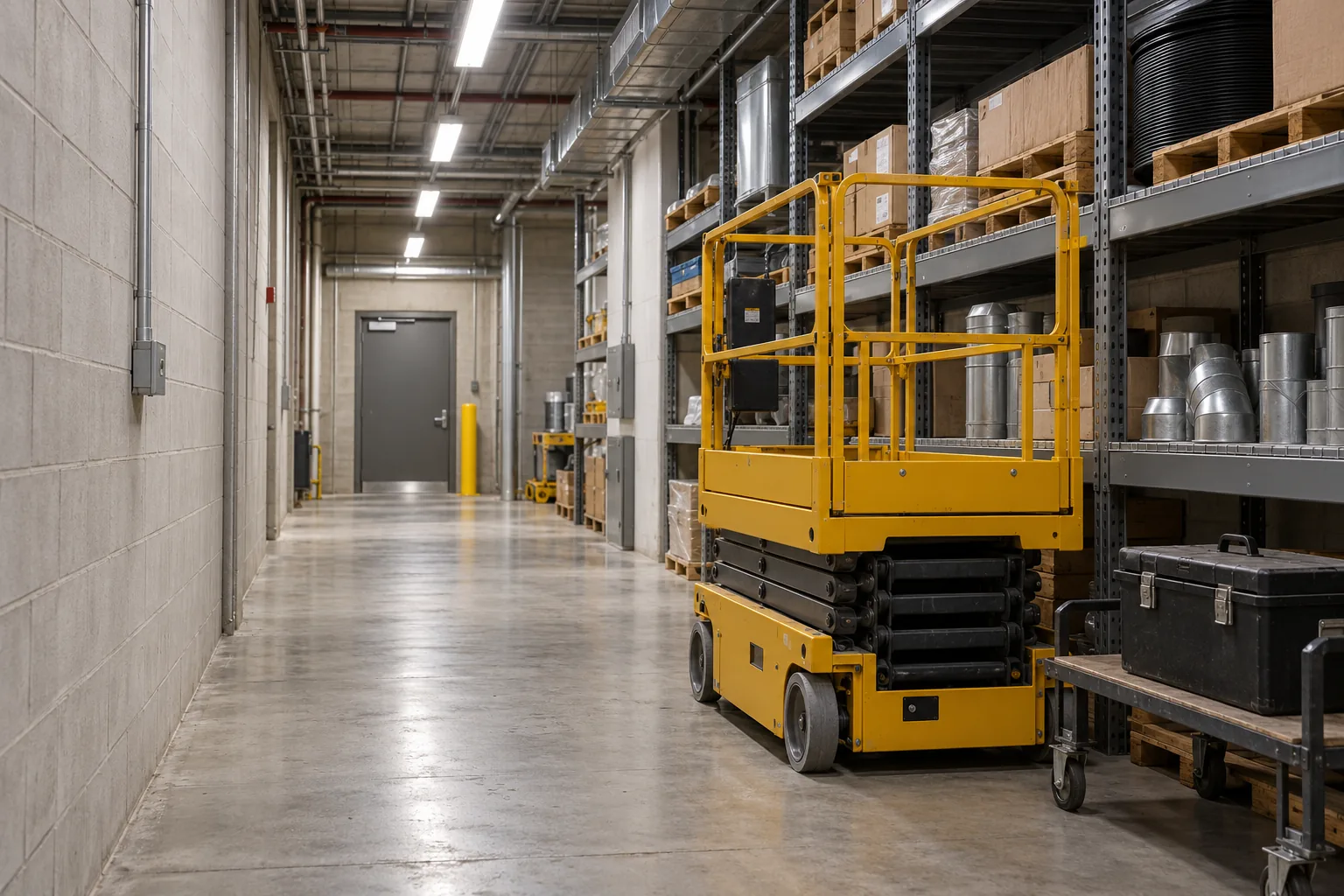
Confirm the equipment position and the route beneath it before booking access. A lift may need a delivery window, an approved travel path and clearance from stock or vehicles. Fixed installations, floor restrictions and overhead services may limit the available approach. These are property-specific conditions that need review.
For warehouses and industrial premises in Mississauga, discuss who can prepare each area and how it will return to use. A maintenance visit is easier to coordinate when the site contact has an agreed list, known priorities and authority to resolve access questions. Include setup and restoration in the work window.

Maintain consistency in replacement decisions
One-off replacements can gradually create a patchwork of output, colour and control behaviour. A preferred replacement standard helps the building team preserve consistency, but it should be based on the application rather than a single product chosen for every space. The standard should identify the characteristics that matter and who approves an alternative.
Keep replacement records linked to the original asset reference. A new fixture may look similar while using different components or settings. Recording that change avoids reliance on an old equipment list during the next service call. Where a product is discontinued, document the accepted replacement and any limits to its use.
Properties managed together may benefit from property management lighting services that consider shared standards and building-specific exceptions. A corridor, exterior wall and loading area have different demands, even when administrative purchasing is centralized.
Include controls and operating schedules
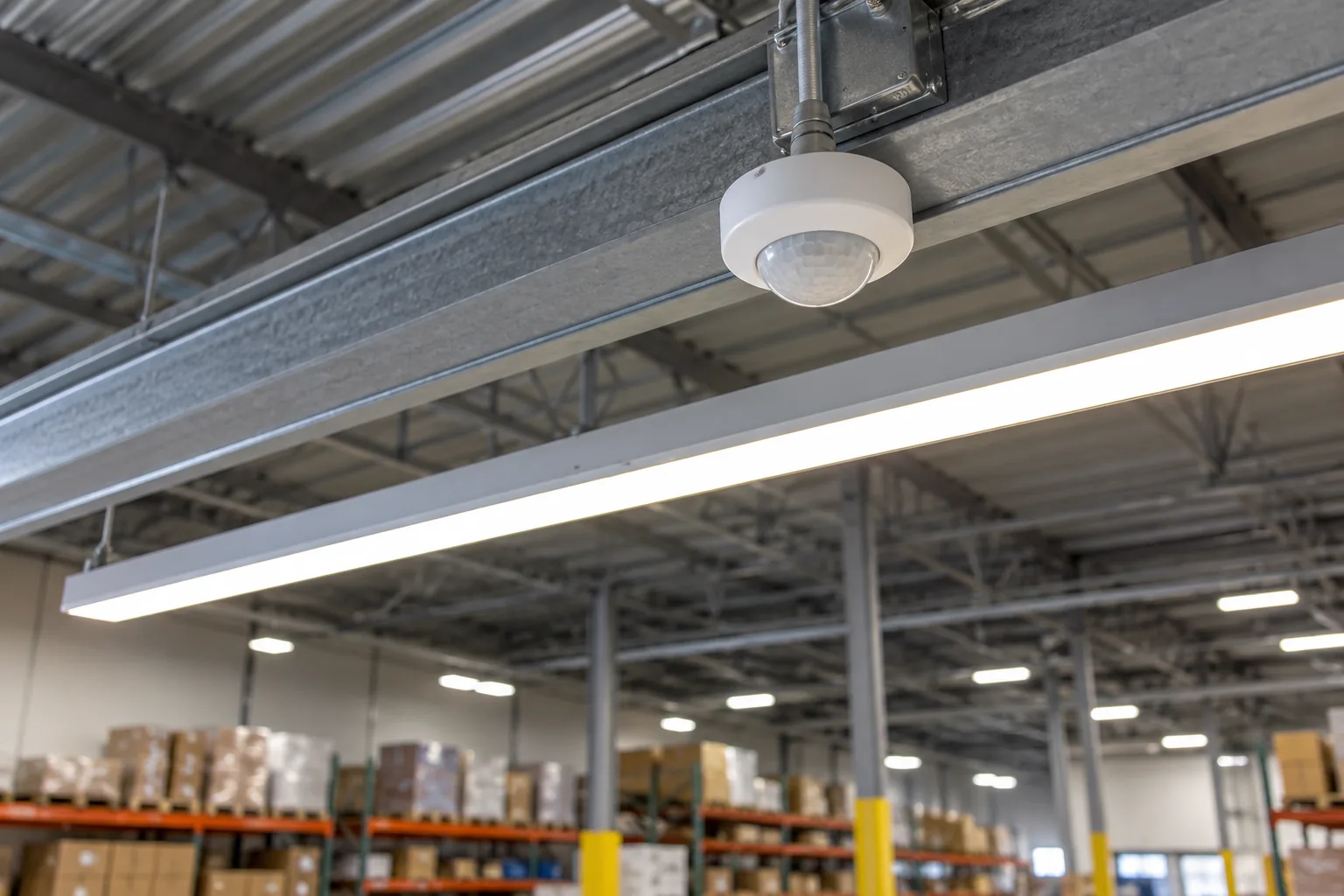
Lighting maintenance should include how the system operates, not only which fixtures are out. A sensor can cause complaints through an unsuitable detection pattern or timeout. A timer can continue following an old tenant’s schedule. An override can be left in place long after the reason for using it has ended.
Keep a record of intended schedules, zones and responsible users. Review settings after changes to occupancy, operating hours, racking or partitions. Where a connected system is used, identify who manages authorized access and where current instructions are stored. Routine users should know the normal controls without needing unrestricted administrative access.
Our lighting timers and scheduling information explains why commissioning and later review both matter. Maintenance should restore an agreed operating pattern rather than repeatedly change settings without recording the reason. If a control is unsuitable for the current activity, replacement or rezoning may deserve consideration.
For a Mississauga plaza or office property, record seasonal tenant-hour changes alongside the exterior lighting schedule. A late-trading unit may still need its entrance and route to parking after neighbouring businesses close. The maintenance review should confirm which control serves that route and who can authorize adjustments. This gives a manager a concrete task to include in property checks instead of treating every lighting complaint as a failed fixture.
Recognize when maintenance becomes upgrade planning
Maintenance history can reveal a point where continuing isolated repairs is no longer the most useful approach. Consider recurring component failures, unavailable parts, inconsistent replacements and difficult access. Also ask whether the fixtures still serve the current layout. Restoring an old arrangement may not solve the problem if the work beneath it has changed.
Compare a defined repair approach with a staged replacement option using the same boundaries. Include equipment, labour, access, operational disruption and any expected changes in energy use. Avoid assuming that a new installation removes all future maintenance or that every older fixture should be replaced immediately.
A commercial lighting upgrade can target the troublesome equipment family or area while leaving suitable fixtures in service. Keep capital planning separate from authorization for immediate repairs so a property manager can respond to today’s needs while evaluating a broader decision.
Keep a clear maintenance handover
After work, the record should identify the location, reported symptom, work completed and any unresolved condition. Include replacement equipment information when it changes the asset record. If further observations or another visit are required, make the next action clear to the responsible property contact.
A multi-tenant building also needs a communication handover. Confirm which units or common areas were accessed, whether any temporary arrangements remain and whether occupants need to know about changed controls. Information should be accurate and proportionate to the work, without promising documentation that was not included in the agreed scope.
To discuss maintenance for a Mississauga facility, provide the property type, recurring issues, known equipment, access restrictions and any existing service records. Explain whether the priority is a current deficiency list, a difficult fixture family, exterior operation or a longer-term plan. That gives the review a concrete starting point and helps establish a manageable scope.
Questions facility managers ask
How often should commercial lighting be maintained?
The interval should reflect use, environment, equipment condition, access and the importance of each area. Existing failure records and operational observations are more useful than applying one generic schedule to every building.
Can a maintenance plan cover interior and exterior lighting?
Yes, the scope can consider both, but each area needs clear boundaries and access arrangements. Exterior observations may require different timing, while high interior fixtures can involve controlled work areas and equipment access.
Does scheduled maintenance prevent every failure?
No. Maintenance can improve records, identify visible issues and support planned service, but components can still fail. Any response arrangements or service commitments should be defined separately in the agreed terms.