
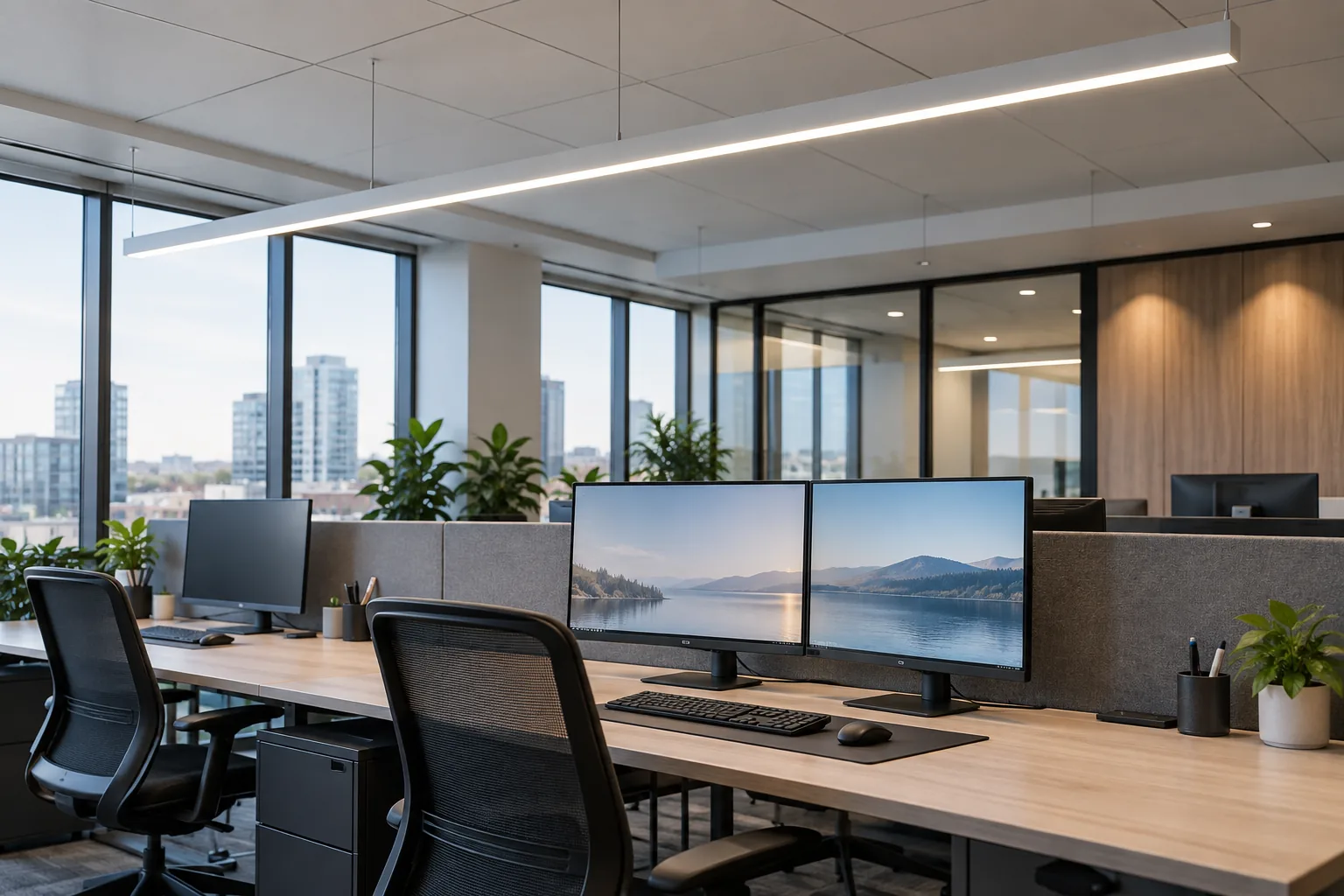
Translate discomfort into a location and a task
A useful lighting complaint describes what is difficult and where it happens. Screen reflections, a bright fitting in direct view, a dim desk corner and a strong contrast between adjacent rooms are different problems. Asking only whether people prefer brighter or softer light can obscure those differences. Start with the work: reading, screen use, product inspection, customer service or movement through the space.
Record the person’s normal position, the direction they face and the time the concern occurs. Include whether the complaint changes with daylight or control settings. In a Mississauga office, one row of desks may experience window reflections while interior desks need more useful illumination. In a showroom, appearance and staff tasks may pull attention toward different surfaces. A clear account of the experience helps the assessment distinguish lighting quantity, distribution and glare rather than treating every complaint as a request for higher or lower output.
Distinguish brightness from useful illumination
A visibly bright fixture does not necessarily provide suitable light where work occurs. Light may be concentrated in the wrong direction, blocked by furniture or unevenly distributed between fittings. A space can therefore appear bright on entry while a particular task remains difficult. Conversely, adding output everywhere can make visible fixtures more distracting without improving the relevant surface enough.
The assessment should consider both the light reaching the task and the person’s field of view. Fixture location, optics, mounting height and surrounding surfaces influence that relationship. Where measurements or a more detailed lighting design are needed, establish them in the scope instead of relying solely on photographs. The useful objective is a defined working condition, not the largest lumen figure in a catalogue. Equipment selection should explain how light is distributed in the actual room and how the result relates to the task being performed.
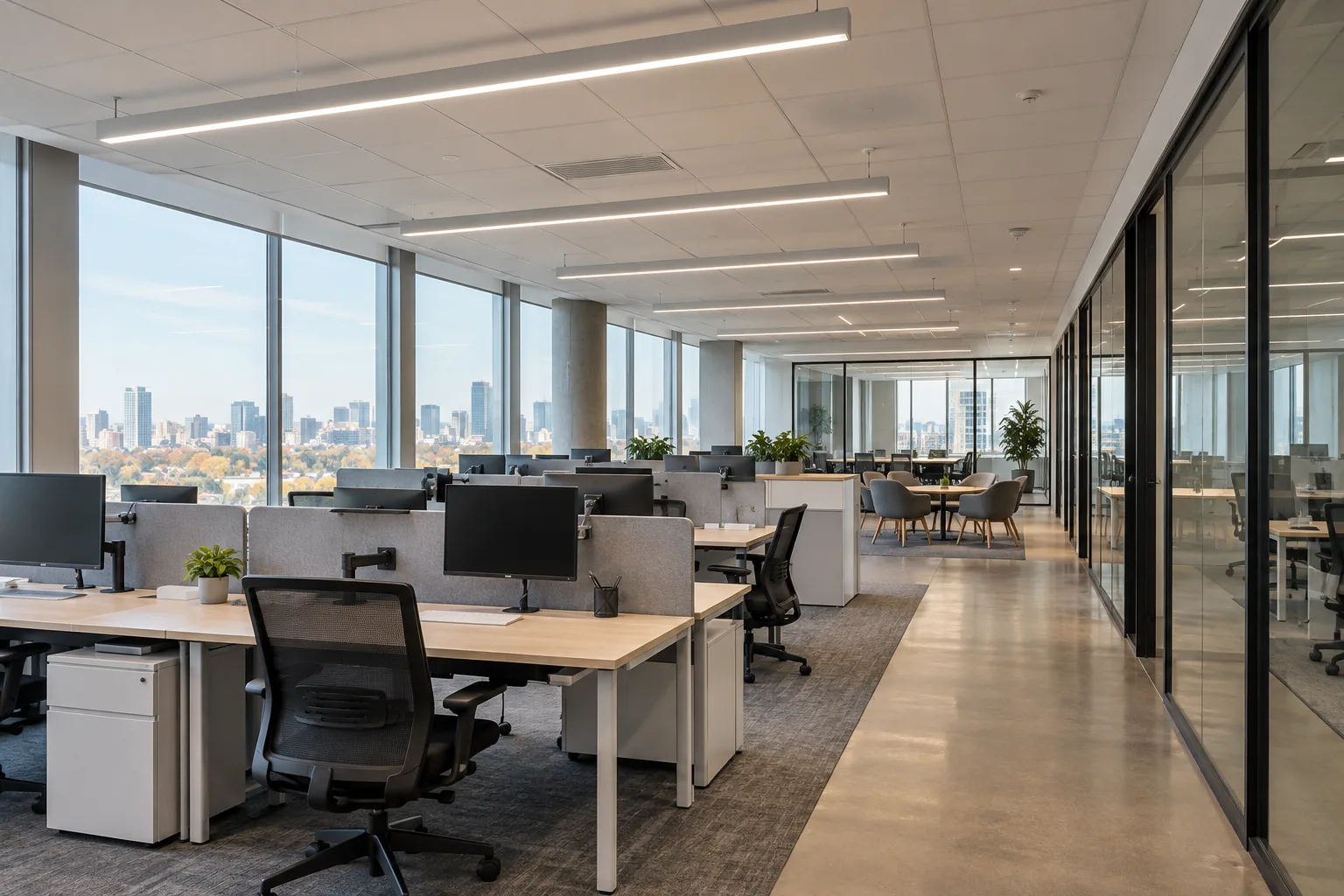
Identify direct glare and reflected light
Direct glare can occur when a bright source is uncomfortable in the normal line of sight. Reflections can create a different problem when light is visible on screens, glossy surfaces or other materials involved in work. The two may coexist, but the appropriate changes can differ. Dimming may help some conditions, while fixture position, distribution or workstation arrangement may need attention in others.
Observe the area from normal seated and standing positions rather than only from the doorway. Describe which fixture or window appears in a screen reflection and whether a change in viewing position affects it. Customers should not move electrical equipment as part of this observation. For an office lighting assessment, screen orientation, partition height and desk layout are useful context. The aim is to identify the relationship causing the complaint so the proposed work does not simply exchange one uncomfortable condition for another.
Review daylight and electric lighting together
Daylight can be valuable while also creating strong differences across a room. Perimeter areas may receive changing natural light, while interior workstations depend more consistently on electric lighting. A single control zone may therefore suit neither condition particularly well. Blinds, glazing, room depth and workstation orientation can all influence the experience, and those factors should be described alongside fixture information.
Observe the problem at the time it normally occurs. A morning issue near east-facing glazing may not be visible during an afternoon visit, and an occupied evening condition may differ again. The assessment can consider dimming and zoning where useful, together with fixture distribution and the existing interior arrangement. A control solution should be coordinated with the space rather than added as a stand-alone device expected to correct every daylight and glare issue automatically.
For offices around Airport Corporate Centre, Meadowvale or the Hurontario corridor, identify the specific floor, suite and window-facing workstations in the complaint. The effect can differ between two sides of the same building. Note the time of day, normal blind position and whether the problem is reflected on screens or directly in the viewing direction. That information makes an occupied-site review more useful than a single photograph of an empty Mississauga office after sunset.
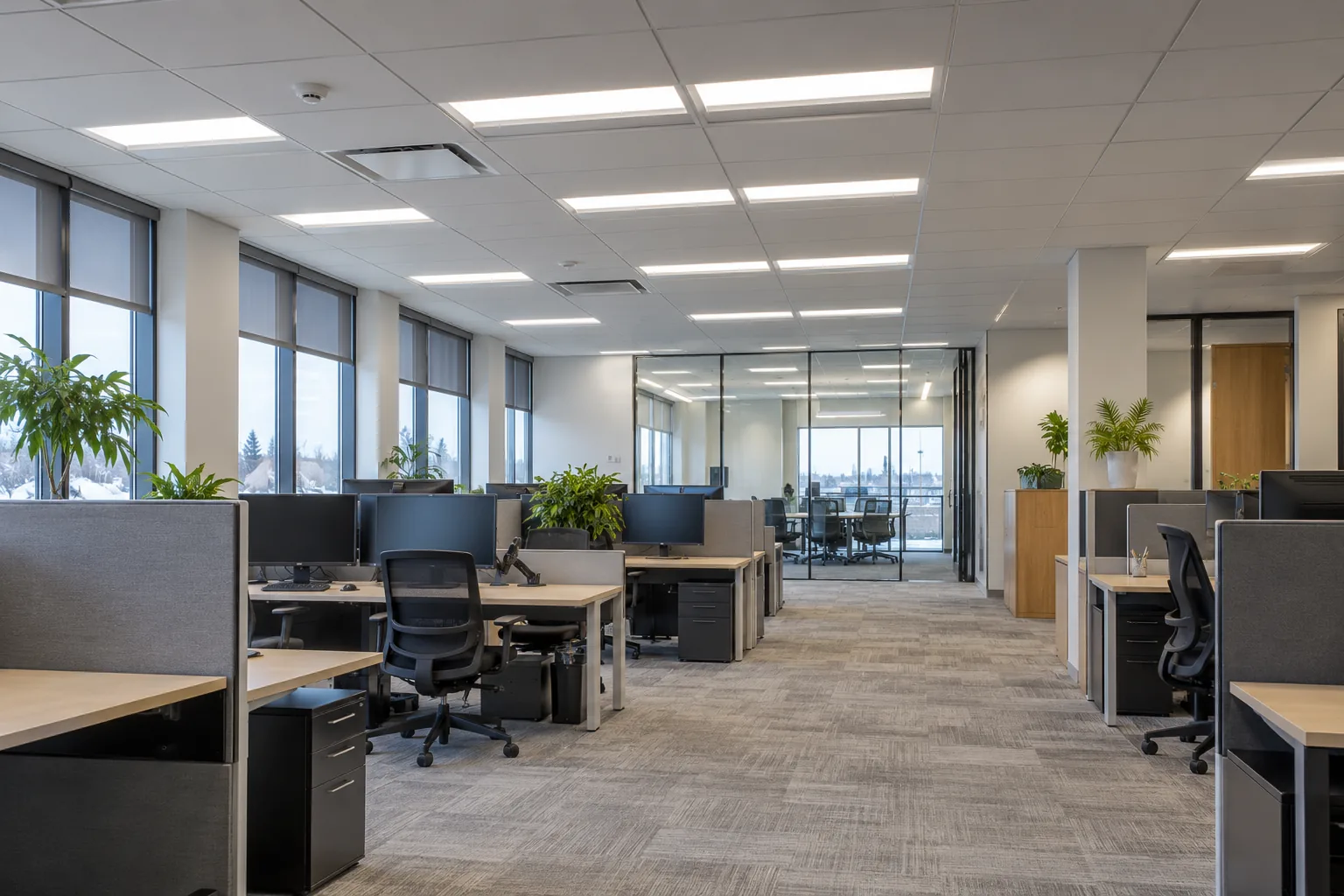
Look for inconsistent replacements and partial failures
A room can become visually uneven through a series of unrelated repairs. Different fixture or lamp choices may introduce changes in colour appearance, output or distribution. Some fittings may be dimmer because of their condition, while others may be completely out. Record these visible differences separately from areas where apparently matching working fixtures still provide unsatisfactory conditions.
Existing service records can identify what was replaced and when. Model information is more useful than a general statement that the room uses LED panels, because similar-looking products can behave differently. A repair assessment may resolve a local defect, while a coordinated office LED upgrade may be appropriate where the installation has become inconsistent. The decision should consider retained equipment and the desired result, not assume that every visible difference requires complete replacement or that all replacement fixtures will automatically match.
Assess controls at normal working settings
Dimming and occupancy controls can improve flexibility, but poor settings or incompatible equipment can create new complaints. A room may feel satisfactory at one level and uneven at another if fixtures respond differently. Lights switching off during quiet desk work can be described as a dim-light problem even when their full-output condition is adequate. Establish the control state associated with the complaint.
Record whether changes affect every fitting together, only a particular row or a single room. Note recent control or driver replacements and any settings staff routinely override. Do not experiment with unknown electrical devices to diagnose the cause. A controls review can consider useful minimum levels, coverage, zone boundaries and the intended operating sequence. The goal is predictable operation that supports occupied conditions, with enough flexibility for the task and a simple way for authorized users to return to the agreed normal setting.
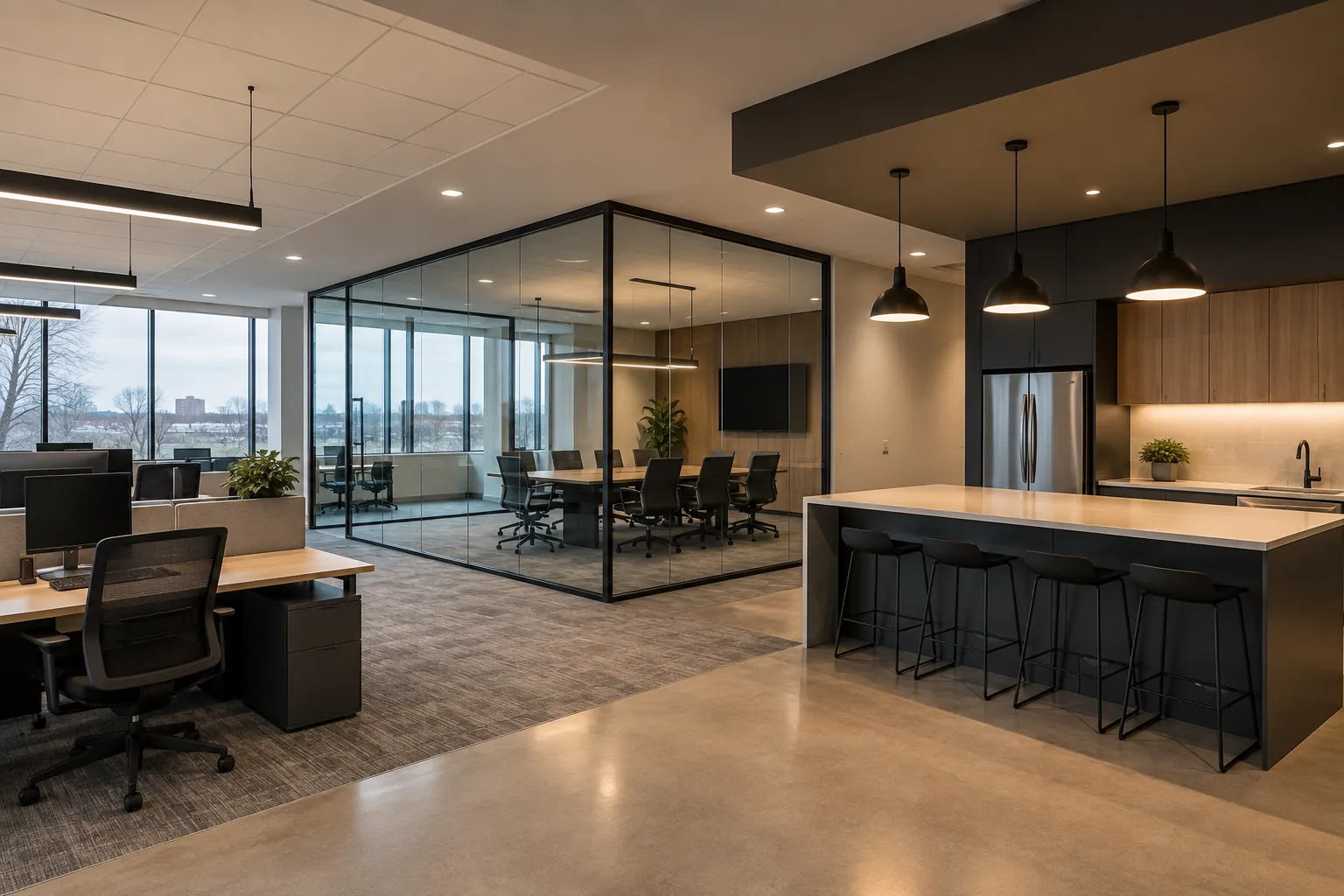
Compare options against specific acceptance questions
Before selecting equipment, define what a successful improvement should address. Will screen reflections be reduced from the normal desk positions? Will light be more consistent across a work area? Will separate zones support perimeter daylight and interior tasks? These are more useful questions than whether a replacement has a more modern appearance or a higher output rating.
The scope may involve correcting faults, revising distribution, changing selected fixtures, adjusting controls or coordinating a wider refurbishment. Ask what existing limitations remain under each option. If a representative area is used to review proposed equipment, choose conditions that reflect the actual task and agree what the review should establish. A demonstration in an empty corner does not necessarily show how the same fitting will feel above occupied desks, polished merchandise displays or inspection stations. Evaluation should remain connected to the original complaint.
Prepare a brief that captures the occupied space
Provide the Mississauga address, facility type, operating hours and affected rooms or zones. Include photographs from normal working positions, a simple layout and known fixture or control details. Describe the task, the time the complaint occurs and whether it changes with daylight, dimming or occupancy. Note planned furniture or partition changes so the lighting scope does not target a layout that will soon be replaced.
When you request a site assessment, state the practical outcome sought: more comfortable screen work, clearer inspection surfaces, improved consistency or useful control of different areas. The proposal can then connect equipment, distribution and configuration with those objectives. A commercial lighting improvement should help the people using the space perform their tasks comfortably, with a defined assessment and scope rather than a universal instruction to make everything brighter.
Questions facility managers ask
Does a cooler colour temperature solve dim lighting?
Colour appearance and useful illumination are different considerations. Changing colour temperature alone does not establish that the task receives suitable light or that glare and distribution problems have been corrected.
Can dimming resolve every bright-office complaint?
No. It may help, but fixture position, optics, daylight and reflections can require other changes. Lowering all fixtures may leave some work areas too dim while the original glare relationship remains.
Why do new panels look different from existing ones?
Similar-looking products can differ in output, colour appearance, distribution and control response. Existing condition can also contribute. Product records and a room-level assessment help establish a consistent replacement approach.
Should staff preferences be included?
Yes, especially descriptions tied to specific tasks and positions. Combine those observations with the relevant technical assessment so the proposal addresses actual use rather than relying only on general brightness preferences.