
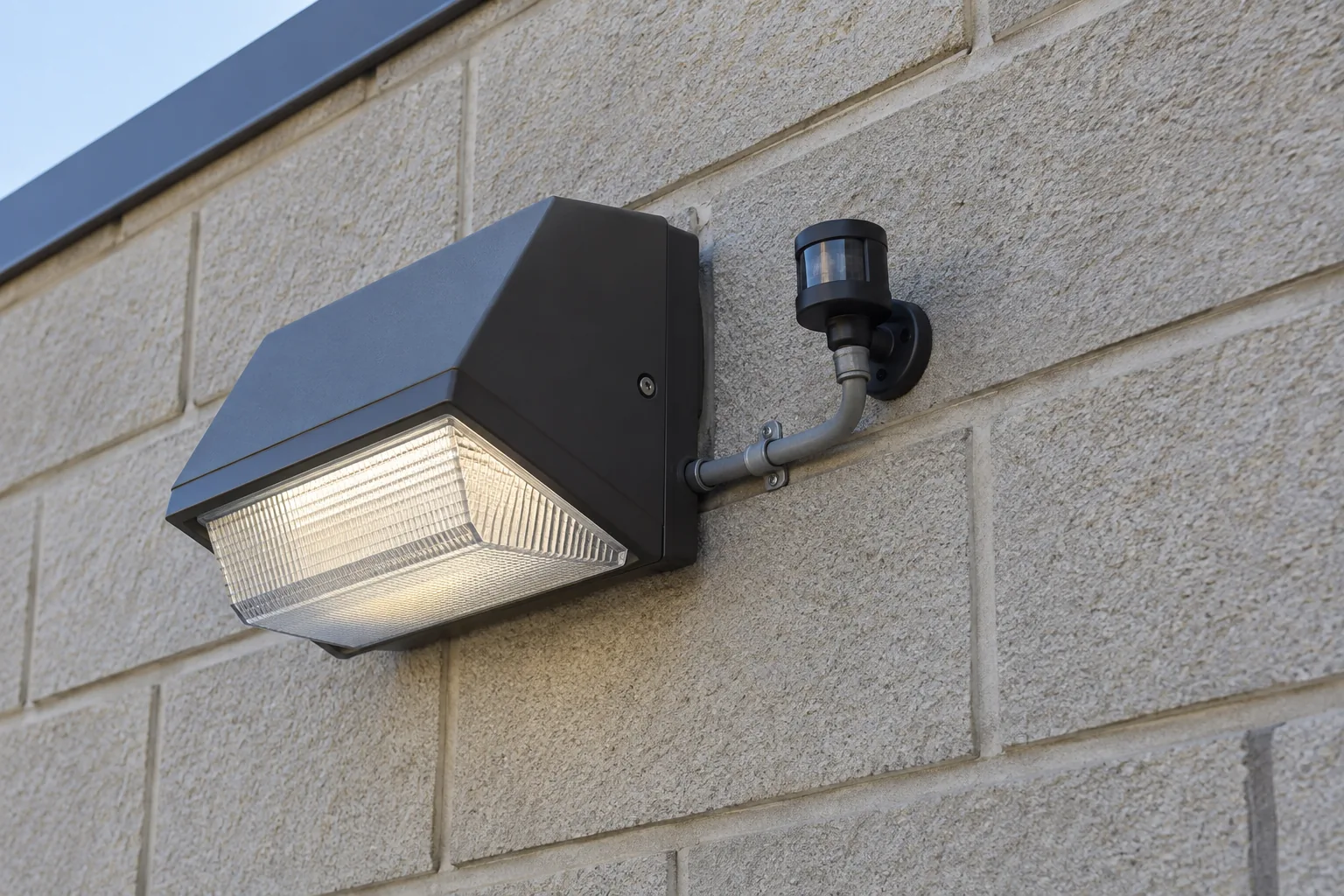
Begin with a day-and-night record of the property
Exterior control problems are often reported at the wrong moment to see them clearly. A manager may receive a complaint about a dark parking area at night but visit when every fixture is intentionally off in daylight. A brief record across the relevant operating period can be more useful than a single inspection photograph. Note the date, approximate time, daylight conditions and affected lighting group.
Include whether the business was open, staff were still present or a scheduled event had occurred. Describe the actual behaviour: all wall packs remained on at noon, one pole did not illuminate after dusk or a canopy zone repeatedly changed state. These observations help distinguish a property-wide control pattern from a local fixture problem. They do not establish the cause on their own, so avoid ordering replacement photocells solely because the complaint happens outdoors.
Map groups rather than treating every light independently
Exterior lights may operate in several groups across a property. Pole-mounted parking lights, building wall packs, storefronts and common walkways can have separate controls and responsibilities. In a multi-tenant plaza, one tenant’s sign or entrance lighting may not share the same arrangement as the landlord’s parking area. A simple map of which lights behave together can prevent confusion.
Mark affected fixtures and note the nearest working units. If a complete group changes at the same moment, that relationship is useful to the assessment. If one fitting behaves differently from its neighbours, record that too. Existing plans or previous service records may identify timers, photocells or control zones, but do not open equipment to investigate. The objective is to give the professional a reliable description of the property pattern, including known boundaries between tenant and common-area equipment.
Understand why lights may remain on during daylight
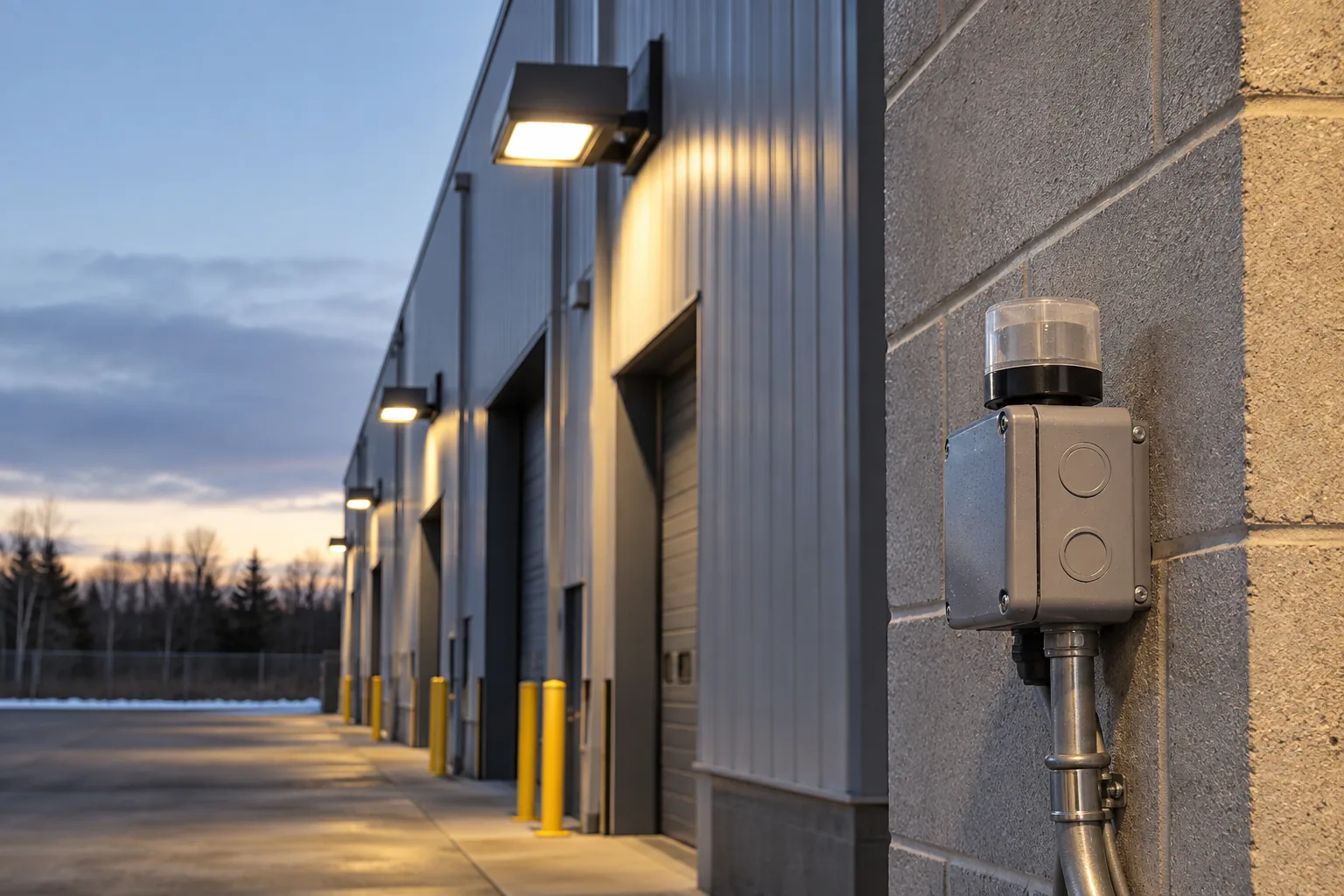
Daytime operation can involve an intentional schedule or override, the location of a daylight control, a device fault or another issue in the arrangement. A photocell responds to the light reaching it, which may differ from what someone sees standing in the open parking lot. Shade from a canopy, landscaping or the building itself can affect that relationship.
Record whether the problem is continuous or occurs only under particular conditions. Note recent changes such as new signage, tree growth, building work or a control replacement. Ground-level photographs that show the surroundings are useful; a tightly cropped image of one fixture may omit the relevant context. A photocell assessment should consider location and interaction with other controls, not merely exchange a visible component without asking why the property is operating in daylight.
Separate late turn-on from a complete outage
Lights that eventually illuminate after dark present a different pattern from lights that never operate. A late start may relate to a schedule, sensed light conditions or another control behaviour. A complete outage may involve controls, fixtures or supply conditions. Record whether the affected group changes later and whether the timing is consistent from one evening to another.
Ask the property team about approved hours and recent adjustments. Sometimes an old schedule remains after a tenant changes business hours, while in other cases the intended operation is clear but equipment is not following it. Do not assume that moving the scheduled start earlier will resolve an underlying fault. For existing outages, request lighting service with the affected pedestrian or vehicle areas identified. The operating consequence helps establish the concern even before the electrical cause is known.
Observe cycling without assuming the fixture is the cause
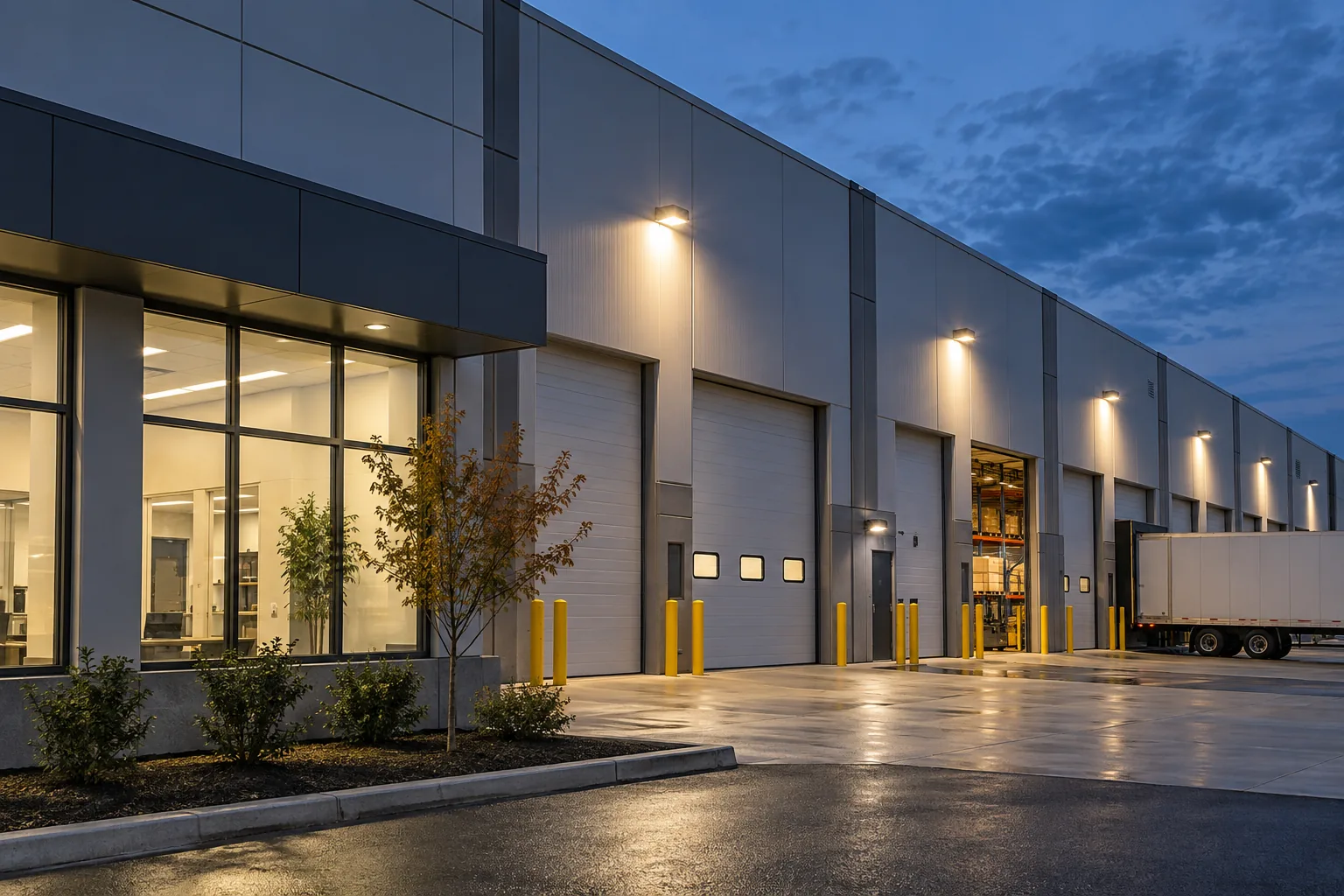
A light that turns on and off repeatedly after dusk can involve more than the light-producing components. The relationship between a daylight control and nearby artificial light may be relevant, but intermittent fixture or electrical issues can create other patterns. Note whether cycling begins after a fixture illuminates, whether adjacent lights cycle together and whether the behaviour changes when other property lighting operates.
A safely recorded short video may help communicate the visible sequence, though it is not a substitute for technical assessment. Do not cover sensors, bypass controls or open fittings to experiment. The assessment should establish the actual arrangement and appropriate corrective work. Replacing a fixture without considering its control can leave the symptom unresolved, while replacing a photocell will not necessarily fix a fault inside the fitting. The useful evidence is the relationship between timing, group behaviour and surrounding conditions.
Review schedules, exceptions and after-hours access
Exterior lighting serves more than customer opening hours. Staff departures, cleaners, deliveries, security activity and early arrivals may extend the required operating period. A schedule that once suited a property can become unsuitable after a tenant change or shift adjustment. Equally, an override used for a special event can remain active longer than intended if its return to normal operation is unclear.
Review the approved operating pattern with the responsible property contact. Identify who can change permanent settings and how exceptions should be handled. Where daylight response and scheduling are combined, the intended sequence should be documented so one control does not inadvertently defeat the other. The timers and scheduling page explains the planning questions. Correcting the schedule is useful when the schedule is the problem; it should not become a substitute for investigating equipment that no longer responds reliably.
Consider glare and neighbouring areas separately from timing
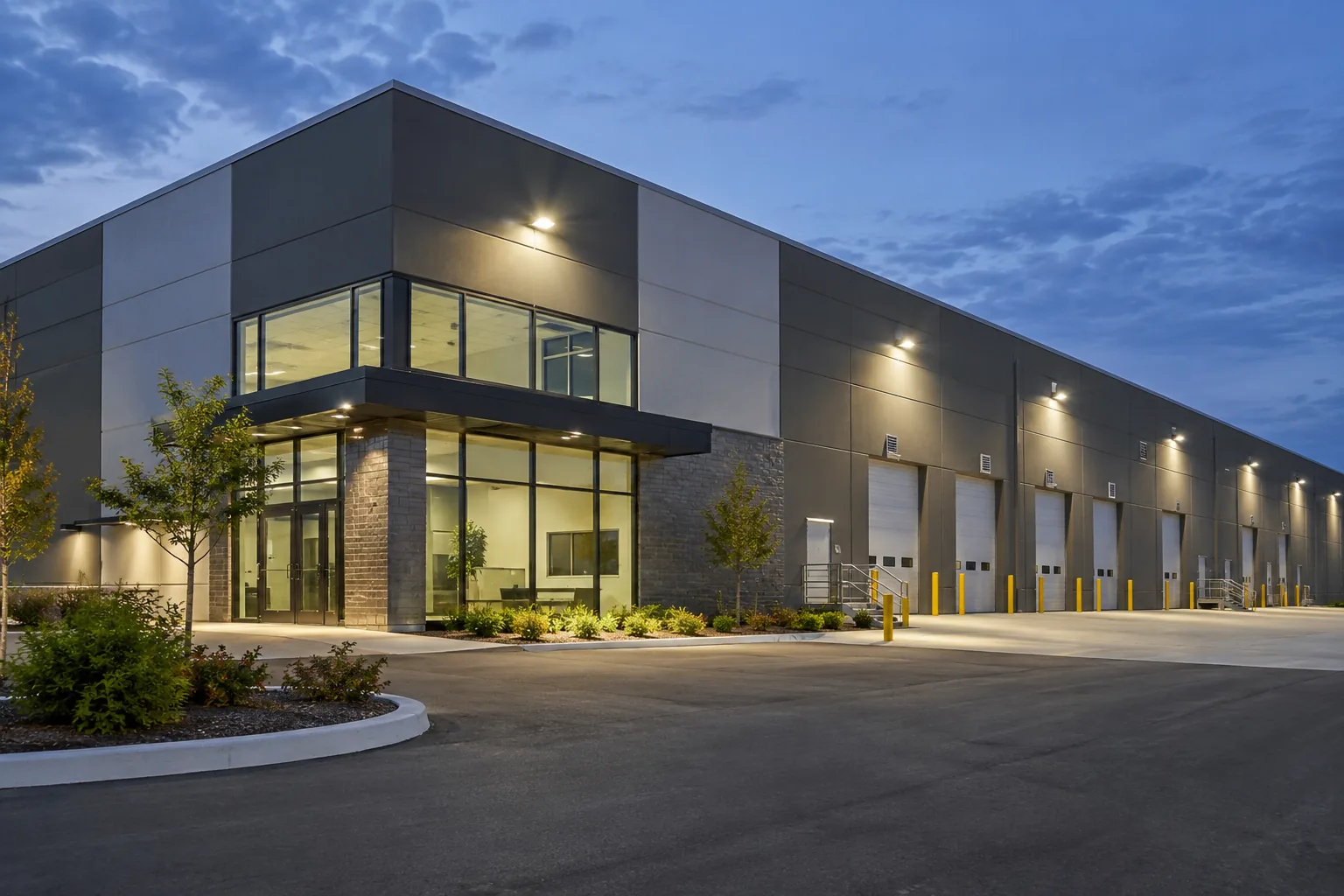
A light can operate at the correct time and still be poorly directed. Conversely, a well-chosen fixture can create unnecessary impact if it stays on beyond its intended operating period. Exterior assessment should separate these concerns so the proposed solution addresses each clearly. Turning a fixture off earlier may not resolve a glare problem while the property is occupied, and shielding will not correct an incorrect operating schedule.
For Mississauga commercial properties, consider how entrances, parking areas and building edges relate to neighbouring uses. Fixture direction, distribution and the areas requiring light belong in the wider exterior lighting plan. Current municipal requirements should be checked where relevant to the project. The assessment should remain property-specific rather than copying a rule or solution from another municipality or assuming that more light across the boundary is an acceptable way to improve visibility on site.
Prepare a focused request and useful follow-up record
Provide the address, affected areas, operating hours and observed day-and-night pattern. Include safe photographs showing both equipment and surroundings, a simple marked plan and known model or service information. Explain whether the problem is new, recurring or associated with a change at the property. Identify access restrictions, approximate heights where known and the person authorized to approve the work.
After the issue is assessed, keep the agreed operating pattern and any relevant changes with the building’s lighting records. If a schedule is adjusted or equipment is replaced, connect that information to recognizable property areas. This makes future complaints easier to compare and reduces uncertainty when staff or tenants change. Use the lighting service contact for a defined problem or request an assessment where several exterior zones need a coordinated review.
Questions facility managers ask
Are lights on in daylight always caused by a bad photocell?
No. Location, shading, schedules, overrides and other equipment conditions can be involved. Record which lights are affected and when the behaviour occurs before selecting a repair.
What if parking lights turn on but the wall packs stay dark?
The groups may use separate controls, or the wall packs may have a different fault. A property map showing the pattern helps avoid assuming all exterior lights share one arrangement.
Should a photocell be covered to test it?
Customers should provide observations and accessible records rather than manipulate unknown equipment. Testing and electrical investigation should be arranged through the appropriate professionals and site procedures.
Can control repairs be combined with exterior upgrades?
They can be coordinated where appropriate, but identify current operational concerns separately. The scope should show what will be repaired now, what will change later and how the final controls are intended to operate.