
First distinguish a lighting complaint from an immediate hazard
A dark fitting and an electrical hazard do not require the same response. If there is smoke, burning smell, sparking, visible damage or another sign of an immediate unsafe condition, keep people away as appropriate, follow the property’s emergency procedures and contact the relevant emergency service or responsible electrical professional. Do not wait for an online assessment request to be reviewed before responding to an emergency.
For a routine lighting complaint, the useful first step is observation from a safe position. Record what is happening without opening fixtures, removing covers or experimenting with wiring. Commercial equipment can be mounted at height and may involve shared circuits or controls. A staff member should not be asked to climb racking or improvise access to identify a driver. The information needed to start the service discussion is usually the location, visible symptom, timing and effect on the area being used.
Map whether the fault is local or shared
One failed fixture, a row of lights and an entire building area provide different starting clues. A single dark fitting surrounded by working units may direct attention toward that fitting and its associated equipment. Several lights changing together may point toward a shared influence, but neither observation is proof of the cause. The pattern helps the professional decide what to investigate.
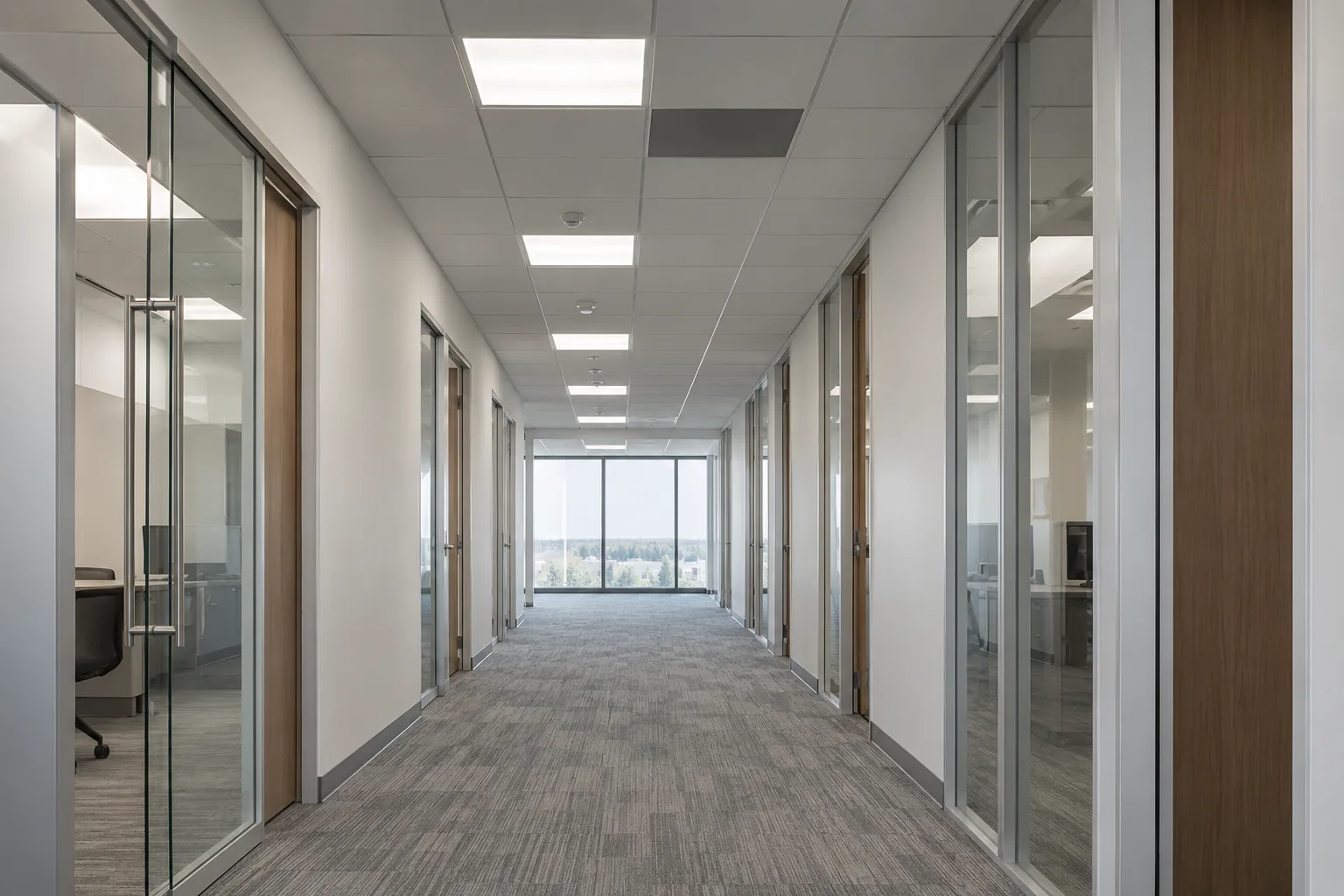
Mark affected locations on a plan or label photographs with recognizable area names. Note whether adjacent spaces behave normally and whether all affected lights are the same type. In a warehouse, distinguish one high bay from a complete aisle or switching zone. In an office, identify whether the complaint follows a row, room or group controlled together. This is more useful than reporting that the building’s LEDs are bad, because it preserves the evidence without prematurely selecting a replacement product or repair method.
At a Mississauga plaza or multi-tenant industrial property, note whether the affected lights are inside one unit or in a shared area. A tenant’s report of several dark fixtures should not be assumed to describe the whole building. Identify nearby entrances, loading zones or common corridors that appear affected, without entering electrical rooms or testing equipment. This helps the property manager coordinate the right access and distinguish a tenant request from a possible shared-system concern.

Record when the symptom appears and what else changes
Timing can reveal relationships that are easy to miss during a short visit. Does flicker begin after the lights have been on for a while? Does it occur only at a low dimming setting, after an occupancy timeout or around dusk? Does a fixture remain dark after switching while nearby units start normally? Record the pattern as an observation rather than drawing a technical conclusion from it.
If an issue is intermittent, a short dated log can help. Include the area, approximate time, current activity and any ordinary operational change occurring at the same time. A video taken safely may show visible behaviour, although camera recordings can differ from what the eye sees and should not be treated as a measurement. Do not intentionally recreate potentially unsafe conditions. The goal is to preserve naturally observed information that helps a service assessment focus on the actual operating context.
Understand the main categories of possible causes
Commercial lighting systems contain several interacting parts. An LED fixture may involve a driver, light-producing components, controls and an electrical supply. Older fluorescent systems can involve lamps and ballasts; exterior installations may also involve photocells, timers and environmental exposure. A visible symptom can originate in more than one of these categories, which is why a diagnosis should not be made solely from the word flicker.
A replacement component also needs to suit the existing arrangement. A driver selected only because its housing fits is not a complete compatibility decision. Similarly, installing a new fixture will not necessarily resolve a shared control or supply issue. Customers can provide known models from maintenance files and describe earlier repairs, while the electrical professional establishes the actual cause and suitable corrective scope. This keeps the service decision grounded in the installation instead of a list of possible faults copied from unrelated equipment.

Look for the relationship with controls
Controls deserve particular attention when lights behave normally in one state and poorly in another. Flicker appearing during dimming, lights switching off while a space is occupied or exterior units cycling after dark can indicate that the control arrangement needs to be reviewed. The issue may concern settings, location, compatibility or a failed component; the symptom alone does not establish which.
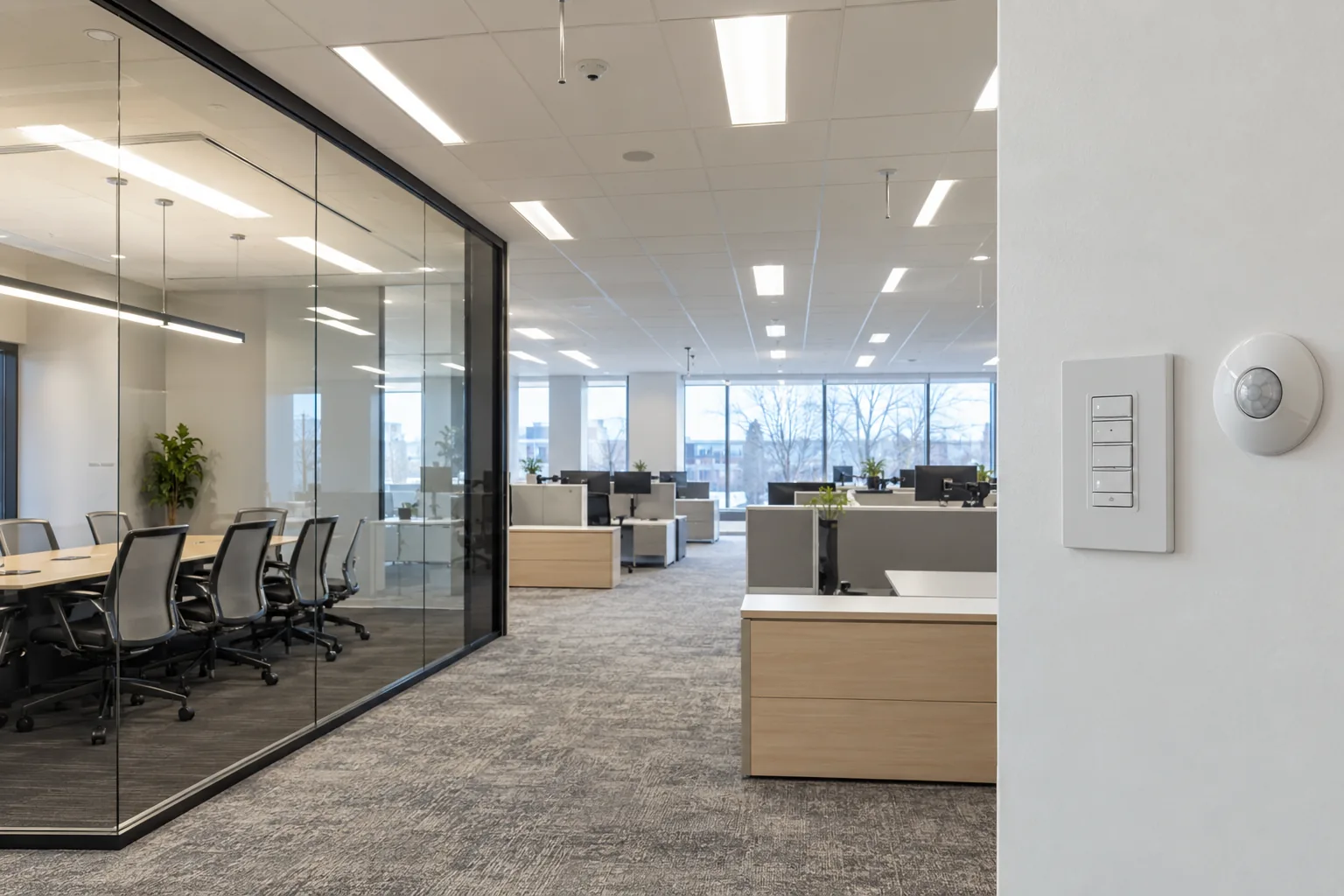
Describe the control state and affected area. For office dimming, note whether all fixtures respond together and whether the issue started after a replacement. For a warehouse sensor complaint, explain where workers are positioned when lighting changes. For exterior behaviour, record the daylight conditions and whether a timer or photocell is known to be present. Relevant assessments may involve commercial lighting controls or the exterior control guide, alongside fixture service where appropriate.
Use repair history to identify recurring problems
Repeated replacement at the same location deserves more investigation than a fresh count of failed units. Gather available service dates, component details and descriptions of the previous symptom. Was the same part replaced, or did different work occur each time? Did the problem return immediately, gradually or only after another operational change? Uncertain recollections are still useful if clearly identified as uncertain.
A pattern can involve equipment suitability, compatibility, environmental conditions or another factor requiring assessment. It can also reveal that several different complaints have been grouped under the same vague location name. Connect each record to a specific area or fixture reference. For property managers, this information helps compare another isolated repair with a planned upgrade. It does not mean that every repeated failure proves the entire installation is unsuitable; it means the history should influence the questions asked before the next repair is approved.
Compare repair and replacement as different scopes
A suitable repair restores a defined fault while retaining other existing equipment. A replacement project may change light output, distribution, colour appearance, controls and maintenance needs. Both can be sensible, but they should be compared on what they actually address. A failed high bay in an otherwise satisfactory warehouse is different from a building where many old fixtures are failing and the layout has changed.
Ask what remains after the proposed repair and whether any wider issue has been identified. If replacement is considered, include mounting height, access, operating hours and the area served, not just wattage. The repair service page supports existing-fault requests, while LED retrofit planning addresses broader upgrade decisions. Neither pathway should promise a fixed saving or assume that a new fixture automatically resolves every lighting-quality or control complaint.
Prepare a service brief that saves repeated questions
A strong brief includes the Mississauga address, facility use, precise affected location, number of affected lights if known and a plain description of the symptom. Add operating hours, approximate mounting height, access restrictions and available photographs. Include known fixture or control information from records, previous service history and the person authorized to arrange access or approve further work.
Explain the operational effect: a picking face is difficult to read, reception lighting is distracting or a parking route is darker than normal. Avoid turning an observation into a certainty about the cause. When you request lighting service, the assessment can then determine whether the next step is investigation, a component repair, fixture replacement or a wider review. A clear description is valuable even when the equipment model is unknown, because it identifies the real problem the commercial space needs resolved.
Questions facility managers ask
Does flicker mean the LED driver has failed?
It can be one possibility, but controls, compatibility and other electrical conditions can produce similar symptoms. A professional assessment should establish the cause before a driver or fixture is selected.
Should all lights be replaced when several fail together?
Not without understanding the pattern. A shared issue may affect several fixtures, while aging equipment can also fail individually. The scope should follow the findings rather than an assumption based only on quantity.
What if the problem disappears before a visit?
Keep a dated observation log and any safely captured images or video. Record the location, timing, control state and activity so intermittent behaviour can be discussed even when it is not currently visible.
Can staff troubleshoot by opening the fixture?
No. Provide accessible observations and existing records. Electrical investigation, component access and work at height should be arranged through the appropriate professionals and site procedures.