
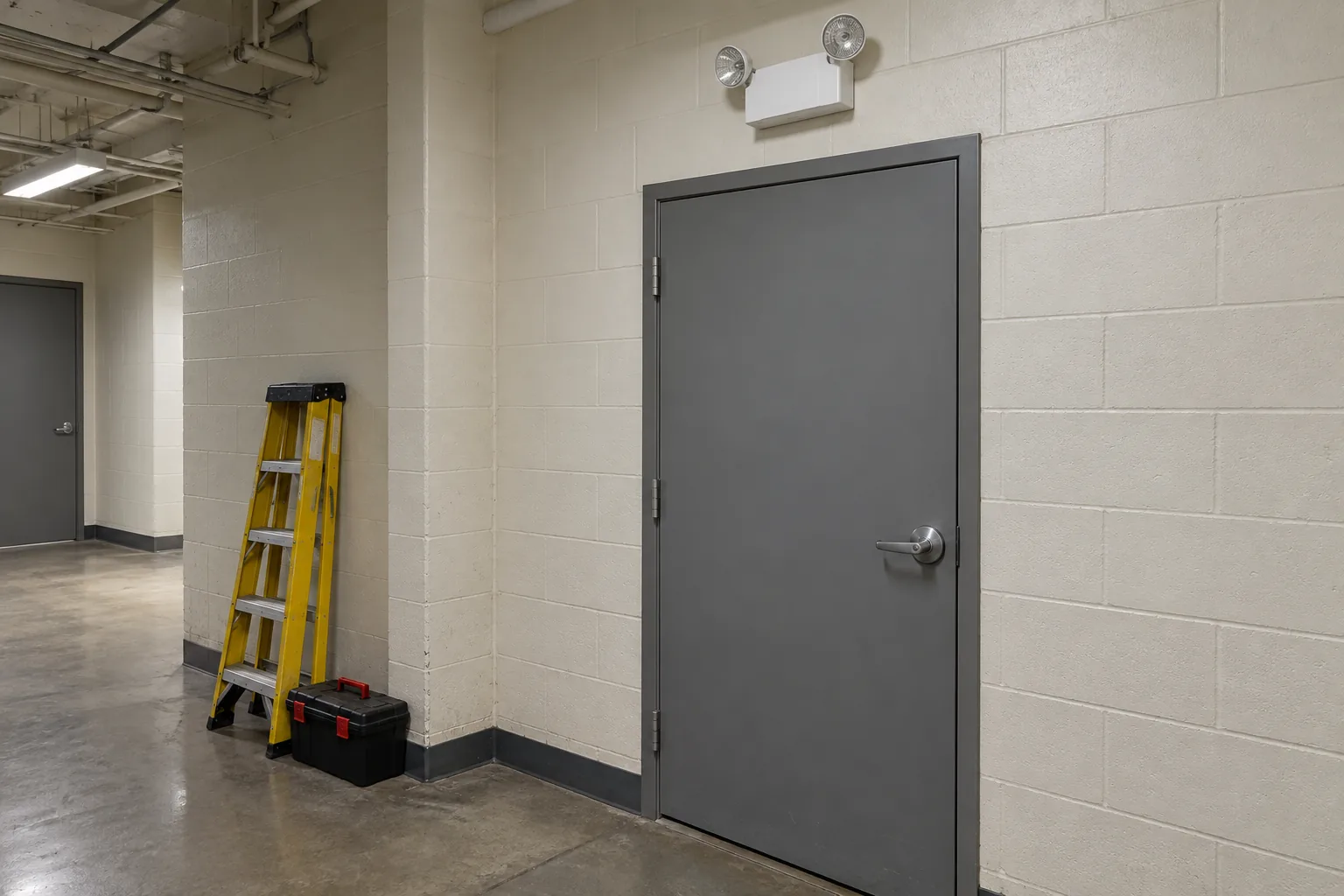
Describe the observed failure accurately
A useful repair request starts with what was observed. A unit may have a damaged housing, an unlit indicator, a reported failure during a scheduled check or a lamp head that does not operate as expected. Those symptoms do not all point to the same cause. State when the issue was noticed, who recorded it and whether there are existing test or maintenance notes.
Identify the affected location precisely: floor, corridor, room, stair entrance or warehouse zone. If several units are involved, number photographs or mark a simple plan so the service discussion does not confuse one location with another. Do not operate unknown electrical equipment or open units to gather more information. The repair process should begin with reliable observations and accessible records, then leave component investigation and electrical work to the appropriate professionals.
Treat immediate operational concerns separately
Emergency lighting defects can affect important building arrangements. The responsible property team should consider the concern within its established safety procedures and obtain appropriate direction for the circumstances. A website contact form is suitable for arranging service discussions; it is not a substitute for emergency response or an on-site decision about an unsafe occupied area.
If an immediate emergency exists, follow the property’s emergency procedures and contact the appropriate emergency service. For a non-emergency repair request, explain the affected area and any operational restrictions already identified by the building team. Do not assume the same priority applies to every defect simply because the visible equipment looks similar. Clear communication allows the proposed service scope to reflect the actual situation, while keeping immediate building responsibilities distinct from the scheduling of a future lighting visit.
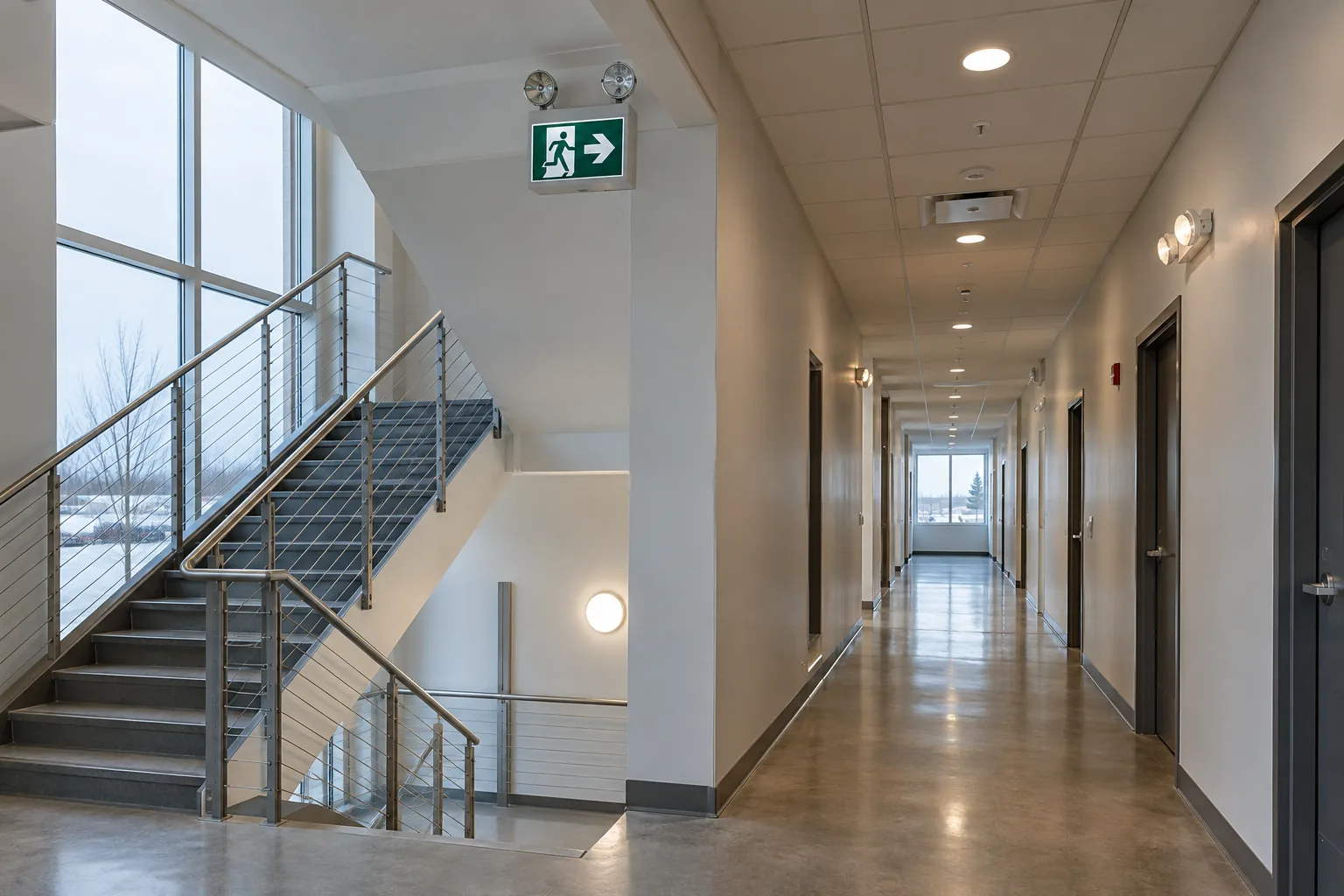
Investigate the system around the failed component
An apparent lamp or battery problem may involve other parts of the equipment or its supply arrangement. Replacing a familiar component without understanding the condition can lead to another failure or an incomplete repair. Existing service history is especially useful where the same unit has required attention repeatedly or several units show similar symptoms.
The investigation should consider the actual equipment and manufacturer information, with any appropriate checks defined in the service scope. Customers do not need to diagnose the fault before requesting help. Provide the model from existing records if available, approximate installation history if known and the details of previous repairs. Avoid presenting uncertain dates or assumptions as facts. Where equipment identity or condition cannot be established remotely, the proposal should acknowledge that investigation is needed before a final replacement decision can be made.
Compare repair with replacement on useful grounds
A repair may be practical when the remaining equipment is suitable, replacement components are appropriate and the cause of failure can be addressed. Replacement may deserve consideration where damage is extensive, parts are difficult to support or repeated work no longer makes sense. Neither choice should be based solely on the age of a visible housing or a general preference for new equipment.
Ask the proposal to explain the scope and limitations of the recommended approach. A component repair retains other existing parts whose condition still matters. A new unit must still suit the location and intended arrangement. Where several units are being considered, distinguish urgent corrective work from a planned replacement program. This makes it easier for a property manager to approve a practical response now while organizing broader emergency lighting assessment questions separately.
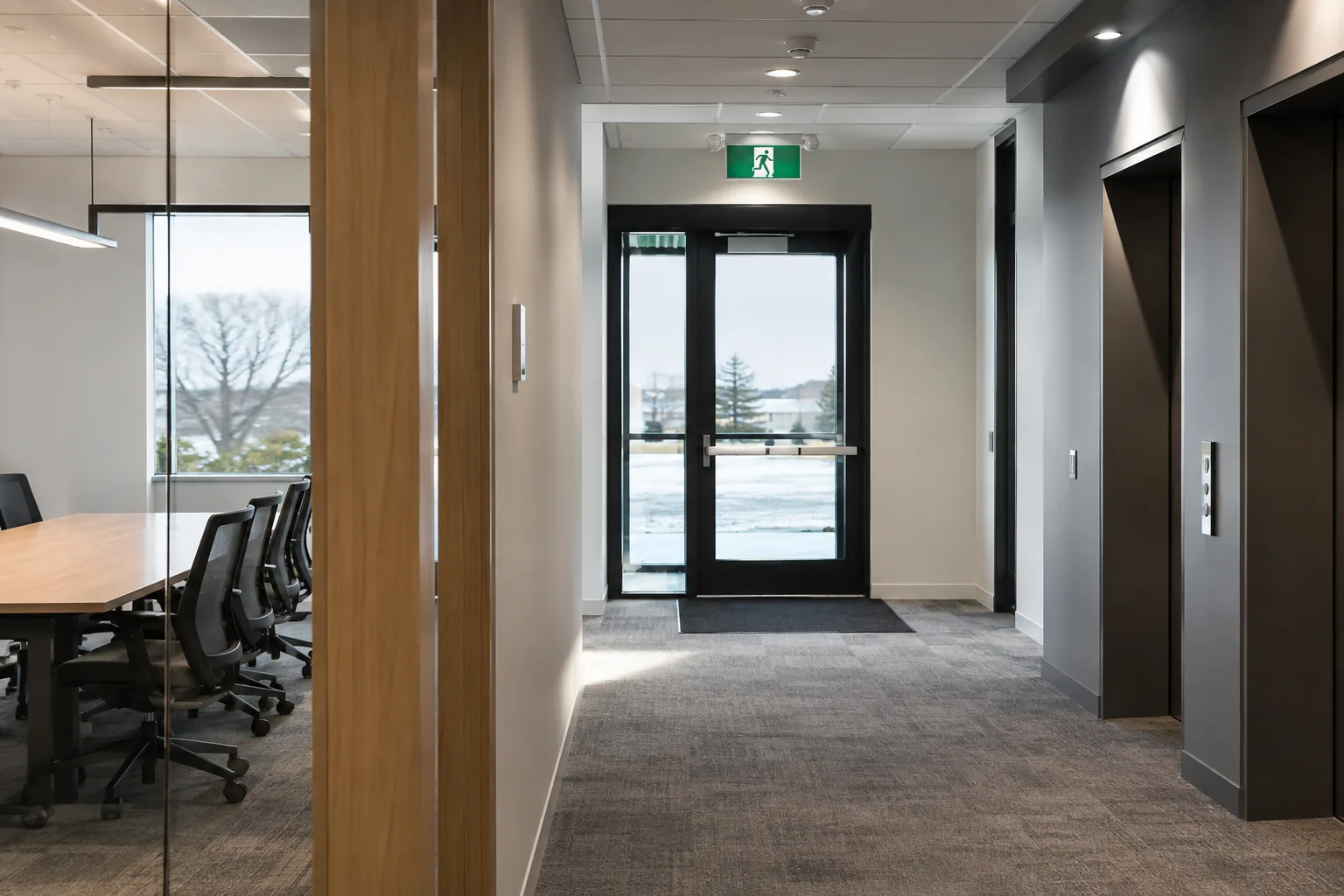
Consider building changes that may explain the complaint
A reported problem sometimes emerges after partitions, tenant layouts or warehouse storage change. The equipment may still operate, but the area it serves has changed or an obstruction now affects its usefulness. A repair request should therefore mention recent renovations, relocated doors, new racking and other alterations near the affected location.
Where the concern relates to a revised layout, replacement of a single component may not resolve the full issue. The appropriate next step can include coordination with the renovation scope and a review of related exit signs. For a Mississauga landlord, clarify whether the area belongs to a tenant fit-out or a common building arrangement. Accurate responsibility and layout information helps prevent an isolated service order from overlooking a broader question that needs the relevant project professionals or authorities involved.
Plan the service visit around access and occupancy
Emergency lighting equipment can be mounted in busy circulation areas, above doors or in spaces with restricted access. A service visit may require coordination with security, tenants, operations staff or a building superintendent. Provide approximate heights where known and note areas affected by storage, parked vehicles or active work. Access planning should reflect the location rather than assuming every unit can be reached in the same way.
Discuss the available work window and who can authorize any required interruption or testing arrangement. Occupied offices, warehouse shifts and condominium common areas each have different practical constraints. The scope should identify the work that can be planned in advance and any investigation that may affect subsequent decisions. An agreed access plan supports a more efficient visit without promising that every unknown condition can be resolved immediately or that work can always occur without affecting normal use.

Keep the repair record specific
A useful repair record identifies the location, reported issue, work undertaken and any follow-up items within the agreed scope. If a component is replaced, its details can help future service. If additional assessment is recommended, keep that recommendation visible rather than allowing it to disappear in a general invoice description. The exact records supplied should be agreed as part of the service arrangement.
Ontario’s official Fire Code and ESA guidance explain relevant maintenance and electrical-work responsibilities. A specific repair does not by itself establish the condition or compliance of every related system in the building. Ask which observations or checks were included and which were outside the visit. Information reviewed September 30, 2026; building-specific obligations should be confirmed with the appropriate professionals and authorities using the current official sources linked below.
Reduce repeat uncertainty with organized maintenance information
Properties often accumulate incomplete records as staff, tenants and service providers change. Connecting each unit to a recognizable location and keeping its service history in one place makes future decisions easier. A consistent record can show whether a concern is new, repeated or associated with a wider pattern, without asking staff to inspect electrical components themselves.
When multiple properties are managed together, use a common reporting format while preserving the details of each building. A simple description such as unit above the north staff entrance is more useful than an unexplained equipment number alone. Include existing maintenance notes when you request lighting service, and state whether the goal is one defined repair or a wider review of recurring problems. The assessment can then focus on the condition requiring attention and the information needed to make a sound repair decision.
Questions facility managers ask
Can a battery replacement be assumed from a failed test?
No. The symptom does not establish the failed component by itself. Appropriate investigation should consider the equipment, available records and manufacturer information before a repair is specified.
Should all units be replaced when one fails?
Not automatically. The condition, suitability and history of the remaining equipment should inform that decision. A localized repair and a planned building-wide replacement are different scopes.
What should be included in a repair request?
Provide the property address, exact location, observed symptom, relevant records and safe photographs. Explain any recent alterations or repeated failures and identify the contact responsible for access and authorization.
Does a repair confirm the whole building meets requirements?
No. A repair addresses its agreed scope. Ask what was checked, what documentation is included and whether further building-specific review is needed for questions outside that work.