
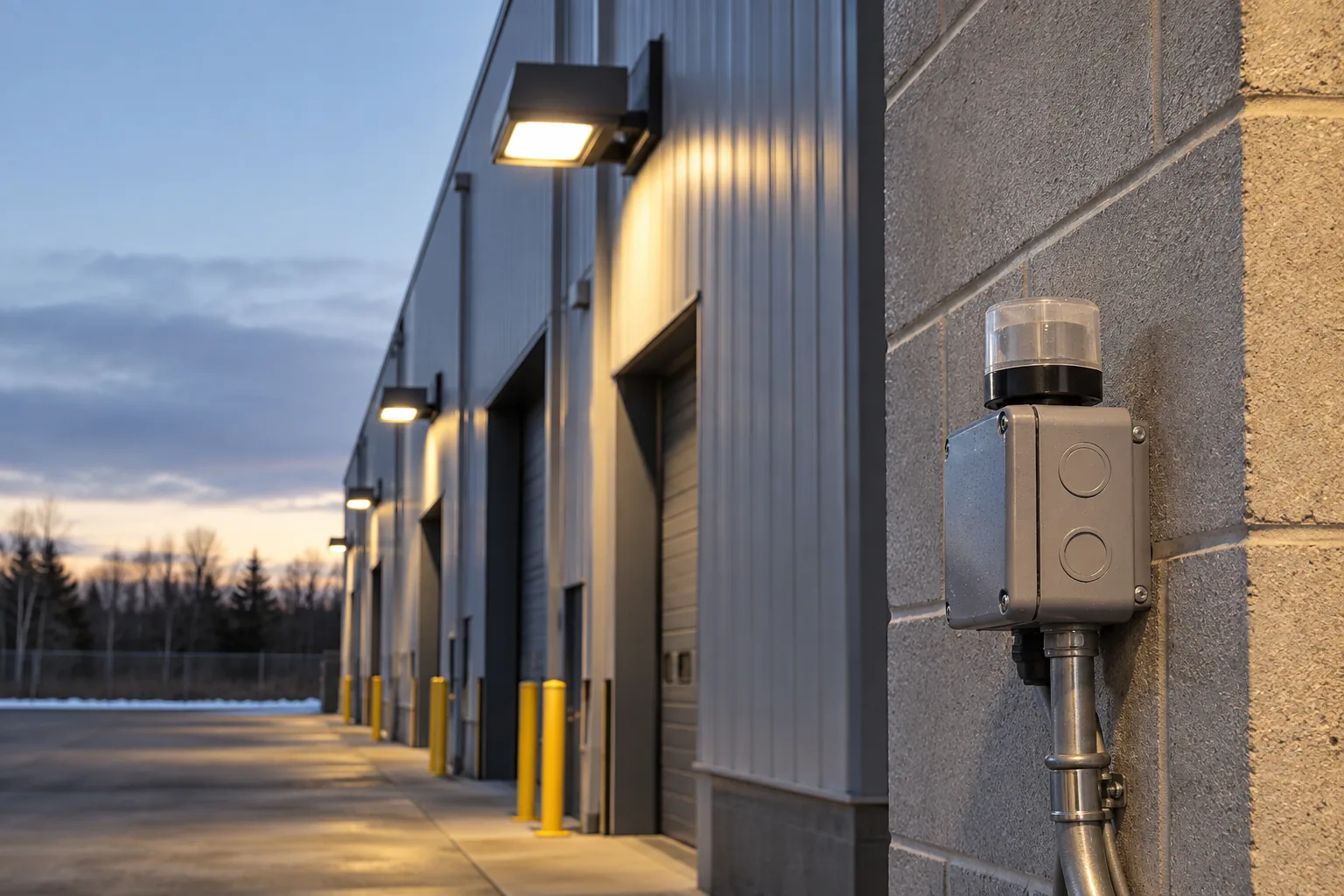
Begin with the actual day-and-night behaviour
An exterior control complaint is most useful when it describes a pattern rather than simply naming a suspected part. Lights that stay on at noon, turn on late, cycle repeatedly after dusk or switch off before staff leave may have different causes. Record which fixtures are affected, when the behaviour occurs and whether it changes with weather, daylight or an operating schedule.
A photocell responds to the light it senses, which may not represent the conditions across an entire property. Timers and other controls may also influence the same lighting group. A Mississauga plaza with several building elevations, a freestanding parking area and a covered walkway may contain more than one control arrangement. Mapping those groups helps establish whether the problem is local to a fixture, shared by a zone or part of a broader control sequence that no longer suits the property.
Consider location, shade and nearby artificial light
The position of a daylight control affects what it sees. Building projections, trees, signage and adjacent lighting can influence the sensed conditions. A control beneath a deep canopy experiences daylight differently from one on an unobstructed wall. Changes to landscaping or a neighbouring property may alter the behaviour of an installation that once operated acceptably.
Night-time cycling can sometimes be associated with the interaction between a control and artificial light, but this should not be assumed without inspection. Record whether cycling begins only after the fixture illuminates and whether other nearby lights are involved. Customers can supply ground-level photographs showing the building elevation and surroundings. Access to high-mounted equipment and any electrical investigation should be planned as professional service work. Replacing a photocell in the same unsuitable location may leave the underlying problem unresolved even when the replacement device itself functions correctly.
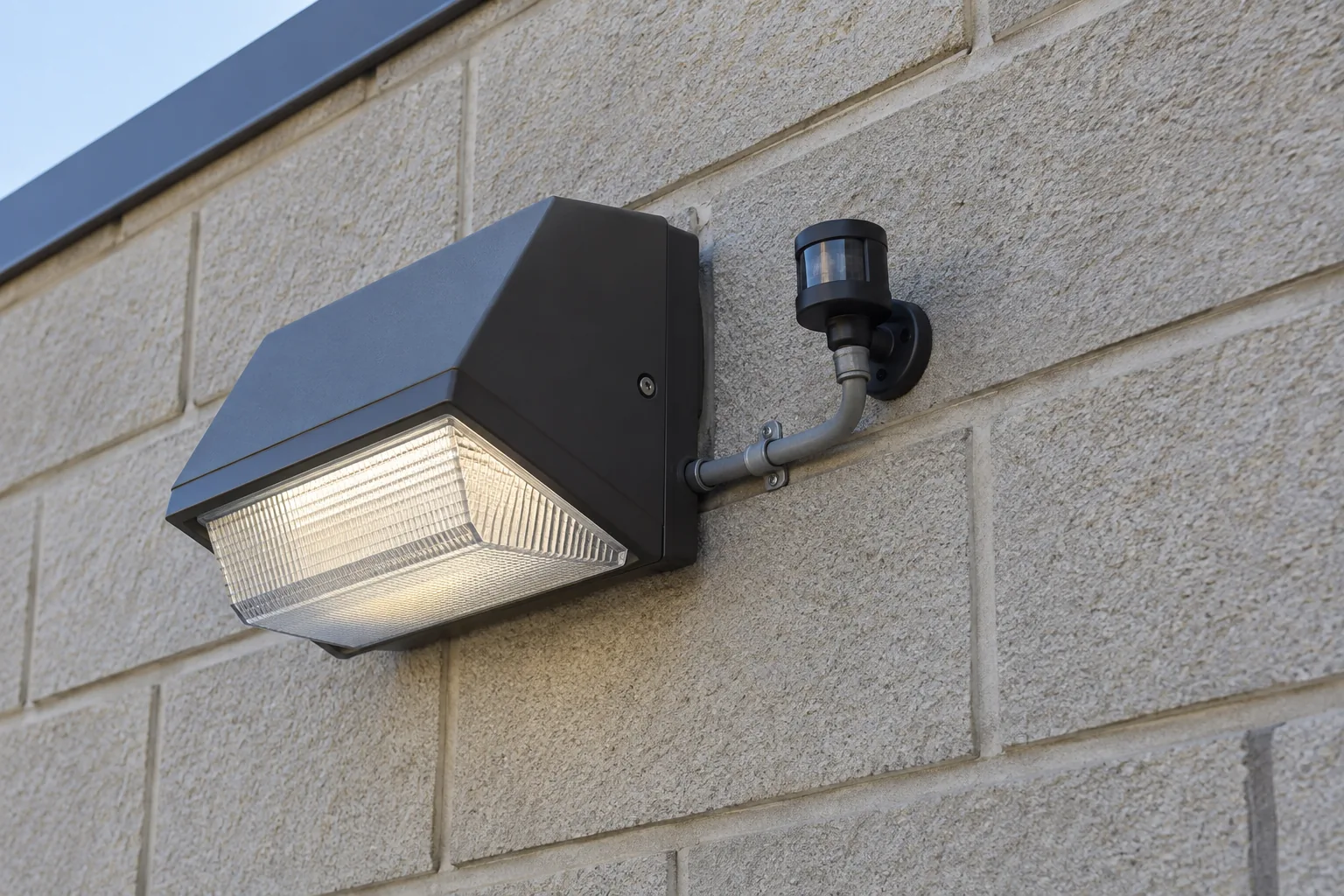
Coordinate daylight response with the operating schedule
Some exterior areas are needed throughout the night; others serve a business that closes earlier. Daylight response and scheduled operation answer different questions. A daylight control can prevent operation when there is sufficient natural light, while a schedule can define periods when a particular lighting zone is expected to operate. Their interaction should be documented so one does not inadvertently defeat the other.
Consider staff departure, cleaners, deliveries, security activity and early opening times. A restaurant entrance and an industrial loading yard may need different arrangements even on the same property. Discuss seasonal changes and exceptional operating dates with the person responsible for building operations. Where an override is provided, establish who can use it and when normal control resumes. A clear operating sequence helps prevent repeated service calls that are actually the result of unclear settings or an undocumented change to business hours.
Separate control faults from fixture and supply faults
When every fixture in a group fails together, the assessment may focus differently than when one wall pack remains dark while adjacent units operate normally. A failed lamp, driver or fixture can resemble a control problem from the ground. Conversely, replacing multiple fixtures will not resolve a shared control fault. The pattern across the property is therefore valuable evidence.
Prepare a simple marked plan or numbered photographs showing the affected lights. Note whether any units have recently been replaced and whether the issue began at the same time. Identify known timer locations or previous service records without opening electrical enclosures. The service scope can then consider controls, fixtures and the relevant supply arrangement in an organized way. For broader outages, use the commercial lighting repair pathway and describe the affected pedestrian or vehicle areas so operational priorities are clear from the outset.
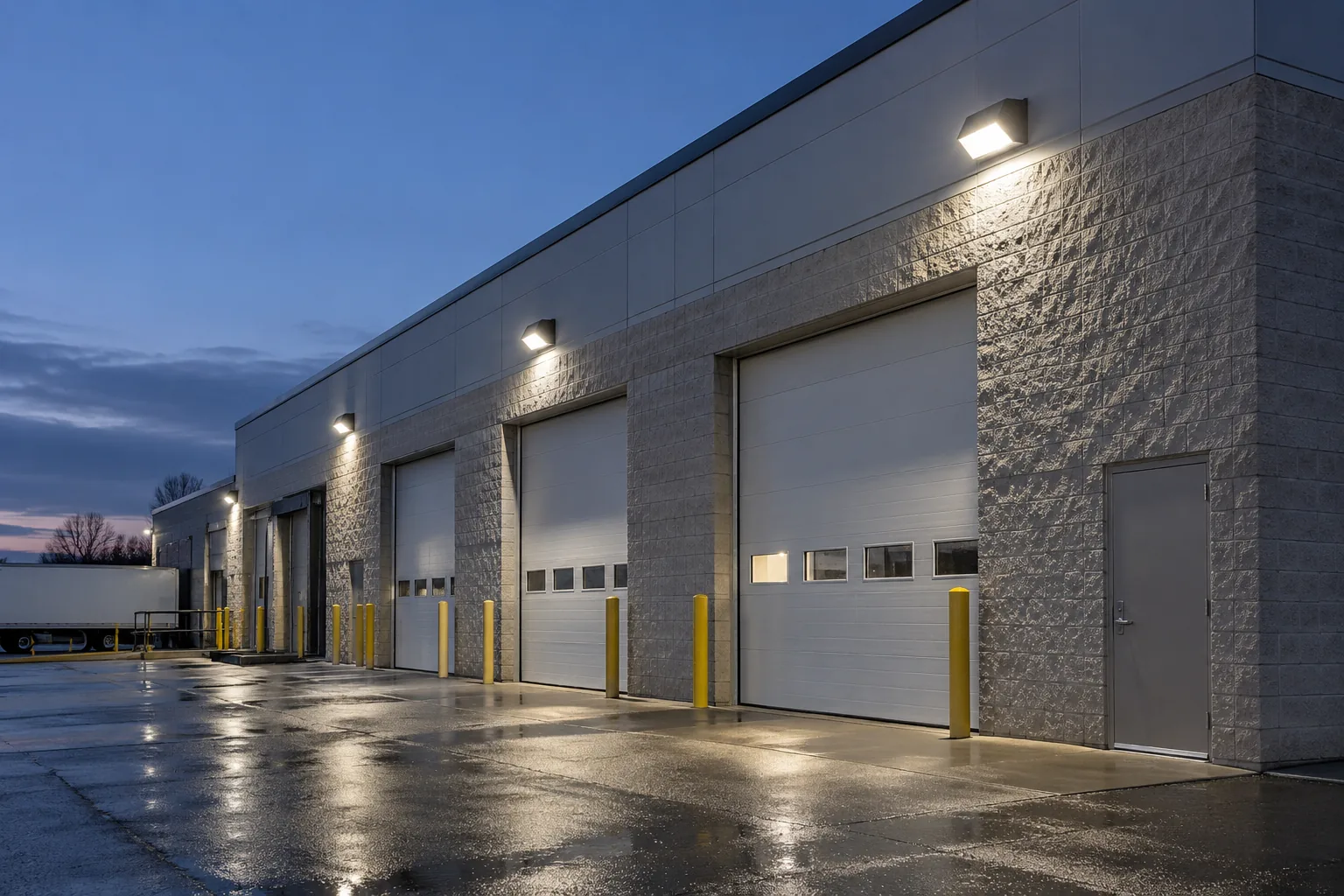
Review the property after dark as well as in daylight
A daytime visit can establish equipment locations and access conditions, but some operating problems only become clear after dark. A control may switch at the wrong point, allow a critical entrance to become dark, or leave one part of a parking area operating differently from the rest. Ask whether observation at the relevant time is useful for the specific complaint rather than assuming all assessment work can be completed under one set of conditions.
Night-time review also helps relate control behaviour to the wider exterior lighting plan. Fixtures should serve the intended property areas while considering neighbouring spaces, glare and direction. A control adjustment cannot correct every optical or placement problem. Where lighting remains disruptive even during the appropriate operating period, fixture distribution, shielding or orientation may need assessment separately from the photocell or schedule.
Plan access and replacement around the property
Photocells and related devices may be located on wall packs, poles, roofs or control equipment elsewhere in the building. Access can therefore be a major part of a seemingly small service task. Provide approximate mounting heights if known, photographs from the ground and information about restricted parking, delivery lanes or building access. Do not estimate a height with more certainty than the available information supports.
For property managers, coordinating several known defects may make access planning more efficient, but urgent operational concerns should be identified separately. The proposal should distinguish investigation, replacement components, access arrangements and configuration where those are relevant. If fixtures are nearing a planned replacement, compare a stand-alone control repair with work incorporated into the future project. The decision should account for present lighting needs and the reliability of the remaining equipment rather than delaying every repair in anticipation of a larger upgrade.
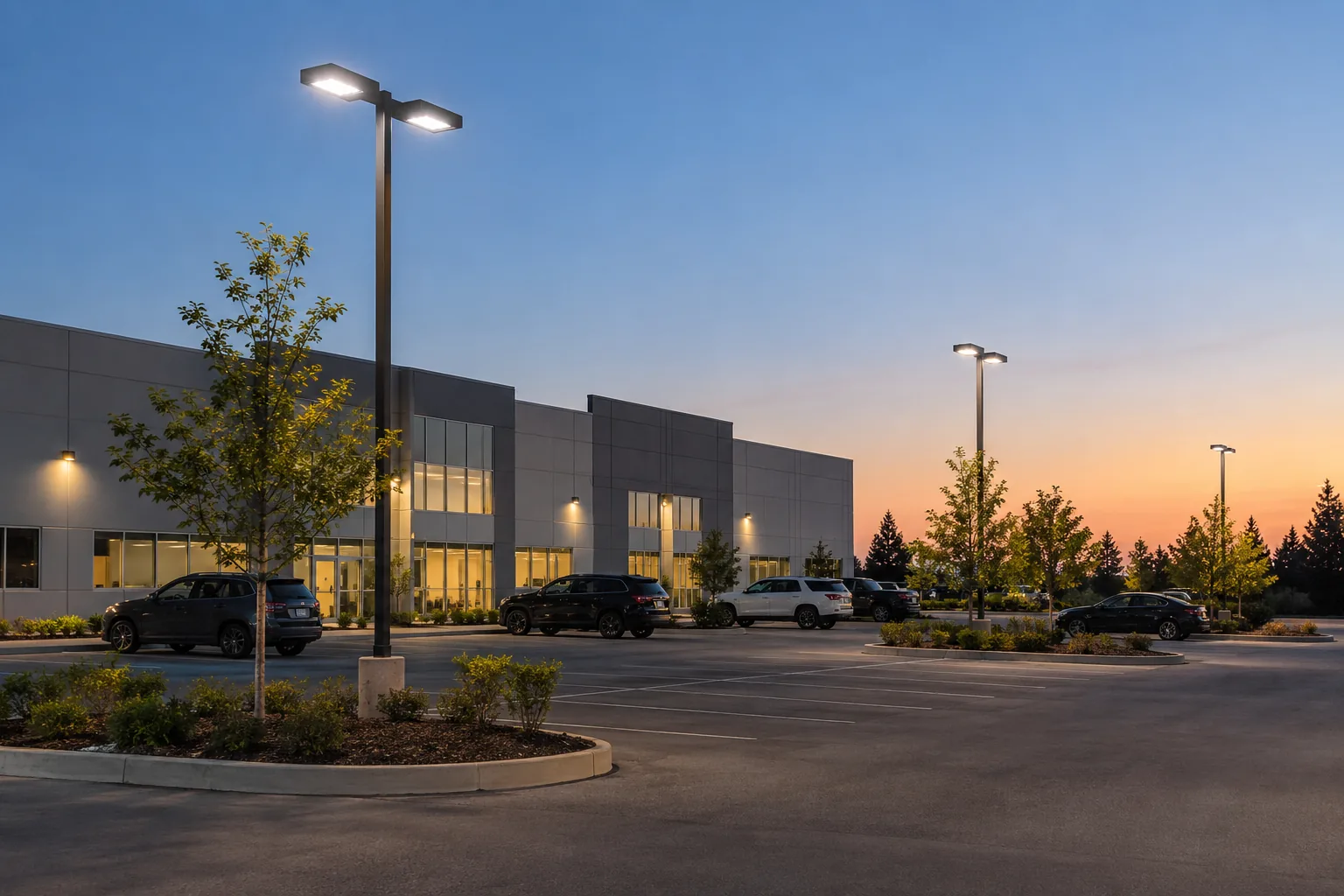
Use understandable settings and maintenance records
Exterior control information often becomes fragmented as tenants change and service visits accumulate. One timer may control storefront lighting while another controls a common parking area, and a local override may have been added years earlier. A useful handover connects physical areas to equipment and records the intended hours or daylight-based behaviour in terms the property team can understand.
Keep model details, configuration notes and the date of changes with the property’s lighting records. Record who can authorize future changes and how exceptions should be handled. If a seasonal schedule is used, establish responsibility for reviewing it. A small amount of clear documentation can prevent unnecessary investigation later, especially across multiple commercial properties. The aim is to give the manager enough information to describe a problem accurately without asking unqualified staff to inspect or modify electrical components.
Request a targeted exterior controls assessment
Provide the Mississauga property address, affected lighting group, normal operating hours and a description of the day-and-night pattern. Include recent photographs showing the fixture and the area it serves, any known equipment models and previous repair history. If the lights operate intermittently, a dated observation log can be more informative than a single photograph taken when everything appears normal.
Use the exterior control problems guide to organize symptoms before requesting service. A planned upgrade can also consider timers and scheduling alongside fixture replacement. The assessment should lead to a defined scope: correcting a fault, relocating or changing a control where appropriate, revising the operating sequence, or coordinating a larger lighting project. No single photocell model can be assumed suitable for every elevation, fixture and operating requirement on a commercial property.
Questions facility managers ask
Why are exterior lights on during the day?
Possible explanations include the control location, a failed device, a schedule, an override or a different electrical issue. Document whether one fixture or an entire group is affected before requesting professional investigation.
Can a photocell and timer be used together?
Compatible arrangements can combine daylight response with operating hours. The intended sequence must be clear so the property receives light when needed and controls do not work against each other.
Will a new photocell fix a flickering wall pack?
Not necessarily. Flicker can involve the fixture, driver, supply or control interaction. The relationship between the symptom, daylight and nearby fixtures helps direct the assessment.
Do parking lights need to operate all night?
That depends on property use, applicable requirements and the lighting plan. Operating decisions should consider access, occupants, vehicle movement and neighbouring properties rather than a single default schedule.