Published September 30, 2026 · Mississauga Commercial Lighting
Record the existing arrangement before comparing products
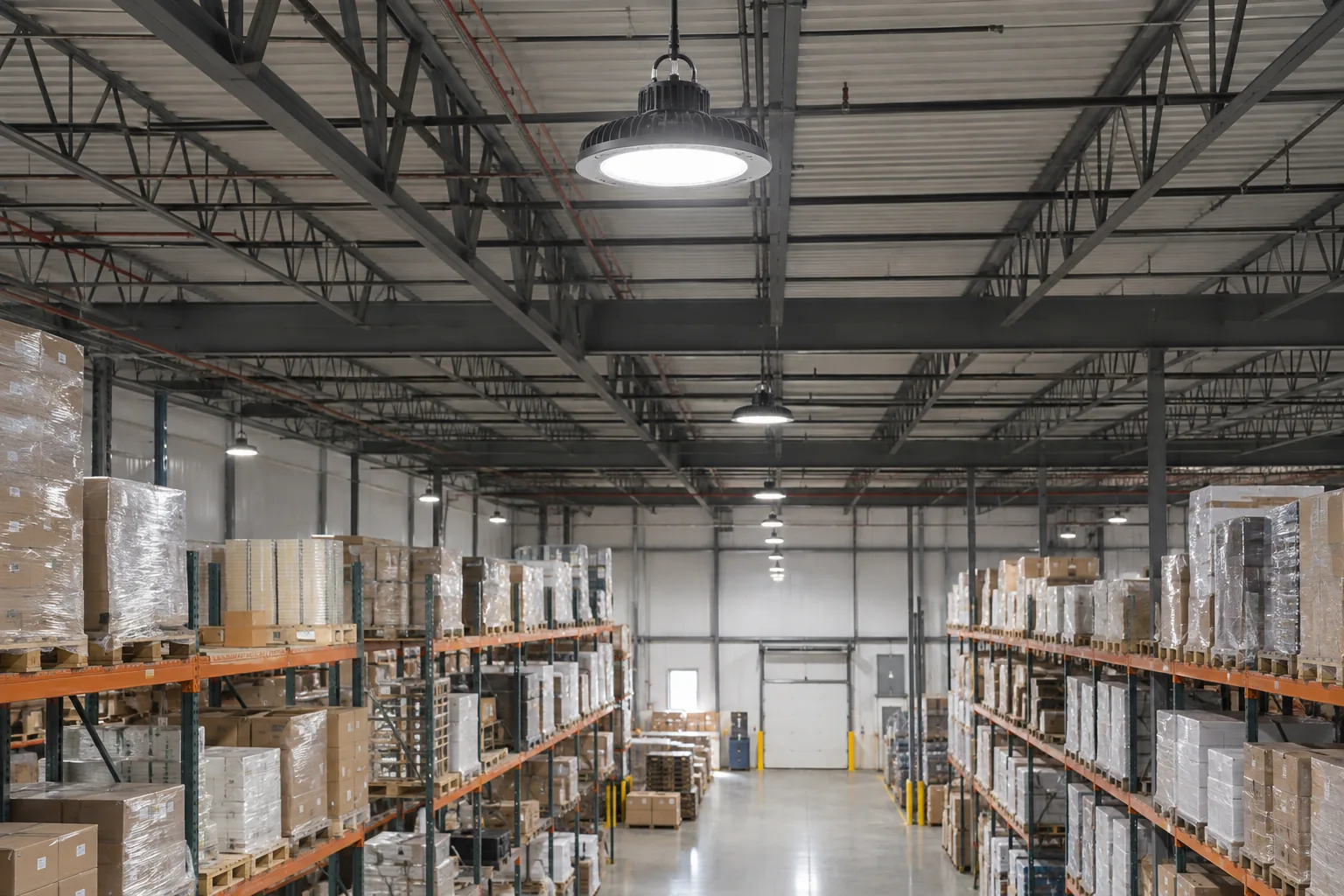
Start with a plan showing the high-bay locations and the activities below them. Identify racking, machinery, open storage, packing zones and circulation routes. Record mounting height where known and distinguish the height of the building from the actual mounting position of the fittings. A ceiling estimate alone may not describe the working arrangement.
List the existing technology, quantities, visible condition and known model information. A site may contain HID fittings, fluorescent high bays and several generations of LED equipment. Similar-looking fixtures may have different drivers, optics or controls. Note which information is confirmed and which needs investigation. Photographs taken safely from the floor should show both the fittings and surrounding obstructions. This helps a replacement assessment consider layout and access rather than turning immediately into a catalogue comparison based on an assumed wattage.
When reviewing a high-bay replacement in a Mississauga industrial unit, establish whether the overhead fixtures serve the current tenant’s layout or an arrangement left by an earlier occupier. A property in Dixie or Northeast Mississauga may be used for storage, production or a mixture of tasks; the district name does not establish the specification. Ask about incoming racks, new machinery and leasehold changes so the replacement distribution matches the area that will actually remain in use.
Use the failure pattern to define the first task
A single failed fitting, a group that flickers together and scattered dim units suggest different investigation needs. Record the observed behaviour, location and timing. Mention whether failures occur after warm-up, during specific equipment operation or following a known event. These details help establish the scope of diagnosis without claiming to identify the cause remotely.
If the current objective is restoring service, keep that request clear. A repair assessment can determine whether an appropriate component replacement is practical or whether the fixture condition supports replacement. Repeated failures across similar equipment may justify a wider review, but they should not be treated as proof that every unit needs immediate replacement. The lighting repair service addresses existing faults, while a planned high-bay project can compare longer-term options once the condition is understood.

Consider distribution at the actual mounting height
High-bay output needs to reach the relevant task and circulation areas. A broad distribution may suit an open floor, while a rack aisle may need light directed along the aisle and onto visible rack faces. Mounting height affects the distribution at those surfaces and the appearance of the source to people looking upward or across the space.
Compare optical information and the proposed arrangement, not only lumens or input power. Existing mounting points may be suitable, but retaining them should be a considered decision. If racking has moved, the old grid may now sit above shelves rather than aisles. Where a layout calculation, measured survey or specialist design is needed, identify it explicitly in the scope. A fixture with a higher output rating cannot automatically compensate for poor positioning or an optic intended for a different type of space.
Match the equipment to its environment
Industrial conditions can include dust, moisture, temperature variation, vibration and cleaning practices. A warehouse with ordinary dry storage differs from a production area or a space near frequently opened loading doors. Explain the actual conditions to the person selecting the equipment, including any special processes or exposures that may affect suitability.
Review mounting arrangements and the space around the fixture. Overhead services, structural members and equipment movement can influence placement and servicing. Do not assume that a fitting suitable in one part of the building is appropriate everywhere. Any specialist environmental classification or product requirement should be assessed through the relevant design and safety responsibilities. The proposal should identify the selected equipment and its intended application clearly, without making unsupported claims that a general-purpose high bay is suitable for every industrial environment.
Compare retained components with complete replacement
A failed LED driver may be replaceable where a suitable component and service method are available. In other cases, complete luminaire replacement may be more practical because of condition, parts availability or performance requirements. For older HID or fluorescent systems, the options may involve a different conversion approach or a new fitting. Compatibility and approved equipment use need review.
Ask what will remain in each option and how future servicing will work. A proposal should not hide a retained ageing component behind a broad description such as LED upgrade. Conversely, replacing a sound fixture solely because one serviceable component failed may not be the best use of the budget. Compare the complete installed scope, including access, rather than only the component price. Document the chosen model or replacement part so the next service provider has a reliable reference.
Design controls as part of the replacement
A high-bay replacement creates an opportunity to consider occupancy, schedules and dimming, but these should follow the facility’s operating needs. Busy production areas, occasional storage aisles and dispatch zones may require different behaviour. Clarify what happens when an area is empty, when activity begins and when staff remain relatively still to read or count stock.
The driver and control equipment must support the intended method. Mounting height and racks can affect detection, so an integrated sensor should not be accepted without considering its application. Review manual overrides, operation after power interruption and responsibility for settings. If a networked system is proposed, account ownership and configuration handover belong in the scope. See occupancy sensors and networked lighting controls for the distinct decisions involved. Controls should be commissioned under real operating conditions.
Plan the route to every fitting
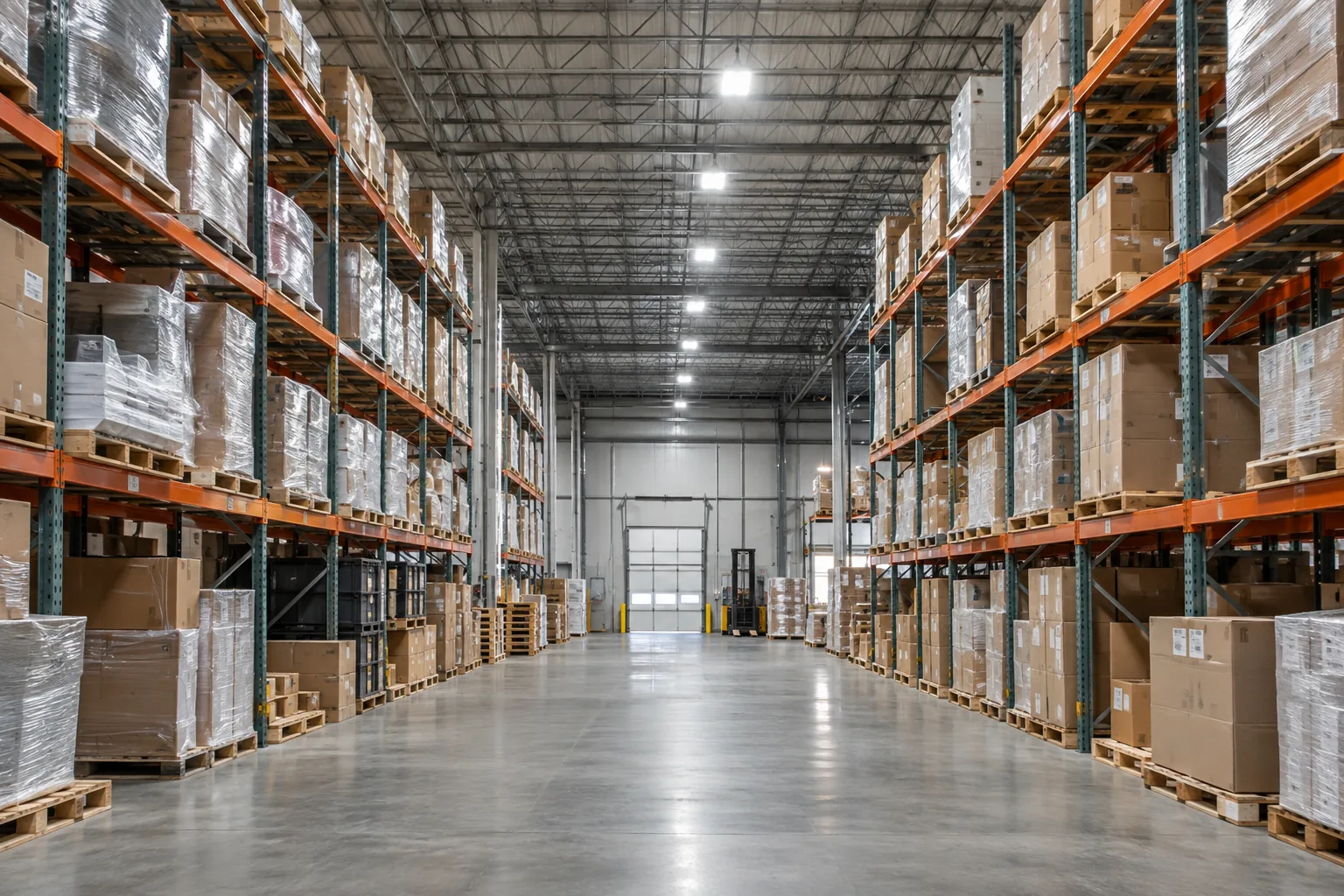
Access is often a major part of high-bay work. Determine how suitable equipment can enter the building, reach each zone and be positioned safely. Door clearances, floor conditions, rack spacing and equipment beneath the fittings can all matter. A fixture that appears accessible from a photograph may be blocked during normal operations.
Agree who clears stock or moves equipment, when that work must be complete and how the area is separated from traffic. Consider delivery peaks, shift changes, security requirements and where access equipment can remain between work periods. These details should be confirmed rather than assumed. If some fixtures cannot be reached within the proposed window, identify them before scheduling. A complete access plan can reduce repeated setup and helps the facility understand the operational cost of the work alongside the installation price.
Choose phases that leave the facility workable
Phasing may follow aisles, work zones or planned shutdown periods. The best boundary is not always the smallest area; electrical arrangements, controls and access can make a larger coordinated phase more practical. Describe what each phase includes, what remains operational and how unfinished areas will be managed.
Consider visual consistency where old and new equipment will coexist temporarily. Differences in colour, distribution and control response should be understood rather than discovered after the first phase. Confirm procurement for later phases and the process if a selected product changes. After-hours work may be useful but must be agreed with the facility and service provider. A realistic sequence acknowledges the needs of production and distribution without promising that every replacement can happen without interruption or that all work windows are equally available.
Keep detailed work areas in view
A high-bay system provides general illumination, but inspection benches, packaging checks and equipment servicing may need separate task consideration. Record where staff assess small details or colour differences, and where machinery creates a shadow over the work. Increasing general output throughout a large building may be less useful than a carefully planned local solution. Discuss the relationship between general and task lighting during the assessment so the replacement scope supports both movement through the facility and the more demanding work performed within it.
Compare operating and maintenance assumptions
Estimate energy use with the actual input power and annual hours for each zone. If controls reduce operating time or output, show those assumptions separately from the equipment change. Ask the facility team to review them, including seasonal peaks and weekend activity. No single savings percentage describes every high-bay installation.
Maintenance considerations include access, availability of components and the effect of an outage on work. Rated product life and written warranty terms are different concepts, and neither should be turned into a blanket promise of no future service. Keep possible incentives separate from the underlying project case. Eligible products and control measures need current programme checks before procurement; an LED label alone is insufficient. A clear comparison explains how the proposal addresses the building’s known problems and where assumptions still need confirmation.
Keep the handover useful for future work
At completion, retain fixture locations, model information, control settings and the documentation agreed for the electrical work. Identify any variations from the original schedule. Where a future layout change is expected, keep the plan used for the installation so the next assessment can compare the old and new conditions.
Review normal tasks once the area is back in use, including rack-label visibility, packing work and sensor response. Any agreed measurement or design verification should be performed by the responsible party under the defined scope. Record unresolved observations and the next action. For the initial request, provide the Mississauga address, mounting and rack heights if known, operating hours, affected quantities and access restrictions. The high-bay LED lighting service is a focused starting point, with warehouse lighting available for a broader facility review.
Questions facility managers ask
Can a brighter high bay fix a dark aisle?
Not reliably without reviewing distribution and position. Racks may block the light or the optic may direct too much output away from the task. Assess the geometry before increasing output.
Is a driver replacement always better than a complete fixture?
No. Compare compatibility, fixture condition, available parts, access cost and the required performance. Either approach may be appropriate depending on the actual equipment and fault.
What should be known about access before a visit?
Provide mounting height if known, aisle restrictions, floor or doorway constraints, equipment below the fitting and available work windows. Identify who can authorize access and clear the area when required.