
Published September 30, 2026 · Mississauga Commercial Lighting
Create a location system people will actually use
Start with a property plan and a consistent way to identify fittings or small groups. Pole numbers, floor and corridor references, garage levels and suite boundaries can all be useful. The exact format matters less than whether tenants, security staff and service providers can identify the same location. Avoid relying on descriptions that change with parked vehicles or temporary storage.
Connect each location to basic equipment information where available. Record fixture type, control arrangement and access considerations, with photographs taken from safe positions. A practical inventory does not need to begin as a complex database. A structured spreadsheet or property-maintenance system can work if it is kept current and accessible to the responsible people. Separate common-area equipment from tenant-owned lighting so service requests reach the correct decision maker and costs are assigned according to the actual property arrangements.
Make fault reports specific enough to act on
A report that says lights are bad leaves too much uncertainty. Ask for the location, observed behaviour, first-noticed date and affected quantity. Useful descriptions include completely out, intermittent, visibly damaged, unusually dim, different colour or not responding to the expected control. State whether several fittings are affected together and whether the issue occurs only at certain times.
Photographs can show context, but occupants should not climb, open fittings or approach damaged electrical equipment to obtain them. Include any access restrictions and the contact who can meet the service provider. If the concern suggests an immediate hazard, use the property’s safety procedures rather than an ordinary maintenance queue. A well-structured report can reduce unnecessary repeat visits and helps the responsible contractor arrive prepared to investigate the likely scope without treating a tenant’s observation as a confirmed diagnosis.
Prioritize by use and consequence
Not every outage has the same operational effect. A failed fitting at a regularly used entrance, stair route or active loading area may require a different response from one in a temporarily unused storage room. Review the affected use, the remaining lighting and any specific life-safety concern. Emergency and exit-sign issues should be identified distinctly and handled through the appropriate maintenance responsibilities.
Create a clear internal process for triage, authorization and communication. It should say who receives reports, who decides the next step and who keeps occupants informed. Confirm the service provider’s response arrangements before communicating timing expectations to tenants or building staff. For non-urgent defects, grouping compatible work may be efficient, but the decision should not leave a significant problem unaddressed merely to wait for a larger batch. A priority list works best when it reflects actual property conditions and is reviewed as those conditions change.
Separate repair work from capital planning
A maintenance visit can restore a failed component without committing the owner to a broad upgrade. Keep the immediate fault, recommended investigation and optional replacement planning separate in the work record. This helps owners understand what is required now and what may be useful later. It also prevents a large retrofit proposal from delaying a clearly defined repair.
Repeated faults can provide evidence for a capital discussion. Track frequency, affected equipment, access cost and parts availability. If similar fixtures repeatedly fail or no longer provide suitable distribution, ask for a comparison of continued servicing and coordinated replacement. A decision should explain the expected operational benefit, not just the age of the fittings. The lighting maintenance service and lighting upgrades service support different stages of this process.
Use access planning to reduce wasted visits
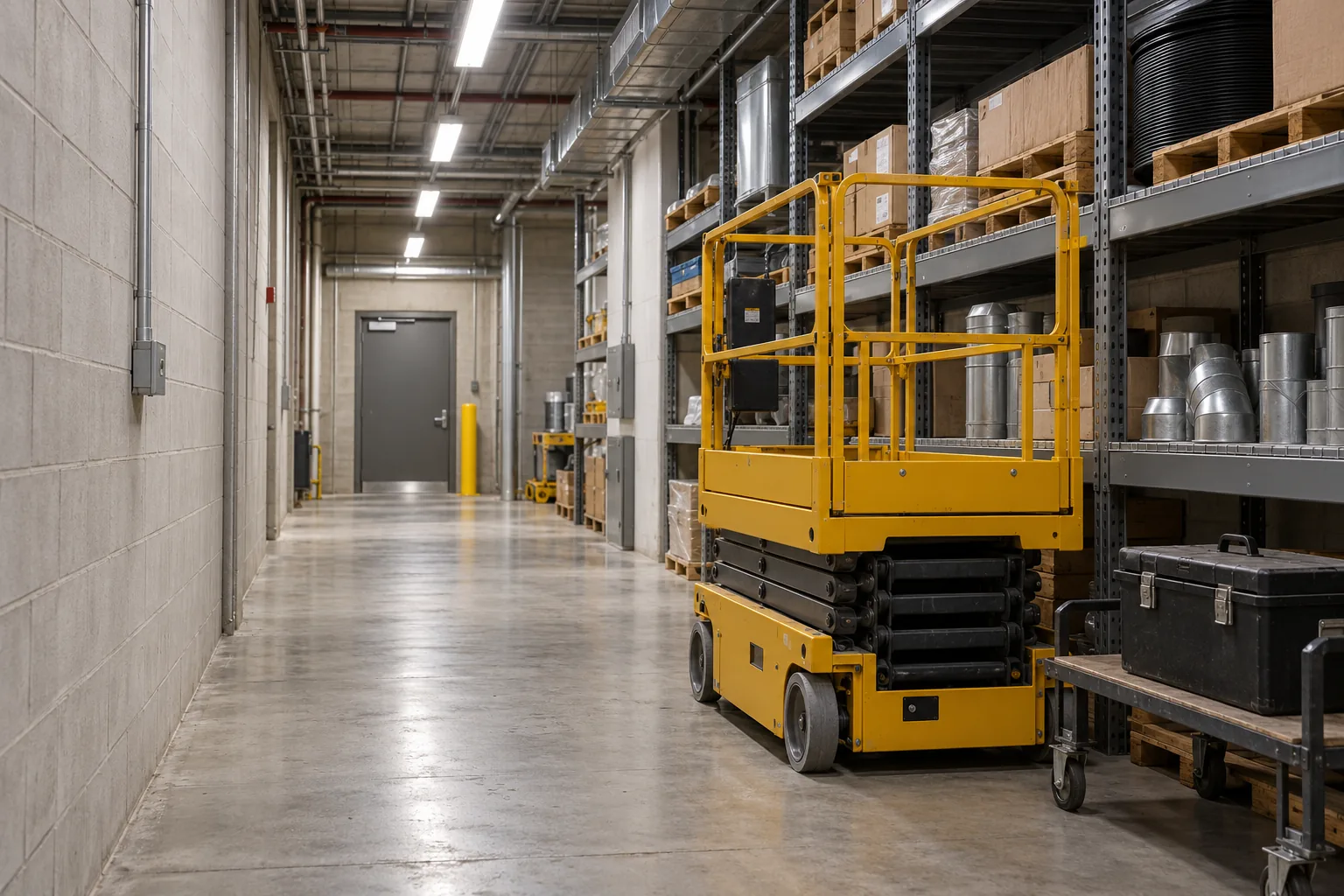
Provide accurate information about keys, security escorts, tenant contacts, parking, loading routes and work windows. High fixtures, garage ramps and restricted plant areas may require more planning than a visible location suggests. Identify whether access equipment can reach the fitting and who is responsible for clearing vehicles, stock or furniture.
For multi-tenant properties, confirm who can approve shutdowns or work in shared areas. A tenant request does not necessarily authorize changes to common lighting or access to electrical rooms. Explain the scope to affected occupants and give practical notice where needed. If several compatible repairs can be completed during one planned access window, record the full list before the visit. Clear access arrangements can improve efficiency without assuming that every property can be serviced after hours or that a contractor owns particular equipment.
Standardize thoughtfully across the portfolio
Standardization can simplify spare information, visual consistency and future service decisions. It is most useful where properties share comparable environments and tasks. Record preferred models or performance requirements, approved alternatives and the reason for each choice. Keep enough detail to evaluate a replacement rather than relying only on a manufacturer name.
Do not force one fixture into every application. A garage, office corridor, exterior wall and high warehouse ceiling have different conditions. The portfolio standard should allow appropriate differences while reducing unnecessary variation within each use. Consider controls compatibility, mounting, environmental suitability and access as well as appearance. If a product changes or becomes unavailable, update the standard and identify which properties use the earlier version. This makes future servicing easier and helps avoid accidental mixtures of equipment that look similar but behave differently.

Include controls in routine records
Some apparent fixture failures are actually control problems. A photocell, timer, occupancy sensor or schedule may affect several lights at once. Keep the location and intended behaviour of controls alongside fixture records. Document who is authorized to change settings and how temporary overrides are returned to normal.
Review exterior operation after seasonal schedule changes, tenant-hour changes or reports of daytime lighting. In garages and common areas, note unwanted shutoff, delayed response or detection outside the intended zone. Do not solve every complaint by leaving the system permanently overridden. Record the issue and arrange appropriate assessment. When a fixture or driver is replaced, its compatibility with retained controls should be considered. A maintenance plan that ignores controls can repeat the same service calls without addressing the actual source of the problem.
Keep local property responsibilities visible
Mississauga’s Property Standards By-law includes provisions for lighting maintenance and safe operation, while exterior nuisance concerns are addressed separately. The practical implication is that maintenance decisions should consider use of the area and effects on neighbouring properties, not only whether a lamp turns on.
For electrical work, the ESA guidance for property owners and managers explains contractor and notification responsibilities. Confirm the requirements for the particular scope and retain the relevant records. A maintenance agreement does not replace those responsibilities or establish that every item of work has the same process. Where a tenant arranges alterations, clarify how the owner or manager receives the required information. These references support planning; they do not constitute a property-specific compliance determination. Information reviewed: September 30, 2026.
Review trends at useful intervals
Periodically review the fault log by property, zone and equipment type. Look for repeated failures at the same location, groups of similar-age equipment needing service and visits that could have been avoided with better information. A recurring issue beside a loading door may have a different cause from scattered failures in an office floor, even if both are recorded as lighting outages.
Use the review to improve the next work plan. Prioritize investigation where the cause remains unclear, identify suitable grouped repairs and develop capital options where evidence supports them. Track the effect of completed changes rather than assuming an upgrade has eliminated future maintenance. A short owner report can state the observed pattern, the operational consequence and the proposed next step. This is more useful than a large list of invoices without an explanation of what the property is learning from them.
Preserve records through management changes
Store the current lighting inventory and recent work history with the property records so they remain available when a manager, tenant representative or service provider changes. Name the person responsible for updating them after completed work. Remove obsolete schedules from active use or mark them clearly as superseded. When a new team takes responsibility, a short review of unresolved faults, unusual controls and access restrictions is often more useful than a folder of unidentified photographs. Consistent records help the next decision start with the actual condition of the property.
Prepare multi-property requests consistently
When requesting work across several Mississauga properties, use one intake format but retain site-specific details. Each address should have its own affected locations, access contact, operating hours and authorization status. Identify which requests are repairs and which are assessment or upgrade discussions. A combined list should not hide a time-sensitive issue at one property.
Agree how reporting, approvals and invoices should reference the work. If the owner wants a phased portfolio plan, provide enough equipment and operating information to compare properties on a consistent basis. Keep local restrictions and tenant obligations visible. The property management lighting service addresses common-area and operational needs, while multi-site commercial lighting supports coordinated planning. A repeatable information process makes the relationship easier to manage while preserving the different scope and access needs of each building.
Questions facility managers ask
Should every outage be handled as a separate visit?
Not necessarily. Compatible non-urgent work may be grouped when access and priorities allow. The decision should reflect the affected use and any safety concern rather than waiting automatically for a larger batch.
What belongs in the lighting maintenance log?
Record the location, observed fault, date, action taken, installed or replaced equipment and relevant control settings. Add access information and follow-up needs so the next service request has useful context.
Can one fixture standard cover an entire portfolio?
A common standard can help within similar applications, but different environments and tasks need suitable equipment. Keep controlled alternatives for offices, garages, exteriors and industrial spaces.