
Published September 30, 2026 · Mississauga Commercial Lighting
Compare systems rather than individual lamps
A fluorescent installation includes more than the tubes. The fixture housing, ballast, lampholders, wiring, lens and mounting arrangement all affect its operation and maintenance. An LED option may retain some of those components or replace the fitting entirely. A comparison based only on the price of one lamp leaves much of the decision unexplained.
Inventory the existing system by area and record visible condition, failures and known maintenance history. Different parts of one property may have been altered at different times, leaving a mixture of equipment behind similar lenses. Identify the quantities and system types before asking for a conversion price. When documentation is missing or components are inaccessible, that uncertainty should be addressed during assessment. A clear inventory helps prevent a proposal for one arrangement from being applied to another without checking compatibility or scope.
Recognize what LED can change and what it cannot
A well-selected LED system may reduce input power, support useful controls and change maintenance requirements. It can also improve distribution when the fixture and layout are chosen for the task. These benefits are project-specific. Replacing a fluorescent tube with an LED lamp does not automatically improve a poorly placed fitting or eliminate shadows caused by shelving.
Distinguish the source of each expected improvement. Lower energy use comes from equipment and operation; better visibility may come from distribution, placement or task lighting. Reduced service effort depends on product suitability, access and future repair options. Avoid treating the technology label as a guarantee of comfort or reliability. A facility manager should be able to explain why the proposed equipment suits the building, not simply that it is newer. This is especially relevant when an older Mississauga commercial unit has changed use since its original lighting was installed.

Understand the broad conversion choices
Some projects retain existing housings and use an appropriate lamp or retrofit arrangement. Others replace the complete luminaire. The suitable option depends on the condition and intended use of the existing equipment, the compatibility of the proposed components and the resulting performance. There is no single conversion method that fits every fluorescent installation.
Ask the responsible electrical contractor to identify the approved equipment arrangement and any required changes. Do not attempt to choose a wiring method from a product image or a general article. A physical fit does not establish electrical compatibility. The proposal should explain what components remain, what is removed and how the converted fitting will be identified and serviced. Where existing housings are damaged or the distribution is unsuitable, complete replacement may offer a clearer solution. Where the housing remains appropriate, retaining it may deserve consideration.
Review visual performance where work happens
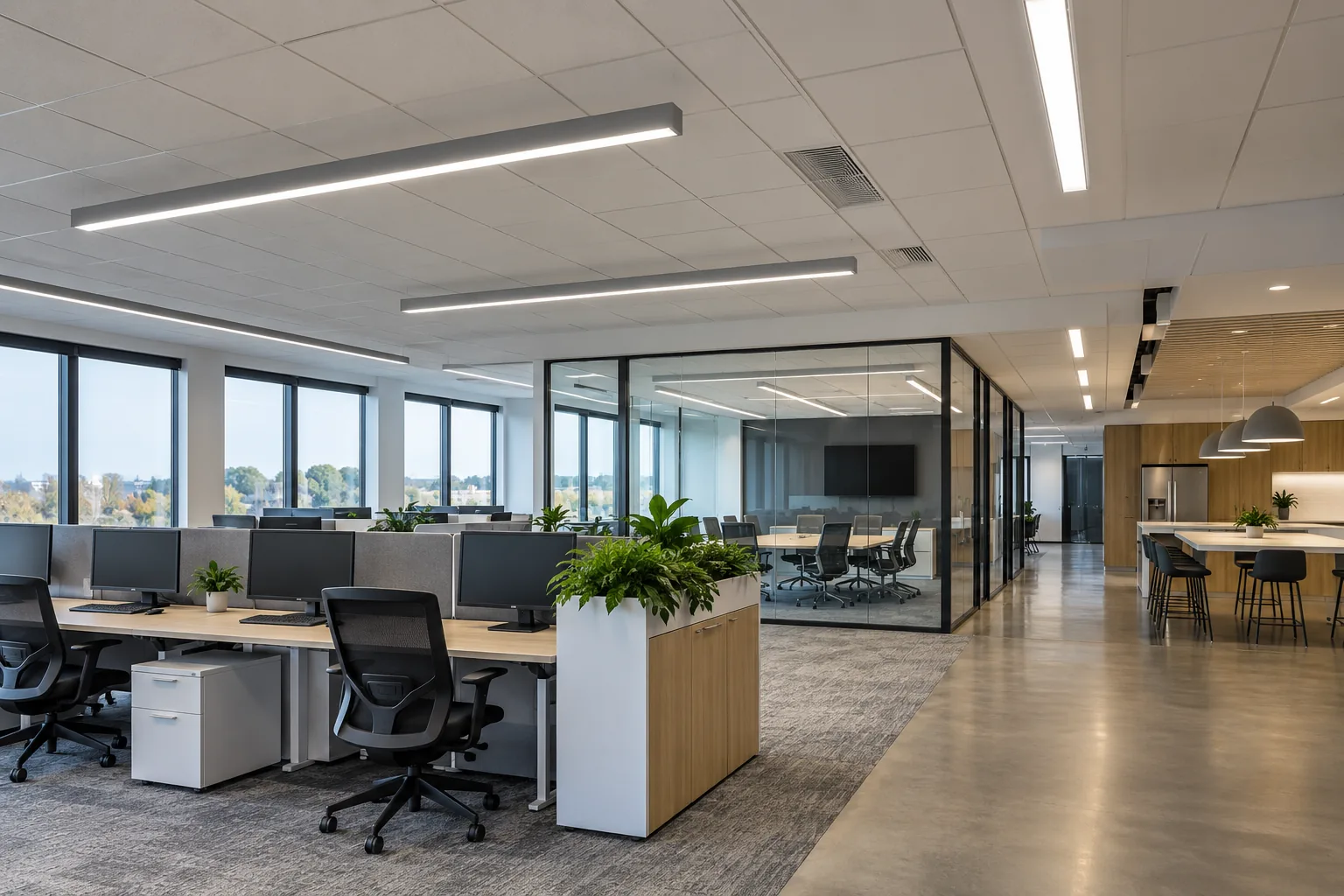
Compare light at relevant surfaces and viewing positions. In an office, this may involve screens, desks and meeting rooms. In a warehouse, it may involve labels, rack faces and packing benches. In retail, product appearance and customer movement can matter as much as a general impression of brightness. A fitting that looks bright when viewed directly is not necessarily delivering useful light where it is needed.
Consider glare, shadows, colour appearance and consistency between adjacent areas. Colour temperature is not a measure of output or colour-rendering quality. Dimming behaviour and flicker also deserve attention where controls or visually demanding tasks are involved. If a representative-area review or measured comparison is important to the decision, define it as part of the project. Do not assume that a wattage conversion table can describe the completed experience for every type of commercial space.

Calculate energy with the actual operating pattern
Separate the property into zones with different hours. An office, a back-of-house stockroom and an exterior entrance may operate for very different periods. Use system input information where available, recognizing that fluorescent system consumption can include ballast losses beyond the lamp rating. Identify assumptions when reliable data is not yet available.
Compare the proposed system on the same basis, then show any change in operating hours or controls separately. A reduction caused by switching an empty area off should not be presented as if it came entirely from replacing the light source. Electricity billing arrangements can affect how reduced consumption translates into cost. A useful assessment provides a transparent method and a range where necessary, rather than a guaranteed savings percentage. Review the assumptions with someone who knows the building schedule, including cleaners, security and seasonal changes in activity.
Think through controls before buying lamps
An LED conversion can create an opportunity for dimming, occupancy control or better scheduling, but the equipment must support the intended method. Existing fluorescent controls may not be compatible with the proposed LED arrangement. Some conversions offer limited practical adjustment, while a new fixture and driver may support a broader controls scope.
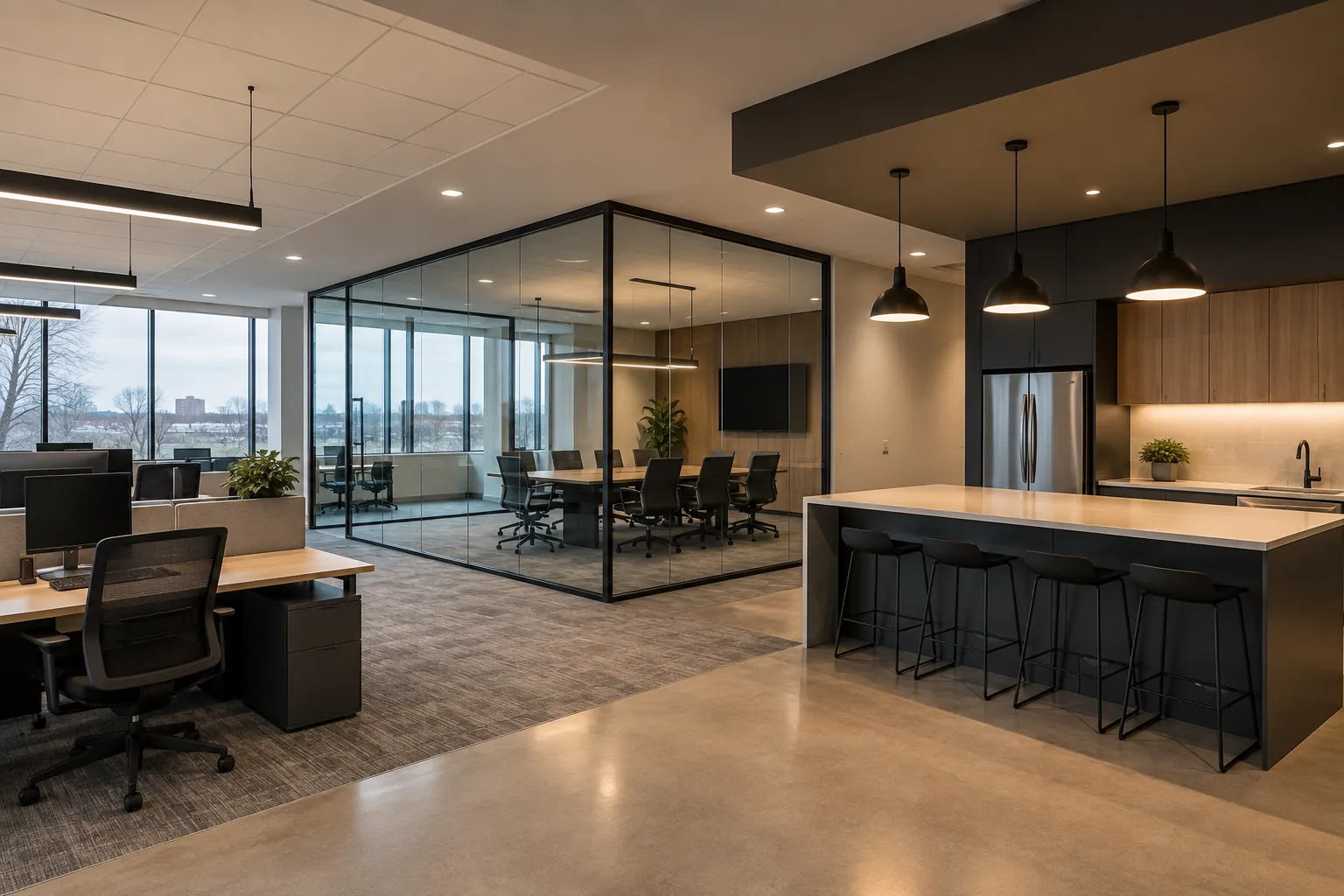
Decide what each area should do before equipment is selected. Does a storage room need occupancy-based operation? Does an office perimeter need a separate zone? Does a meeting room need simple presentation settings? Review the driver, sensor and dimming compatibility together. Commission the completed combination under normal use, including quiet occupancy and low-level dimming where relevant. Controls that behave poorly may be overridden permanently, reducing the value of the project. The dimming and zoning service explains why the operating plan belongs in the initial discussion.
Assess maintenance beyond a quoted lifespan
A long rated life is not a complete maintenance plan. It does not describe every driver, sensor, connection or environmental condition, and it should not be treated as a promise that the installed system will never require service. Consider access, replacement parts, cleaning and the consequences of a failure in the particular area.
High fixtures and fittings above difficult-to-move equipment can make repeated visits costly. In an office, a replacement that no longer matches adjacent panels can create a visible inconsistency. Ask how a failed component would be identified and serviced, and retain model information after installation. Compare the value of standardizing appropriate equipment across similar areas with the need for different products where conditions differ. A maintenance decision should be grounded in practical serviceability rather than an unsupported claim that one technology is universally maintenance-free.
Allow for the installation setting
A fluorescent conversion in an occupied office needs different preparation from replacement over an industrial production area. Identify furniture or equipment beneath the fittings, working hours and the person who can authorize access. Where ceiling finishes are fragile or damaged, agree whether repairs belong in the scope. Confirm how each completed area will be returned to use and how removed materials will be handled during the shift. These practical details can affect the choice between a limited conversion and a more comprehensive replacement even when both options appear suitable on an equipment schedule.
Include removal and responsible disposal
A lighting upgrade generates removed lamps, components, packaging and sometimes complete fixtures. Agree who removes these materials from the site and how disposal will be handled under the applicable requirements. Fluorescent lamps need appropriate handling, and the facility should not be left with an undefined pile of old equipment after installation.
Plan where removed materials can be held safely during the work and how they will leave the building. In occupied premises, coordinate this with access routes and housekeeping requirements. The proposal should distinguish removal of the lighting equipment from unrelated ceiling repairs or finish work. Where incentive documentation or the project agreement calls for disposal records, identify that requirement in advance. Ask how removed lamps and equipment will be handled, and confirm any required disposal records in the agreed scope. A clear disposal scope is a practical part of a complete comparison between conversion and replacement.
Check the current incentive category
Eligible lighting products for existing commercial buildings may be available through Save on Energy Instant Discounts. Eligibility depends on the current measure and product requirements, the participating distributor and the project conditions. An LED product does not qualify solely because it replaces fluorescent lighting.
Confirm the precise model and purchase route before relying on a discount in the budget. Where networked controls are included, a different program pathway may apply and the project sequence needs attention. Do not assume that a discount is available after equipment has already been purchased or that incentives can be combined for the same work. Keep any incentive as a separately identified part of the commercial comparison. The Ontario lighting incentives page explains the main pathways. Information reviewed: September 30, 2026.
Choose the scope that solves the building problem
The best comparison sets out the existing condition, the proposed approach and the reason for each change. It identifies fixture quantities, retained components, controls, access, installation assumptions and handover information. A repair-only option, a limited conversion and a coordinated replacement may all be worth comparing where they address different priorities.
Start the assessment with the Mississauga address, facility use, operating hours, photographs, approximate quantities and the reasons for considering an upgrade. Mention known failures, planned layout changes and any landlord requirements. Use commercial LED lighting retrofits when the objective is improving an existing system, or lighting repair when the immediate concern is a fault. A technology decision becomes much clearer once the facility’s operational and maintenance needs are visible.
Questions facility managers ask
Is a lamp conversion always less expensive than a new fixture?
Not necessarily when installation, compatibility, condition, controls and future servicing are considered. Compare complete scopes rather than only product prices, and identify what each option retains.
Should all fluorescent fixtures be replaced at once?
The right sequence depends on condition, performance, access and budget. A phased approach may be practical, provided each phase has a clear purpose and does not create an awkward mixture of incompatible equipment.
Can an LED tube be selected by length alone?
No. Length and physical fit do not establish the approved electrical arrangement or compatibility. Selection and any required alterations need assessment by the responsible qualified personnel.