

Published September 30, 2026 · Mississauga Commercial Lighting
Find the areas with a genuine control opportunity
Record when each area is occupied and when it is lit without useful activity. A continuously staffed packing operation may have little opportunity for occupancy-based reduction, while an occasionally visited storage aisle may behave very differently. Include night shifts, weekend work, cleaning, deliveries and inventory counts. A schedule based only on office hours can misrepresent the warehouse.
Ask supervisors and operators about exceptions. A normally quiet aisle may become active during a seasonal peak, or a staging area may be used late when outbound loads change. The aim is to identify useful control behaviour without making the system inconvenient. Divide energy assumptions by area and avoid promising one savings percentage for the entire building. The benefit depends on the existing operating pattern, proposed settings and whether the system remains in its intended mode after installation.
A Mississauga distribution operation may use a night shift for receiving while daytime staff focus on picking and dispatch. Record that distinction zone by zone, whether the property is in Gateway, Dixie or another employment area. Ask the late-shift contact about stock counts, delayed trucks and temporary storage. Observing only daytime activity can produce a control schedule that appears sensible during commissioning but behaves poorly during the part of the operation that was never discussed.
Match detection to rack geometry and height
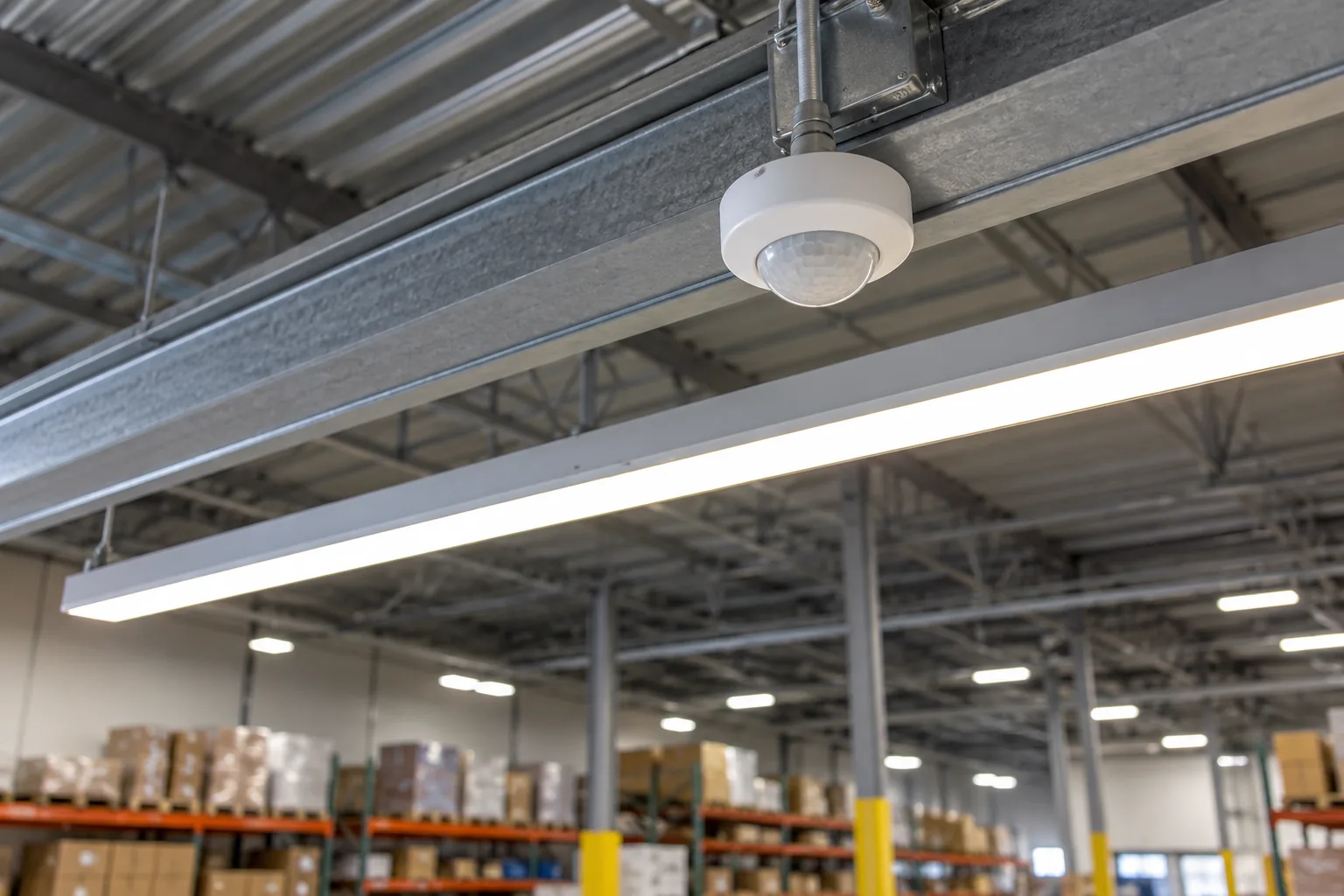
Racks create a different sensing environment from an open room. They may block a sensor’s view, constrain movement to a narrow aisle or introduce shelving that changes over time. The mounting height and detection pattern need to suit the actual space. A sensor that works well in a low-ceiling stockroom may not perform as intended above tall warehouse racking.
Document aisle width, rack height, entry points and the locations where people pause. Explain whether activity involves pedestrians, forklifts, elevated picking or a mixture. Selection should consider the manufacturer’s intended application and the proposed mounting arrangement. Do not assume that a larger detection area is always better; detecting movement outside the intended zone can keep lights on unnecessarily. A useful layout plan identifies both the area that needs reliable detection and adjacent activity that should not trigger it.
Define what the lights should do, in plain language
Describe the desired sequence for each zone. What happens when it is empty, when someone enters, while activity continues and after the area becomes quiet? If dimming is proposed, define the intended operating levels through the design and commissioning process. Avoid treating a sensor timeout or dimmed level as a universal setting suitable for every aisle.
Consider the time needed to approach, identify a location, pick stock and move away. Quiet tasks such as counting or reading can require a different delay from simple passage through a corridor. Confirm how cleaning and maintenance staff will use the area. Required emergency and egress lighting functions must remain appropriately addressed and should not be casually included in energy-saving shutoff strategies. A plain-language sequence helps operations staff review the proposal before it becomes a set of technical settings that are difficult to evaluate.
Choose zones that operators can understand
Zoning should reflect useful boundaries. A group of related aisles, a receiving area and a packing zone may justify separate operation, but excessive fragmentation can make the system difficult to manage. Identify which lights need to act together and where a change between zones would be distracting or impractical.
Use stable names that match the facility’s own references. If staff call an area Receiving West, the controls should not identify it only by an unexplained device number. Keep a plan showing the relationship between zones and physical fixtures. When racking or work areas change, review whether the zones still make sense. A good system should be maintainable by the people responsible for the building, with a clear route for adjustments. The initial configuration is only useful if the facility can understand it after the installer has left.

Check fixture and control compatibility early
Drivers, sensors, dimming interfaces and communication components must function together. Existing LEDs may support one control method, limited adjustment or no practical dimming. A proposed sensor addition should therefore begin with equipment identification and compatibility review. Do not assume that every LED fixture is ready for any control system.
Ask which components will remain and which need replacement. Where integrated sensors are proposed, consider how they will be accessed and replaced at height. Where remote devices are used, review wiring or communication requirements and the environment in which they operate. Confirm behaviour after a power interruption and any required local fallback. These details should be resolved before procurement so the controls scope does not become an unexpected fixture replacement project. The occupancy and vacancy sensor service provides a starting point for a focused assessment.
Know what a networked system adds
Networked controls can allow coordinated zones, schedules and adjustments across multiple devices. Depending on the selected system, they may also provide information about operation. These capabilities can be useful in a large warehouse, but they introduce decisions about administration, access and long-term support. Do not select them solely because they sound more advanced.
Identify the business reason for networking. Does the facility need centralized scheduling, easy rezoning, operational reporting or remote adjustment? Confirm which functions are included and which depend on extra hardware, subscriptions or external connectivity. Establish account ownership, administrator permissions and the process when a staff member or service provider changes. Ask what remains functional if the network or external service is unavailable. A proposal should distinguish the required capability from optional features, with handover information appropriate to the selected system.

Plan commissioning around real activity
Turning the lights on once is not a complete controls check. Test normal entry routes, movement at the far end of aisles and the places where staff pause to work. Include periods of quiet occupancy and the transition between adjacent zones. Review unwanted triggering from cross-aisle traffic or activity outside the intended area.
Commissioning needs a practical time window and someone from operations who understands normal use. Agree how observations will be recorded and which adjustments are included. Where the building is not fully stocked during installation, note that later storage changes may affect behaviour. Keep the accepted settings and the reason for important choices. If staff later report that lights switch off unexpectedly, the service provider can compare the complaint against a known configuration rather than an undocumented starting point.
Make overrides deliberate and reversible
Warehouses have exceptions: a late truck, a stock count, cleaning or maintenance can extend activity beyond a schedule. Provide a clear way for authorized users to operate the lighting when needed, while understanding how the system returns to normal. An override that is easy to activate and difficult to cancel may become the permanent operating mode.
Identify who can change routine settings and who can make deeper configuration changes. Explain the controls in the language used by the facility, and place operating information where it will be available to the appropriate staff. A simple log of major changes can prevent confusion across shifts. If a complaint leads to a temporary override, record the reason and arrange review rather than leaving it indefinitely. Controls should support operations; persistent workarounds are a signal that the original settings or zoning may need adjustment.
Check incentives without confusing the pathways
Standard occupancy controls and networked lighting controls do not necessarily follow the same incentive route. Save on Energy’s Instant Discounts information distinguishes standard controls from networked systems that remain under Retrofit. Eligibility still depends on the exact measure, equipment and project conditions.
Discuss the pathway before buying components or accepting a binding project commitment. Ask who confirms eligibility and what documents are needed to support the application or discount. Do not assume that adding a sensor to an existing fixture automatically qualifies, or that two programmes can be stacked for the same work. Keep the operational case for the controls separate from a possible incentive. The project should have a useful purpose even while eligibility is being checked. Information reviewed: September 30, 2026.
Describe a controls fault clearly
A useful service report distinguishes a fixture outage from unexpected control behaviour. Note whether the light can operate at all, whether adjacent fixtures respond correctly and whether the problem occurs at a particular time or position in the aisle. Include recent changes to racks, schedules or equipment. Avoid changing several settings at once in an attempt to solve the issue, because that can remove the original reference point. Give the responsible service provider the zone name and any available configuration record so diagnosis begins with the intended sequence of operation.
Maintain the controls as part of the lighting system
Controls can be affected by physical damage, altered layouts, changed settings and replacement components. Include them in the maintenance record rather than treating them as invisible accessories. Note sensor locations, zone names, model information and the contacts responsible for administration. When a driver or fixture is replaced, compatibility with the existing controls should be checked.
Review operation after significant changes to racking, shifts or work areas. A system configured for one warehouse arrangement may be unsuitable after a tenant expansion or a new picking method. For an assessment, provide the Mississauga address, operating schedule, rack and mounting heights if known, existing controls and the behaviour you want to improve. Use commercial lighting controls for a broader plan or networked lighting controls when centralized operation and administration are part of the requirement.
Questions facility managers ask
Can controls be added without replacing every fixture?
Sometimes, depending on the fixture, driver, wiring and intended control method. Equipment identification and compatibility review should happen before deciding whether retained fittings can support the required behaviour.
Why do warehouse sensors turn lights off while people are present?
Possible reasons include an unsuitable detection pattern, obstructions, mounting conditions, quiet activity or settings. Record where and when it happens; diagnosis and commissioning should consider the actual task.
Are networked controls always the best choice?
No. The appropriate system depends on the facility’s operational needs, administration capability and existing equipment. A simpler arrangement may be sufficient where centralized functions do not add practical value.