Published November 13, 2026 · Mississauga Commercial Lighting
A clear commercial lighting repair request for a Dixie facility starts with the observed problem, not a diagnosis. Whether lights are dark, flickering, switching at the wrong time, or repeatedly failing in the same location, recording where and when the issue occurs helps separate a possible fixture fault from a control, access, or wider system concern.
At Mississauga Commercial Lighting, we provide commercial lighting repair for existing lighting problems. The most useful first step is to give us a practical picture of the facility, the affected area, and the impact on operations. You do not need to identify a failed driver, ballast, sensor, or circuit before requesting service.
Start with the symptom and the affected area
A dark fixture does not automatically mean the fixture itself has failed. One light that is out in an otherwise working row can call for a different investigation than an entire aisle, exterior zone, or group of fixtures that stop operating together. The pattern often provides more useful information than the appearance of a single fitting.
Describe the problem in plain terms and establish its boundaries. For example:
- One high-bay above a shipping lane is completely out.
- Several fixtures in one warehouse aisle flicker after they have been on for an hour.
- Exterior wall lights fail to turn on after dusk.
- Office lights turn off while the space is still occupied.
- A fixture in the same location has required repeated attention.
Include the exact area using labels that the site team recognizes, such as a unit, loading area, aisle, floor, parking row, entrance, or common corridor. If nearby lights behave differently, note that as well. This helps distinguish an isolated issue from a condition involving controls, scheduling, or shared equipment.
Record timing, operating conditions, and recent changes
Intermittent lighting faults can be difficult to assess because equipment may appear normal during a short visit. A report that says when the problem happens can be far more informative than simply reporting unreliable lighting.
Note whether the symptom occurs at startup, after extended operation, during dimming, after rain, at dusk, or when an area becomes occupied. If a lighting issue began around the same time as a new schedule, equipment change, tenant alteration, racking change, or recent work in the area, include that context without assuming it is the cause.
For an outage affecting a group of lights, identify how that zone normally operates. It may follow a timer, photocell, occupancy sensor, wall switch, or another arrangement. A fixture that remains off may have an equipment issue, but a whole area that comes on at the wrong time can point toward a control-related problem. Our commercial lighting controls information explains how schedules, sensors, switching, and fixture compatibility can affect normal operation.
What to include in a commercial lighting repair request for Dixie facilities
Good information helps define a repair visit and identify questions that need site investigation. It also helps us understand access and operating restrictions before work is arranged.
Repair request checklist
Information that helps define the repair scope
Gather what is readily available from safe, authorized locations. Unknown details can remain unknown.
- Property address and facility type
- Exact affected area, such as an aisle, entrance, loading zone, or parking row
- Observed symptom and whether it affects one fixture or a group
- When the problem occurs and whether it is constant or intermittent
- Approximate quantity of affected fixtures and any visible fixture or model information
- Photos from a safely accessible location, including surrounding access conditions
- Mounting height, racking, obstructions, pole location, or other access details
- Operating impact, preferred timing, and site access restrictions
- Relevant past repair history, schedule changes, or control information
Photos can be useful when taken from a safely accessible position. A photo that shows the fixture and its surroundings can reveal mounting style, visible damage, nearby racking, obstructions, and access conditions. Existing model details, prior invoices, equipment records, or a labelled floor plan can also help where available.
Do not climb to reach a high fixture, open energized equipment, bypass controls, or repeatedly reset protective devices to collect information. Those actions can create a safety concern and do not establish the cause of a fault.
Know when the issue needs immediate facility safety action
Most lighting concerns can begin as a service request, but visible damage, overheating, unusual odours, water around electrical equipment, or another immediate hazard should be handled through the facility’s established safety and emergency procedures. Keep people away from the affected area where appropriate and use the relevant emergency contacts for an immediate danger.
A lighting service request does not promise emergency dispatch. Explain the operational effect and any known safety concern so the required scope and timing can be discussed. A failed light in a little-used storage area is different from a condition affecting an active pedestrian route, loading activity, or vehicle movement.
Safety first
Do not troubleshoot live lighting equipment
Visible damage, overheating, unusual odours, water near electrical equipment, or another immediate hazard should follow your facility’s safety and emergency procedures. Do not open equipment, bypass controls, or repeatedly reset protective devices to test a lighting fault.
Plan access for high fixtures, warehouse areas, and exterior lights
Access conditions can materially affect a repair, especially in a Dixie warehouse, industrial unit, plaza, or multi-tenant property. A failed high-bay may require consideration of mounting height, racking, floor conditions, overhead obstructions, aisle width, and the route required to reach the work area. Stock, equipment, or vehicles may need to be moved by the facility before work can proceed.
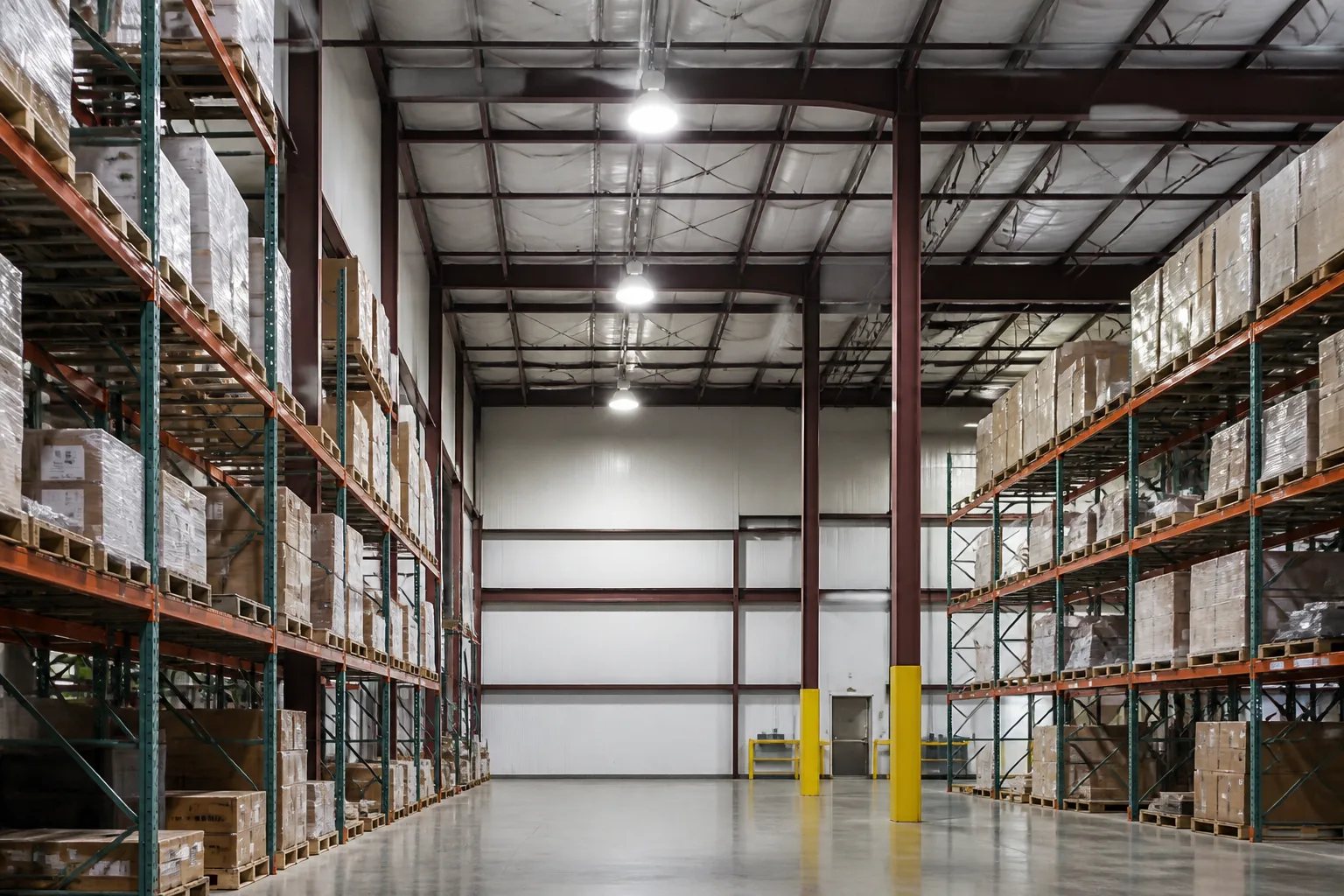
Exterior repairs have their own access and observation requirements. Pole-mounted lights, wall packs, entrance fixtures, and parking-area lighting can involve parking restrictions, delivery routes, overhead clearances, and control timing. A daytime photo may show visible damage or pole location, but it cannot fully show how the property operates after dark.
If the reported concern is not a failed fixture but an area that remains dark despite working equipment, a repair alone may not solve it. Fixture position, distribution, obstructions, and controls can all affect useful coverage. In that situation, a lighting assessment and planning review can help define whether the issue is restoration, layout, controls, or a broader improvement question.
Separate a practical repair from a broader replacement decision
Replacing an entire fixture is not always necessary, and replacing a component is not automatically the most practical answer. The decision can depend on fixture condition, the availability of appropriate parts, documentation, compatibility, labour, access difficulty, and the expected result after work is completed.
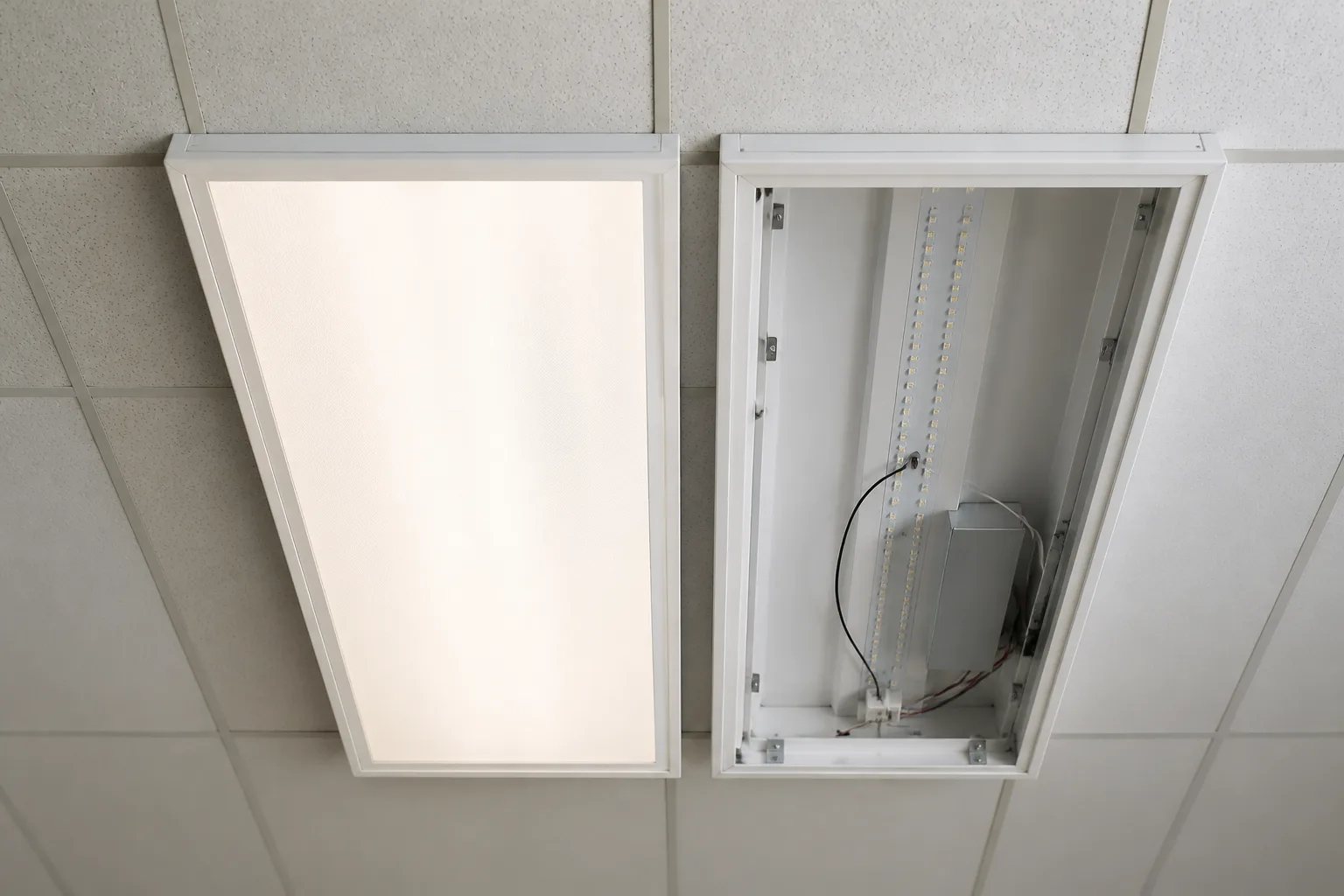
For LED equipment, driver and fixture information matters because fittings that look alike may use different electrical characteristics or control arrangements. With fluorescent or HID equipment, the visible lamp count or housing dimensions also do not confirm that a proposed component is suitable. A repair review should establish what can be restored and whether another condition is likely to affect the same location again.
Repeated failures deserve a record rather than a series of disconnected service requests. Track the fixture location, symptom, confirmed cause where known, completed work, and date. That history can reveal a recurring issue with one equipment family, a control arrangement, or a particular operating environment.
Where parts are unavailable, access is repeatedly disruptive, or several related fixtures are failing, a targeted replacement or phased change may warrant comparison with repair. Our commercial LED lighting retrofit service examines existing fixtures, controls, operating conditions, and access as part of a wider planning decision. An immediate repair and a longer-term upgrade can remain separate decisions, allowing the facility to address the current operational need without automatically committing to unrelated replacement work.
Coordinate service around an occupied property
Lighting repair in an active commercial property can involve different responsibilities. A person who can provide building access may not be authorized to approve a shutdown, release a secured aisle, or approve additional work. Before service, identify the site contact, relevant approval contact, access window, and any tenant, security, receiving, or purchase-order requirements that affect the visit.
For a property with tenants or multiple operating areas, clarify whether the fault is in a tenant space, common area, exterior area, or a landlord-controlled system. If work may interrupt operations, describe what must remain available and who can coordinate access. This turns a basic repair request into a workable site plan rather than leaving essential questions until arrival.
Keep a record after the repair is complete
A usable closeout record should identify the fixture or control location, the reported symptom, the completed work, and any unresolved condition. If equipment is replaced, retain the relevant information with the site records. If the problem recurs only under certain conditions, record those conditions so the next request is more precise.
For facilities with recurring deficiencies, a simple asset list and service history can make future decisions faster and more consistent. Our commercial lighting maintenance information covers practical ways to organize fixture records, observed issues, access planning, and replacement standards over time.
The most effective repair request is specific without trying to diagnose electrical equipment remotely: state what is happening, where it happens, when it occurs, how it affects the facility, and what access conditions apply. That creates a stronger starting point for restoring useful lighting and deciding whether the issue is isolated or part of a larger pattern.
Helpful answers
Frequently Asked Questions
Discuss the lighting issue at your facility
Share the affected area, observed symptom, operating impact, and any access details so we can begin with a clearer scope.